Professor Alex Edmans on Misinformation

Professor Alex Edmans on Misinformation

Why is misinformation so prevalent, and what can we do about it? On this episode, I’m speaking with Alex Edmans, a London Business School Finance Professor who has written a book called ‘May Contain Lies: How Stories, Statistics, and Studies Exploit Our Biases and What We Can Do About It’.

Alex’s areas of focus are purposeful business, sustainable investing, corporate governance, and behavioural finance. He’s also very prepared to use his platform to challenge people who propagate inaccuracies or misleading information.

In our discussion, we explore why he wrote his book, the impact of cognitive biases on decision-making, and practical solutions to navigate a world rife with misinformation.

You’ll hear about the pitfalls of relying on research produced with an agenda in mind and why we need to be wary when we’re told that a particular academic establishment has published a piece of research.

Alex also explains why the popular belief that if you spend 10,000 hours on a particular activity, you’ll have to be skilled at it might not be all it seems and why popular management mantras like ‘start with why’ aren’t as effective as those who propose them might like us to believe.

He talks about his own experiences and why his judgement has been just as vulnerable to biases as ours. Find out why cognitive diversity matters and why we shouldn’t listen to everyone’s views.


Timestamp Highlights: (Produced by AI)
  • [00:00:00] Introduction
    • Christian introduces Professor Alex Edmans and discusses his impact on social media and public discourse.
  • [00:01:00] Motivation for Writing "May Contain Lies"
    • Alex explains his transition from academic research to writing about misinformation and the importance of discerning data accuracy over personal biases.
  • [00:02:00] Cognitive Biases and Their Impact
    • Discussion on confirmation bias and black-and-white thinking and how they affect our perception of data and evidence.
  • [00:04:00] Personal Experiences with Bias
    • Alex shares personal anecdotes illustrating how even experts can fall prey to biases and misinformation.
  • [00:08:00] The 10,000 Hours Rule
    • A critical look at Malcolm Gladwell's popular concept and its misinterpretations.
  • [00:13:00] Research and Decision-Making
    • The importance of scrutinising academic research and the pitfalls of relying solely on endorsements and institutional affiliations.
  • [00:21:00] Statistical Literacy
    • Alex emphasises the need for statistical literacy from an early age and practical ways to teach it.
  • [00:23:00] Balancing Data and Anecdotes
    • How to effectively use stories and data to make informed decisions.
  • [00:25:00] Encouraging Cognitive Diversity
    • The value of different perspectives in decision-making processes and organisational settings.
  • [00:29:00] Flaws in Consultant Research
    • Critique of research produced by consultancies like McKinsey and the difference between advocacy and genuine scientific inquiry.
  • [00:36:00] Limits of Cognitive Diversity
    • Discussing when it might be necessary to draw the line in accepting diverse viewpoints, especially in the context of misinformation.
  • [00:41:00] Societal Solutions to Misinformation
    • Proposals for improving transparency in endorsements and the peer review process to combat misinformation.
  • [00:46:00] Role of Gatekeepers
    • The diminishing role of traditional gatekeepers in the age of social media and the importance of self-regulation and critical thinking.
  • [00:55:00] Ethical Presentation of Data
    • Encouraging ethical behaviour in the presentation of data and the potential for individuals to influence organisational culture positively.
  • [00:59:00] Closing Remarks
    • Christian wraps up the conversation, highlighting the key takeaways from the discussion and thanking Alex for his insights.
Key Quotes:
  • "Misinformation has always been around, but the ease with which it spreads today is unprecedented."
  • "The goal is not to enslave the reader to think like a statistician but to allow them to live more freely by being discerning with information."
Resources Mentioned:
  • Book: "May Contain Lies: How Stories, Statistics, and Studies Exploit Our Biases and What We Can Do About It" by Alex Edmans
  • Website: maycontainlies.com
Follow Alex Edmans:Subscribe & Follow:
  • To discover episodes of the show you might have missed, visit the show's website
  • Follow Christian on Twitter and LinkedIn.

Denne episoden er hentet fra en åpen RSS-feed og er ikke publisert av Podme. Den kan derfor inneholde annonser.

Episoder(378)

Annie Wagstaff on The Joy of Curiosity

Annie Wagstaff on The Joy of Curiosity

What’s the last thing you learned simply because you wanted to know?Episode summaryWhy do we feel the need to justify what we learn? My guest on this episode is Annie Wagstaff, a musician and composer...

23 Aug 1h
Paul Craven on Living With Uncertainty

Paul Craven on Living With Uncertainty

What happens when someone who spends his life thinking about risk, decision-making and human behaviour is confronted with an uncertainty he simply can’t control?Episode summaryMy guest is Paul Craven,...

15 Aug 51min
Benji Wilson on why we rate everything

Benji Wilson on why we rate everything

Why do we rate everything and why do we do so on a scale of one to five stars? What happens when systems designed to help us make better choices start influencing our behaviour in ways we don’t necess...

8 Aug 1h 4min
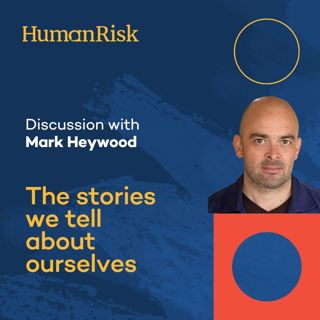
Mark Heywood on The Stories We Tell About Ourselves

Mark Heywood on The Stories We Tell About Ourselves

What parts of yourself have you learned to hide in order to be taken seriously? My guest on this episode is Mark Heywood, a friend of the show, returning guest and someone I've collaborated with on a ...

2 Aug 1h 21min
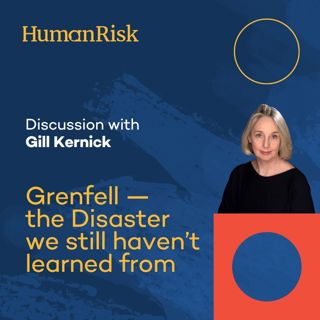
Gill Kernick on Grenfell -  the disaster we still haven't learned from

Gill Kernick on Grenfell - the disaster we still haven't learned from

When something goes badly wrong, we investigate it. Reports are written. Recommendations are made. Lessons are identified. But do we actually learn them?Episode SummaryReturning to the show, Gill Kern...

21 Jul 57min
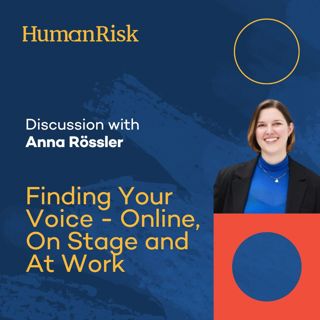
Anna Rössler on Finding Your Voice — Online, On Stage and At Work

Anna Rössler on Finding Your Voice — Online, On Stage and At Work

What does jazz singing have to do with LinkedIn? More than you might think. This week's guest, Anna Rössler, has built a career helping senior leaders find their voice online while simultaneously deve...

5 Jul 1h 1min
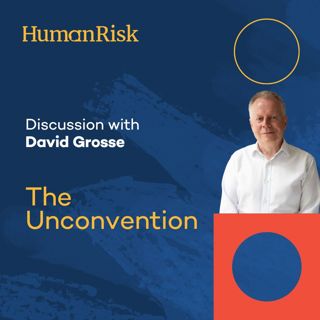
David Grosse on The Unconvention

David Grosse on The Unconvention

What happens when two people who spend their careers thinking about human behaviour meet in a London pub and start complaining about conferences? Apparently, they decide to organise one.Episode Summar...

25 Jun 48min
Freewheeling on Human Risk with Thomas Ableman

Freewheeling on Human Risk with Thomas Ableman

Why is it so hard to stop people playing vides, music or phone calls out loud on public transport — and what does that tell us about changing human behaviour? Show Summary This episode of The Human Ri...

11 Jun 45min

Populært innen Vitenskap

fastlegen
tingenes-tilstand
romkapsel
jss
liberal-halvtime
rss-nysgjerrige-norge
forskningno
rss-paradigmepodden
sinnsyn
smart-forklart
rekommandert
fjellsportpodden
tomprat-med-gunnar-tjomlid
villmarksliv
dekodet-2
rss-inn-til-kjernen-med-sunniva-rose
rss-kunstig-intelligens-med-elisabeth-maren-og-morten
vett-og-vitenskap-med-gaute-einevoll
rss-fuglehundfolk
tidlose-historier