Episode Eight: Dr. Gavin Murphy, TCD, Dr. Declan Fahie, UCD and Bella Fitzpatrick, Shout Out. “LGBTQI+ Issues in Education”

Episode Eight: Dr. Gavin Murphy, TCD, Dr. Declan Fahie, UCD and Bella Fitzpatrick, Shout Out. “LGBTQI+ Issues in Education”

My guests in this episode are Dr. Gavin Murphy, Dr. Declan Fahie and Bella Fitzpatrick. Dr. Gavin Murphy is an Assistant Professor in Education in the School of Education in Trinity College Dublin. As a post primary school teacher Gavin worked as a languages teacher. He was introduced to Sociology of Education both during his initial teacher education and before that, while studying languages, when he studied sociolinguistics. This sensitised him to the idea of questioning ‘taken for granted assumptions’. He mentions Mills, who invites us in our sociological imagination to make the familiar strange and how as an Irish teacher, that kind of minority perspective he had about making the familiar strange was in relation to language first and foremost. Gavin’s main area of research interest and work in his current role focuses on educational policy and leadership. Dr. Declan Fahie is a former primary school teacher, he has taught in West Dublin, the UK and in Sicily and he is currently Director of School Placement and Director of Research in UCD. Declan was a teacher for almost 20 years working in primary schools and mostly in West Dublin. He spent a lot of his teaching career teaching Junior infants. He mentions how four and five year olds were his audience for many, many years in a job that he absolutely loved. Declan has taught Sociology of Education, to PME student teachers, at both primary and post-primary level. His Master's thesis was on the experiences of lesbian and gay teachers. Bella Fitzpatrick worked initially as a volunteer at Shout Out (www.shoutout.ie) for seven years and became its first ever employee in 2017 and is now CEO of the organisation and an LGBTQ+ educator. Bella believes that sociology includes the study of society, human social behaviours, patterns of social relationships, social interaction. Bella describes constantly trying to get people to be a bit more fluid in their thinking about things they think are just set in stone and think more broadly and more inclusion overall. In this episode we discuss LGBTQI+ issues in Education for teachers, students and school communities from a number of different perspectives including; social justice, equity, inclusion, equality of opportunity, representation in the teaching profession of and for LGBTQI+ teachers and contemporary, practical LGBTQI+ student issues and challenges. My guests articulate a broad variety of views on inclusion and diversity within the teaching profession. We explore key challenges and barriers, such as progression, for LGBTQI+ teachers within the profession. We also look at opportunities for LGBTQI+ teachers, the visibility and inclusion of the diverse LGBTQI+ community within our education system, the opportunities for all teachers and school leaders to be allies to the LGBTQI+ members of the school community, and the impact of Covid on the LGBTQI+ community over the past 15 months. This is a really informative, interesting and engaging episode from three really inspiring contributors. Some of the stand out points for me from this podcast episode, include how the concepts of empathy, tolerance, acceptance, belonging, compassion and care are so critical in working together to address LGBTQI+ issues in education. Gavin describes his first research engagement with the whole question of educational leadership research, policy (specifically, the National LGBTI Youth Strategy) and LGBTQ+ questions, which was the interconnection between our own researcher subjectivity and educational leadership research and why when we talk about leading, there was this glaring absence compared to all of the other topics of social justice. There was much research in leadership and policy fields where there was economic challenge and ethnically diverse communities, and he questioned why wasn’t there more to talk about leading in respect to gender and sexual diversity and expression. He also articulates a Sustainable Development Goals point of view and how there are very clear connections to the work of a sustainable educational provision and ensuring that for example, some challenges that LGBTQ+ children face, for example when they don't have a positive coming out experience and how this can impact on their well-being and mental health. Gavin and Declan talk about their free online resource www.queerying.ie where they discuss and present many LGBTQI+ issues with contributions from other scholars, in the area of research on queer issues in education, as well as contributions from teachers and some of the advocacy groups. They both comment on how things have improved so much in terms of how schools address and support Lesbian and Gay pupils but that one of the challenges that remains is the issue of how schools negotiate trans issues and that members of the trans community feel very vulnerable. Declan describes how it is very difficult for members of the trans community who are experiencing any level of discomfort, comfort, challenge, or distress around their own presentation of their own gender, or their gender identity. He says that there are huge opportunities for schools to educate themselves in these issues and that it is the responsibility of school communities to educate themselves to support members of the trans community. He says that this is a space that is under attack at the moment and how we should be very mindful of that and how the LGBTQI+ community are a community, who can support one another. Bella describes how Shout Out have been giving LGBTQ+ inclusion workshops to students for the past nine years and that this is their core work. In the past nine years, they have delivered almost 2000 workshops to tens of thousands of people. Shout Out visit schools pretty much every single day and during COVID, they moved online. Bella says that they speak to all students, not only LGBTQ+ students, and that they focus on empathy building and thinking of empathy as a skill set with all students that they meet. In their work they encourage students to realise that we all have a relationship to our sexual orientation and to our gender identity, it just might not be something that we have had to think about a huge amount, because those in the majority don't think about it a lot. One of the main aspects that Shout Out focus on with students is that whatever is important to them about their identity, whether that is being from Cork, or supporting Dublin, or being really into theatre, that that is as important as our identities. LGBTQ+ equality helps everyone because it is about thinking past more simplistic, binarized ideas of gender and sexual expression. Gavin also refers to how as educators, we are working as individuals to serve children, young people, primarily, however, that the whole collective effort of doing that traverses working with colleagues in an organisation serving an educational purpose. He says that it is really important to think of staff, and the team who work together, how they feel connected to, for example, the educational ethos, mission values, etc. He mentions also how it's important in a community construction of schooling to think about, perhaps children who are attending a school who identify as straight, but who have same sex parents and how sometimes ‘families can be forgotten’. He gives the example of how we think about the kinds of admissions forms that we have in schools, our parents, teachers, and even representations of who are part of our school communities. These ‘artefacts’ in an organisation may not be LGBTQI+ inclusive, albeit unintentionally, and ought to be on our radars. Key to the overall discussion is the concept of intersectionality. Intersectionality is about different layers of potential discrimination and it helps us to conceive of, analyse and understand more deeply the complex (and often personal, identity- related) nature of inequity. Contributors discuss how our identities are multiple and that ‘we're not just one thing but are instead lots of different things’. Intersectionality, originally connected to scholars of US Black feminism, is when we look at the experience of somebody, particularly somebody who was othered and we say that they're actually othered at multiple levels. Declan mentions how when you're discriminated against or treated badly at multiple levels, it's much more difficult to resist or fight back, because it's like as if you're ‘doomed’. Understanding the sociological significance of ‘othering’ and ‘intersectionality’ is critical for educators to approach LGBTQI+ issues in education, as well as to conceive of the rationale for the prospects collective action through allyship offers not only the LGBTQI+ community, but the entire community as a whole for generations to come. Tune in to hear more! A very important episode for teachers, students, school management, parents, teacher educators, policy makers and many more.

Denne episoden er hentet fra en åpen RSS-feed og er ikke publisert av Podme. Den kan derfor inneholde annonser.

Episoder(34)

S2 Episode Fifteen:  Dr. Anne Marie Kavanagh "Decolonising the curriculum: Creating a more inclusive, diverse, and critically-engaged approach to education"

S2 Episode Fifteen: Dr. Anne Marie Kavanagh "Decolonising the curriculum: Creating a more inclusive, diverse, and critically-engaged approach to education"

In this episode I chat to Anne Marie Kavanagh (PhD, FHEA). Anne Marie’s episode is called Decolonising the curriculum: Creating a more inclusive, diverse, and critically-engaged approach to education....

10 Apr 202548min

S2 Episode Fourteen: Dr. Alison Egan "Navigating the Third Space in Higher Education Institutions"

S2 Episode Fourteen: Dr. Alison Egan "Navigating the Third Space in Higher Education Institutions"

In this episode I speak to Dr. Alison Egan in an episode entitled Navigating the Third Space in Higher Education Institutions where we discuss the concept of the "third space" in higher education, whi...

20 Mar 202554min

S2 Episode Thirteen: Niall Mulpeter "From Policy to Practice: Enacting Values in Publicly Managed Schools through Communities of Practice and Professional Learning Communities"

S2 Episode Thirteen: Niall Mulpeter "From Policy to Practice: Enacting Values in Publicly Managed Schools through Communities of Practice and Professional Learning Communities"

In this episode I speak to Niall Mulpeter in an episode entitled From Policy to Practice: Enacting Values in Publicly Managed Schools through Communities of Practice and Professional Learning Communit...

6 Mar 202547min
S2 Episode Twelve: Professor Dympna Devine "What has social justice got to do with pedagogy?"

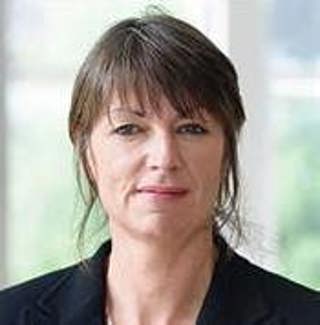
S2 Episode Twelve: Professor Dympna Devine "What has social justice got to do with pedagogy?"

In this episode I speak to Professor Dympna Devine in an episode entitled, "What has social justice got to do with pedagogy?" a title which Dympna explains was inspired by a question from a student in...

27 Feb 202551min
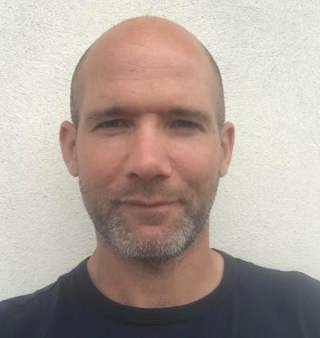
S2 Episode Eleven: Declan Qualter “Parents as partners in education: Rhetoric and reality in an era of digital and AI transformation”

S2 Episode Eleven: Declan Qualter “Parents as partners in education: Rhetoric and reality in an era of digital and AI transformation”

Declan Qualter is the Practice Placement Supervisor for the BEd with Gaeilge and/or Modern Languages Programme in the UCD School of Education. He also teaches on the Professional Masters in Education ...

20 Feb 202553min
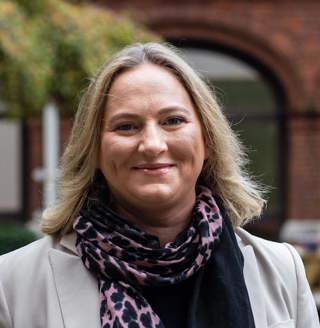
S2 Episode Ten: Dr. Audrey Bryan “Enduring Inequalities in Education: Whither Sociology?”

S2 Episode Ten: Dr. Audrey Bryan “Enduring Inequalities in Education: Whither Sociology?”

Dr. Audrey Bryan is an Associate Professor of Sociology in the School of Human Development at Dublin City University’s Institute of Education (DCU IoE).  Her teaching spans a number of undergraduate a...

13 Feb 202558min
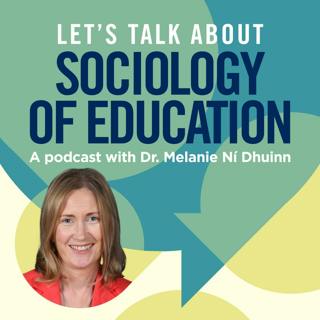
 S2 Episode Nine: Highlights episode

S2 Episode Nine: Highlights episode

In this episode Dr. Melanie Ní Dhuinn revisits the eight episodes released in the first half of season two. She highlights key discussions from the first eight episodes of Season Two and recaps on to...

7 Feb 202540min
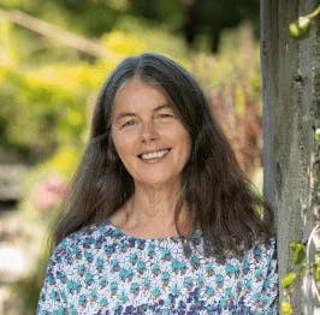
S2 Episode Eight: Dr. Michelle Share "Food Matters: It's not just what you eat, but where, how, and with whom"

S2 Episode Eight: Dr. Michelle Share "Food Matters: It's not just what you eat, but where, how, and with whom"

Dr Michelle Share is a Senior Research Fellow at the School of Education, Trinity College Dublin.  She is a sociologist with extensive experience in the conduct of multi-site research and evaluation p...

19 Des 202459min

Populært innen Fakta

fastlegen
dine-penger-pengeradet
relasjonspodden-med-dora-thorhallsdottir-kjersti-idem
rss-kunsten-a-leve
foreldreradet
treningspodden
mikkels-paskenotter
sinnsyn
rss-strid-de-norske-borgerkrigene
jakt-og-fiskepodden
gravid-uke-for-uke
fryktlos
rss-sarbar-med-lotte-erik
hverdagspsyken
uroskolen
rss-mind-body-podden
rss-impressions-2
rss-var-forste-kaffe
level-up-med-anniken-binz
takk-og-lov-med-anine-kierulf