Episode Twelve: Mr. Alex Murphy “The Student Becomes the Teacher”

Episode Twelve: Mr. Alex Murphy “The Student Becomes the Teacher”

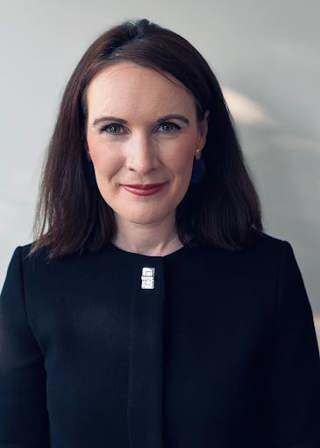
My guest in this episode is Mr. Alex Murphy. Alex is a Newly Qualified Teacher and a graduate of the Professional Master of Education (PME) initial teacher education (ITE) programme in the School of Education, Trinity College Dublin Alex has been teaching as a newly qualified teacher in his Induction Year in an Educate Together post-primary school in Dublin. His PME research was supervised by Dr. Erika Piazzoli and focused on an examination of the role of the body in a second language classroom. Alex has published his ITE research work recently in the Student Teacher Educational Research (STER) peer reviewed e-journal. In this episode we discuss the transition from being a student teacher to becoming a newly qualified teacher and how what student teachers learn in their teacher preparation programmes is relevant and does reveal itself in even greater detail as a newly qualified teacher. He mentions that the transition from the initial teacher education phase to the induction phase is welcome and something that student teachers look forward to but that that it can be an abrupt transition. Alex says that “you're not going to be the student teacher forever. And eventually, you are going to be the teacher that gets to see these, these social, sociological theories come to life in the classroom”. He advises “that there isn’t any middle ground between being a student [and] becoming a teacher for PME students” and, that” the transition happens almost kind of overnight, as you move from pretty minimal responsibility to do a full contract in a matter of months, you know, in April, May, you're finishing off your thesis and then when it hits August, September, you’re responsible for full classes, so the jump is quite big”. He also mentions how when student-teachers complete their initial teacher education, that “you realise the kind of wealth of knowledge and experience it's actually out there in the field”. Alex describes how when he started as a newly qualified teacher that there were a lot of new staff, including newly qualified teachers in his school who all started at the same time. He says that he had wonderful in-school support during the pandemic when all other supports were online. He says that “just being able to go to someone and say, do you have any idea what's going on?Because I'm not entirely sure, either. And having that reassurance that everyone struggles in the beginning, but we got there, you know, we’ve made it through the year”. Alex identifies a number of significant changes from his role as a student teacher to his role as a newly qualified teacher and “how you're no longer in the space that appears to supervise the class, but you're very much a member of staff and have a responsibility within the school”. This has been challenging for him and other newly qualified teachers but that he really enjoys “the independence that comes with this, and the freedom to teach the way you want to teach”. He reminds PME students that “you will eventually get to decide how you want to do things in your classroom. So we can be collaborative, but it should be on a teacher's terms as to how much they want to collaborate and how much collaboration they're comfortable with, because everyone has their own way of doing things”. He talks about teacher autonomy and how having the final say in what happens in his lessons is really important and “that sense of autonomy boosts your self-confidence and allows you to make assured and informed decision” and you know that by the end of your Induction year, that “you're able to stand on your own two feet, and you're able to stand over decisions that you've made”. We discuss a number of different Sociology of Education concepts including; teacher identity and NQTs forming a teacher identity, the family and the school, school culture, family culture, cultural capital, curriculum, language and the pedagogy of teaching a language, additional curricular activities in school and much more. Alex reflects on his own family cultural capital and how that influenced his progression in education and how education was valued in his home. He realises that not all students are fortunate to have the support that he had and that there are multiple priorities for families overall and sometimes school and engagement in education is not one of those priorities. He comments how “it’s not the education system’s job to impose certain priorities on families”, but instead it is “our job is to help these students through the system as best as we can, and help them to achieve success in whatever way they can in our lessons in our subjects, whatever it might be, and their schooling, too..” He concludes by discussing the “usefulness of the Sociology of Education modules” and “how they really become clear when you're actually in the classroom yourself. And when you're the teacher that is solely responsible for a group… I think it's then that you see they're useful in the sense that, you know, they allow you to the scope to kind of focus on the needs of everyone, and then that can be hard to challenge at times”. He says that that sociology modules tell us is that “there's a lot more going on outside of the classroom than we could ever realise. So you have to consider what happens outside of the space that allows it to be that way”. This is a great episode for student teachers, teacher educators, newly qualified teachers, parents, policy makers, school management and teachers. This interview with Alex is a very honest, enjoyable, encouraging and reassuring account as he recalls how his engagement with the Sociology of Education modules as a student teacher and now the newly qualified teacher has been “hugely beneficial, just for perspective, taking, I think, more than anything else, and for developing empathy towards everyone that's involved”. Tune in to hear more!

Denne episoden er hentet fra en åpen RSS-feed og er ikke publisert av Podme. Den kan derfor inneholde annonser.

Episoder(34)

S2 Episode Fifteen:  Dr. Anne Marie Kavanagh "Decolonising the curriculum: Creating a more inclusive, diverse, and critically-engaged approach to education"

S2 Episode Fifteen: Dr. Anne Marie Kavanagh "Decolonising the curriculum: Creating a more inclusive, diverse, and critically-engaged approach to education"

In this episode I chat to Anne Marie Kavanagh (PhD, FHEA). Anne Marie’s episode is called Decolonising the curriculum: Creating a more inclusive, diverse, and critically-engaged approach to education....

10 Apr 202548min
S2 Episode Fourteen: Dr. Alison Egan "Navigating the Third Space in Higher Education Institutions"

S2 Episode Fourteen: Dr. Alison Egan "Navigating the Third Space in Higher Education Institutions"

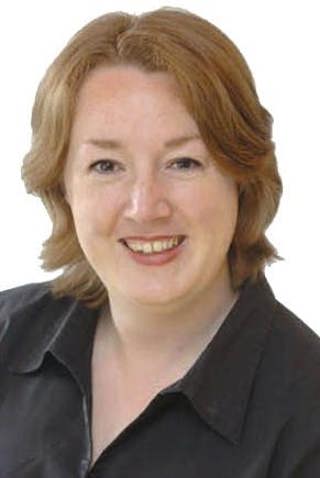
In this episode I speak to Dr. Alison Egan in an episode entitled Navigating the Third Space in Higher Education Institutions where we discuss the concept of the "third space" in higher education, whi...

20 Mar 202554min

S2 Episode Thirteen: Niall Mulpeter "From Policy to Practice: Enacting Values in Publicly Managed Schools through Communities of Practice and Professional Learning Communities"

S2 Episode Thirteen: Niall Mulpeter "From Policy to Practice: Enacting Values in Publicly Managed Schools through Communities of Practice and Professional Learning Communities"

In this episode I speak to Niall Mulpeter in an episode entitled From Policy to Practice: Enacting Values in Publicly Managed Schools through Communities of Practice and Professional Learning Communit...

6 Mar 202547min
S2 Episode Twelve: Professor Dympna Devine "What has social justice got to do with pedagogy?"

S2 Episode Twelve: Professor Dympna Devine "What has social justice got to do with pedagogy?"

In this episode I speak to Professor Dympna Devine in an episode entitled, "What has social justice got to do with pedagogy?" a title which Dympna explains was inspired by a question from a student in...

27 Feb 202551min
S2 Episode Eleven: Declan Qualter “Parents as partners in education: Rhetoric and reality in an era of digital and AI transformation”

S2 Episode Eleven: Declan Qualter “Parents as partners in education: Rhetoric and reality in an era of digital and AI transformation”

Declan Qualter is the Practice Placement Supervisor for the BEd with Gaeilge and/or Modern Languages Programme in the UCD School of Education. He also teaches on the Professional Masters in Education ...

20 Feb 202553min
S2 Episode Ten: Dr. Audrey Bryan “Enduring Inequalities in Education: Whither Sociology?”

S2 Episode Ten: Dr. Audrey Bryan “Enduring Inequalities in Education: Whither Sociology?”

Dr. Audrey Bryan is an Associate Professor of Sociology in the School of Human Development at Dublin City University’s Institute of Education (DCU IoE).  Her teaching spans a number of undergraduate a...

13 Feb 202558min
 S2 Episode Nine: Highlights episode

S2 Episode Nine: Highlights episode

In this episode Dr. Melanie Ní Dhuinn revisits the eight episodes released in the first half of season two. She highlights key discussions from the first eight episodes of Season Two and recaps on to...

7 Feb 202540min
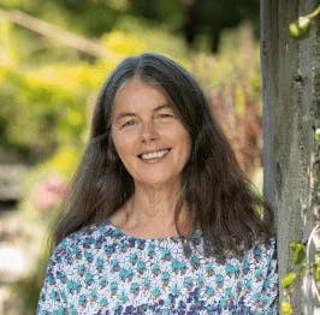
S2 Episode Eight: Dr. Michelle Share "Food Matters: It's not just what you eat, but where, how, and with whom"

S2 Episode Eight: Dr. Michelle Share "Food Matters: It's not just what you eat, but where, how, and with whom"

Dr Michelle Share is a Senior Research Fellow at the School of Education, Trinity College Dublin.  She is a sociologist with extensive experience in the conduct of multi-site research and evaluation p...

19 Des 202459min

Populært innen Fakta

fastlegen
dine-penger-pengeradet
relasjonspodden-med-dora-thorhallsdottir-kjersti-idem
rss-kunsten-a-leve
foreldreradet
treningspodden
mikkels-paskenotter
sinnsyn
rss-strid-de-norske-borgerkrigene
jakt-og-fiskepodden
gravid-uke-for-uke
fryktlos
rss-sarbar-med-lotte-erik
hverdagspsyken
uroskolen
rss-mind-body-podden
rss-impressions-2
rss-var-forste-kaffe
level-up-med-anniken-binz
takk-og-lov-med-anine-kierulf