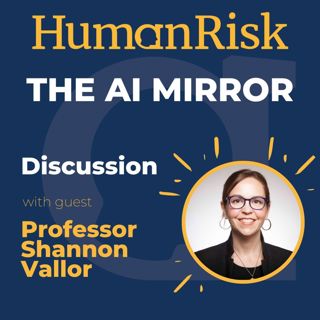
Professor Shannon Vallor on the AI Mirror

Professor Shannon Vallor on the AI Mirror

What if we saw Artificial Intelligence as a mirror rather than as a form of intelligence?

That’s the subject of a fabulous new book by Professor Shannon Vallor, who is my guest on this episode.

In our discussion, we explore how artificial intelligence reflects not only our technological prowess but also our ethical choices, biases, and the collective values that shape our world.

We also discuss how AI systems mirror our societal flaws, raising critical questions about accountability, transparency, and the role of ethics in AI development.

Shannon helps me to examine the risks and opportunities presented by AI, particularly in the context of decision-making, privacy, and the potential for AI to influence societal norms and behaviours.

This episode offers a thought-provoking exploration of the intersection between technology and ethics, urging us to consider how we can steer AI development in a direction that aligns with our shared values.

Guest Biography

Prof. Shannon Vallor is the Baillie Gifford Chair in the Ethics of Data and Artificial Intelligence at the Edinburgh Futures Institute (EFI) at the University of Edinburgh, where she is also appointed in Philosophy.

She is Director of the Centre for Technomoral Futures in EFI, and co-Director of the BRAID (Bridging Responsible AI Divides) programme, funded by the Arts and Humanities Research Council. Professor Vallor's research explores how new technologies, especially AI, robotics, and data science, reshape human moral character, habits, and practices.

Her work includes advising policymakers and industry on the ethical design and use of AI. She is a standing member of the One Hundred Year Study of Artificial Intelligence (AI100) and a member of the Oversight Board of the Ada Lovelace Institute. Professor Vallor received the 2015 World Technology Award in Ethics from the World Technology Network and the 2022 Covey Award from the International Association of Computing and Philosophy.

She is a former Visiting Researcher and AI Ethicist at Google. In addition to her many articles and published educational modules on the ethics of data, robotics, and artificial intelligence, she is the author of the book Technology and the Virtues: A Philosophical Guide to a Future Worth Wanting (Oxford University Press, 2016) and The AI Mirror: Reclaiming Our Humanity in an Age of Machine Thinking (Oxford University Press, 2024).

Links
Shannon's website: https://www.shannonvallor.net/
The AI Mirror: https://global.oup.com/academic/product/the-ai-mirror-9780197759066?A Noema essay by Shannon on the dangers of AI: https://www.noemamag.com/the-danger-of-superhuman-ai-is-not-what-you-think/
A New Yorker feature on the book https://www.newyorker.com/culture/open-questions/in-the-age-of-ai-what-makes-people-unique
The AI Mirror as one of the FT’s technology books of the summer https://www.ft.com/content/77914d8e-9959-4f97-98b0-aba5dffd581c
The FT review of The AI Mirror: https://www.ft.com/content/67d38081-82d3-4979-806a-eba0099f8011
The Edinburgh Futures Institute: https://efi.ed.ac.uk/
The clip from the movie "Real Genius' which she refers to: https://www.youtube.com/watch?v=wB1X4o-MV6o

AI Generated Timestamped Summary of Key Points:

00:02:30: Introduction to Professor Shannon Vallor and her work.

00:06:15: Discussion on AI as a mirror of societal values.

00:10:45: The ethical implications of AI decision-making. 00:18:20: How AI reflects human biases and the importance of transparency.

00:25:50: The role of ethics in AI development and deployment.

00:33:10: Challenges of integrating AI into human-centred contexts.

00:41:30: The potential for AI to shape societal norms and behaviours.

00:50:15: Professor Vallor’s insights on the future of AI and ethics.

00:58:00: Closing thoughts and reflections on AI’s impact on humanity.

Denne episoden er hentet fra en åpen RSS-feed og er ikke publisert av Podme. Den kan derfor inneholde annonser.

Episoder(377)

Paul Craven on Living With Uncertainty

Paul Craven on Living With Uncertainty

What happens when someone who spends his life thinking about risk, decision-making and human behaviour is confronted with an uncertainty he simply can’t control?Episode summaryMy guest is Paul Craven,...

15 Aug 51min
Benji Wilson on why we rate everything

Benji Wilson on why we rate everything

Why do we rate everything and why do we do so on a scale of one to five stars? What happens when systems designed to help us make better choices start influencing our behaviour in ways we don’t necess...

8 Aug 1h 4min
Mark Heywood on The Stories We Tell About Ourselves

Mark Heywood on The Stories We Tell About Ourselves

What parts of yourself have you learned to hide in order to be taken seriously? My guest on this episode is Mark Heywood, a friend of the show, returning guest and someone I've collaborated with on a ...

2 Aug 1h 21min
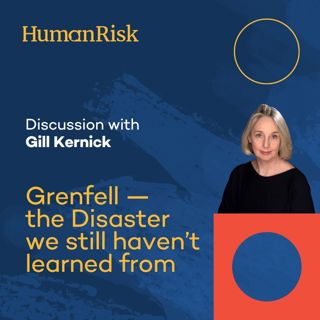
Gill Kernick on Grenfell -  the disaster we still haven't learned from

Gill Kernick on Grenfell - the disaster we still haven't learned from

When something goes badly wrong, we investigate it. Reports are written. Recommendations are made. Lessons are identified. But do we actually learn them?Episode SummaryReturning to the show, Gill Kern...

21 Jul 57min
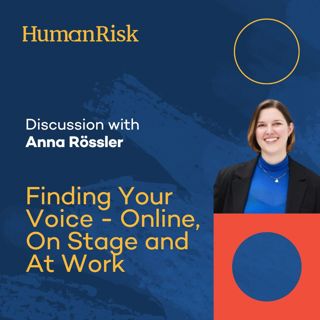
Anna Rössler on Finding Your Voice — Online, On Stage and At Work

Anna Rössler on Finding Your Voice — Online, On Stage and At Work

What does jazz singing have to do with LinkedIn? More than you might think. This week's guest, Anna Rössler, has built a career helping senior leaders find their voice online while simultaneously deve...

5 Jul 1h 1min
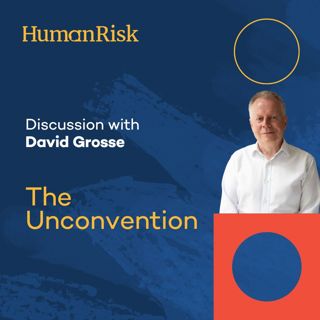
David Grosse on The Unconvention

David Grosse on The Unconvention

What happens when two people who spend their careers thinking about human behaviour meet in a London pub and start complaining about conferences? Apparently, they decide to organise one.Episode Summar...

25 Jun 48min
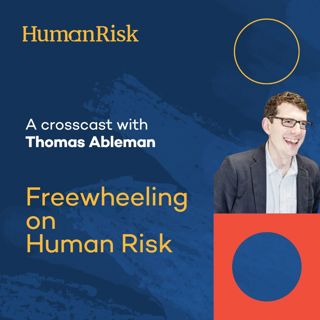
Freewheeling on Human Risk with Thomas Ableman

Freewheeling on Human Risk with Thomas Ableman

Why is it so hard to stop people playing vides, music or phone calls out loud on public transport — and what does that tell us about changing human behaviour? Show Summary This episode of The Human Ri...

11 Jun 45min
Jill Wick on The Human Side of Cybersecurity

Jill Wick on The Human Side of Cybersecurity

What if the best way to improve cybersecurity — or any other form of human risk — wasn't another policy, training course, or piece of technology, but a board game?  That's the kind of question my gues...

30 Mai 1h 3min

Populært innen Vitenskap

fastlegen
tingenes-tilstand
romkapsel
rss-nysgjerrige-norge
jss
liberal-halvtime
tomprat-med-gunnar-tjomlid
sinnsyn
rss-paradigmepodden
rekommandert
forskningno
smart-forklart
fjellsportpodden
villmarksliv
dekodet-2
rss-inn-til-kjernen-med-sunniva-rose
vett-og-vitenskap-med-gaute-einevoll
rss-rekommandert
diagnose
tidlose-historier