#15 - Phil Tetlock on how chimps beat Berkeley undergrads and when it’s wise to defer to the wise

#15 - Phil Tetlock on how chimps beat Berkeley undergrads and when it’s wise to defer to the wise

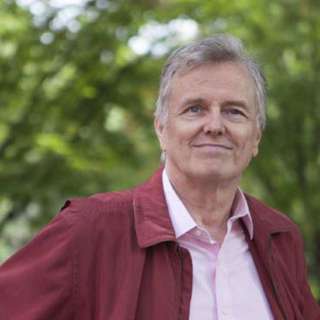
Prof Philip Tetlock is a social science legend. Over forty years he has researched whose predictions we can trust, whose we can’t and why - and developed methods that allow all of us to be better at predicting the future.

After the Iraq WMDs fiasco, the US intelligence services hired him to figure out how to ensure they’d never screw up that badly again. The result of that work – Superforecasting – was a media sensation in 2015.

Full transcript, brief summary, apply for coaching and links to learn more.

It described Tetlock’s Good Judgement Project, which found forecasting methods so accurate they beat everyone else in open competition, including thousands of people in the intelligence services with access to classified information.

Today he’s working to develop the best forecasting process ever, by combining top human and machine intelligence in the Hybrid Forecasting Competition, which you can sign up and participate in.

We start by describing his key findings, and then push to the edge of what is known about how to foresee the unforeseeable:

* Should people who want to be right just adopt the views of experts rather than apply their own judgement?
* Why are Berkeley undergrads worse forecasters than dart-throwing chimps?
* Should I keep my political views secret, so it will be easier to change them later?
* How can listeners contribute to his latest cutting-edge research?
* What do we know about our accuracy at predicting low-probability high-impact disasters?
* Does his research provide an intellectual basis for populist political movements?
* Was the Iraq War caused by bad politics, or bad intelligence methods?
* What can we learn about forecasting from the 2016 election?
* Can experience help people avoid overconfidence and underconfidence?
* When does an AI easily beat human judgement?
* Could more accurate forecasting methods make the world more dangerous?
* How much does demographic diversity line up with cognitive diversity?
* What are the odds we’ll go to war with China?
* Should we let prediction tournaments run most of the government?

Listen to it. Get free, one-on-one career advice. Want to work on important social science research like Tetlock? We’ve helped hundreds of people compare their options and get introductions. Find out if our coaching can help you.

Denne episoden er hentet fra en åpen RSS-feed og er ikke publisert av Podme. Den kan derfor inneholde annonser.

Episoder(348)

Owain Evans on accidentally training AI models to be evil

Owain Evans on accidentally training AI models to be evil

Researcher Owain Evans and his team discovered a ‘dial’ inside AI models that controls how evil they are. Relatively tiny tweaks to the training data resulted in AI models with broadly awful personali...

20 Aug 2h 15min

#251 – The UK's former head AI safety scientist on how to solve alignment before superintelligence arrives | Geoffrey Irving

#251 – The UK's former head AI safety scientist on how to solve alignment before superintelligence arrives | Geoffrey Irving

When should governments slow the race toward superintelligence? According to Geoffrey Irving, the careful answer is sometime in the past. The useful answer is now.Geoffrey — formerly a safety research...

11 Aug 2h 2min

#250 – Toby Ord on where AGI timelines go wrong

#250 – Toby Ord on where AGI timelines go wrong

Both Silicon Valley and the public can’t get enough of ‘AGI timelines.’ But Toby Ord, senior researcher at Oxford’s AI Governance Initiative and author of The Precipice, believes we consistently make ...

6 Aug 2h 46min

What the hell happened with AGI timelines in 2026? – Rob Wiblin

What the hell happened with AGI timelines in 2026? – Rob Wiblin

Last October, famed coder Andrej Karpathy called AI agents “slop.” Two months later he completely reversed his view, describing them as “alien tools” that are “rocking the profession.”He was far from ...

4 Aug 49min

#249 – Spencer Greenberg on staying sane while trying to save the world

#249 – Spencer Greenberg on staying sane while trying to save the world

If you genuinely believe that humanity could be wiped out by AI or a pandemic, what is the appropriate amount of fear to feel?“As much as possible” can seem like the only reasonable answer. If the wor...

28 Jul 2h 9min

#248 – Jasmine Sun on what the people building AI really believe

#248 – Jasmine Sun on what the people building AI really believe

Many AI researchers believe mass job displacement is coming — and some even think there’s a chance their technology will kill everyone. But they’re building it anyway. Writer and journalist Jasmine Su...

21 Jul 1h 6min

#247 – Anton Leicht on how middle powers avoid losing everything in a post-AI world

#247 – Anton Leicht on how middle powers avoid losing everything in a post-AI world

In a post-AGI world, can a country without access to frontier AI even be considered sovereign anymore?Anton Leicht says once frontier AI becomes a core economic input, the countries that own it will p...

14 Jul 1h 33min

#246 – Sneha Revanur on how a small team of activists helped pass America's landmark AI safety laws

#246 – Sneha Revanur on how a small team of activists helped pass America's landmark AI safety laws

Six years ago, aged just 15, Sneha Revanur founded the AI advocacy nonprofit Encode AI — back when AI felt like a niche issue. Now the world’s caught up with her, and she’s ready to share everything s...

8 Jul 52min

Populært innen Fakta

fastlegen
dine-penger-pengeradet
relasjonspodden-med-dora-thorhallsdottir-kjersti-idem
treningspodden
foreldreradet
rss-orjasater
jakt-og-fiskepodden
rss-kunsten-a-leve
rss-strid-de-norske-borgerkrigene
rss-var-forste-kaffe
sinnsyn
mikkels-paskenotter
smart-forklart
gravid-uke-for-uke
fryktlos
hverdagspsyken
rss-impressions-2
tomprat-med-gunnar-tjomlid
hr-podden-2
dopet