
#23 - How to actually become an AI alignment researcher, according to Dr Jan Leike

#23 - How to actually become an AI alignment researcher, according to Dr Jan Leike

Want to help steer the 21st century’s most transformative technology? First complete an undergrad degree in computer science and mathematics. Prioritize harder courses over easier ones. Publish at least one paper before you apply for a PhD. Find a supervisor who’ll have a lot of time for you. Go to the top conferences and meet your future colleagues. And finally, get yourself hired.

That’s Dr Jan Leike’s advice on how to join him as a Research Scientist at DeepMind, the world’s leading AI team.

Jan is also a Research Associate at the Future of Humanity Institute at the University of Oxford, and his research aims to make machine learning robustly beneficial. His current focus is getting AI systems to learn good ‘objective functions’ in cases where we can’t easily specify the outcome we actually want.

Full transcript, summary and links to learn more.

How might you know you’re a good fit for research?

Jan says to check whether you get obsessed with puzzles and problems, and find yourself mulling over questions that nobody knows the answer to. To do research in a team you also have to be good at clearly and concisely explaining your new ideas to other people.

We also discuss:

* Where Jan's views differ from those expressed by Dario Amodei in episode 3
* Why is AGI safety one of the world’s most pressing problems?
* Common misconceptions about AI
* What are some of the specific things DeepMind is researching?
* The ways in which today’s AI systems can fail
* What are the best techniques available today for teaching an AI the right objective function?
* What’s it like to have some of the world’s greatest minds as coworkers?
* Who should do empirical research and who should do theoretical research
* What’s the DeepMind application process like?
* The importance of researchers being comfortable with the unknown.

*The 80,000 Hours Podcast is produced by Keiran Harris.*

Episoder(332)

Rob Wiblin on how he ended up the way he is

Rob Wiblin on how he ended up the way he is

This is a crosspost of an episode of the Eureka Podcast. The interviewer is Misha Saul, a childhood friend of Rob's, who he has known for over 20 years. While it's not an episode of our own show, we...

3 Feb 20211h 57min

#90 – Ajeya Cotra on worldview diversification and how big the future could be

#90 – Ajeya Cotra on worldview diversification and how big the future could be

You wake up in a mysterious box, and hear the booming voice of God: “I just flipped a coin. If it came up heads, I made ten boxes, labeled 1 through 10 — each of which has a human in it. If it ca...

21 Jan 20212h 59min

Rob Wiblin on self-improvement and research ethics

Rob Wiblin on self-improvement and research ethics

This is a crosspost of an episode of the Clearer Thinking Podcast: 022: Self-Improvement and Research Ethics with Rob Wiblin. Rob chats with Spencer Greenberg, who has been an audience favourite in...

13 Jan 20212h 30min

#73 - Phil Trammell on patient philanthropy and waiting to do good [re-release]

#73 - Phil Trammell on patient philanthropy and waiting to do good [re-release]

Rebroadcast: this episode was originally released in March 2020. To do good, most of us look to use our time and money to affect the world around us today. But perhaps that's all wrong. If you too...

7 Jan 20212h 41min

#75 – Michelle Hutchinson on what people most often ask 80,000 Hours [re-release]

#75 – Michelle Hutchinson on what people most often ask 80,000 Hours [re-release]

Rebroadcast: this episode was originally released in April 2020. Since it was founded, 80,000 Hours has done one-on-one calls to supplement our online content and offer more personalised advice. We ...

30 Des 20202h 14min
#89 – Owen Cotton-Barratt on epistemic systems and layers of defense against potential global catastrophes

#89 – Owen Cotton-Barratt on epistemic systems and layers of defense against potential global catastrophes

From one point of view academia forms one big 'epistemic' system — a process which directs attention, generates ideas, and judges which are good. Traditional print media is another such system, and we...

17 Des 20202h 38min
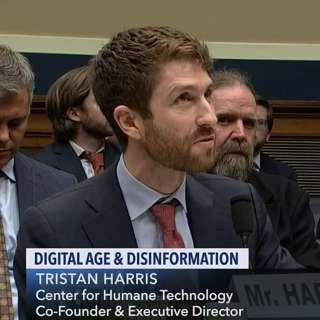
#88 – Tristan Harris on the need to change the incentives of social media companies

#88 – Tristan Harris on the need to change the incentives of social media companies

In its first 28 days on Netflix, the documentary The Social Dilemma — about the possible harms being caused by social media and other technology products — was seen by 38 million households in about 1...

3 Des 20202h 35min
Benjamin Todd on what the effective altruism community most needs (80k team chat #4)

Benjamin Todd on what the effective altruism community most needs (80k team chat #4)

In the last '80k team chat' with Ben Todd and Arden Koehler, we discussed what effective altruism is and isn't, and how to argue for it. In this episode we turn now to what the effective altruism comm...

12 Nov 20201h 25min

Populært innen Fakta

fastlegen
dine-penger-pengeradet
relasjonspodden-med-dora-thorhallsdottir-kjersti-idem
mikkels-paskenotter
rss-strid-de-norske-borgerkrigene
rss-bisarr-historie
foreldreradet
treningspodden
jakt-og-fiskepodden
takk-og-lov-med-anine-kierulf
ukast
rss-sunn-okonomi
rss-bak-luftfarten
sinnsyn
lederskap-nhhs-podkast-om-ledelse
fryktlos
hverdagspsyken
rss-kull
gravid-uke-for-uke
level-up-med-anniken-binz