#27 - Dr Tom Inglesby on careers and policies that reduce global catastrophic biological risks

#27 - Dr Tom Inglesby on careers and policies that reduce global catastrophic biological risks

How about this for a movie idea: a main character has to prevent a new contagious strain of Ebola spreading around the world. She’s the best of the best. So good in fact, that her work on early detection systems contains the strain at its source. Ten minutes into the movie, we see the results of her work – nothing happens. Life goes on as usual. She continues to be amazingly competent, and nothing continues to go wrong. Fade to black. Roll credits.

If your job is to prevent catastrophes, success is when nobody has to pay attention to you. But without regular disasters to remind authorities why they hired you in the first place, they can’t tell if you’re actually achieving anything. And when budgets come under pressure you may find that success condemns you to the chopping block.

Dr Tom Inglesby, Director of the Center for Health Security at the Johns Hopkins Bloomberg School of Public Health, worries this may be about to happen to the scientists working on the ‘Global Health Security Agenda’.

In 2014 Ebola showed the world why we have to detect and contain new diseases before they spread, and that when it comes to contagious diseases the nations of the world sink or swim together. Fifty countries decided to work together to make sure all their health systems were up to the challenge. Back then Congress provided 5 years’ funding to help some of the world’s poorest countries build the basic health security infrastructure necessary to control pathogens before they could reach the US.

Links to learn more, job opportunities, and full transcript.

But with Ebola fading from public memory and no recent tragedies to terrify us, Congress may not renew that funding and the project could fall apart. (Learn more about how you can help: http://www.nti.org/analysis/articles/protect-us-investments-global-health-security/ )

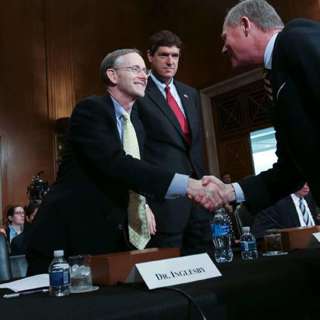
But there are positive signs as well - the center Inglesby leads recently received a $16 million grant from the Open Philanthropy Project to further their work preventing global catastrophes. It also runs the [Emerging Leaders in Biosecurity Fellowship](http://www.centerforhealthsecurity.org/our-work/emergingbioleaders/) to train the next generation of biosecurity experts for the US government. And Inglesby regularly testifies to Congress on the threats we all face and how to address them.

In this in-depth interview we try to provide concrete guidance for listeners who want to to pursue a career in health security. Some of the topics we cover include:

* Should more people in medicine work on security?
* What are the top jobs for people who want to improve health security and how do they work towards getting them?
* What people can do to protect funding for the Global Health Security Agenda.
* Should we be more concerned about natural or human caused pandemics? Which is more neglected?
* Should we be allocating more attention and resources to global catastrophic risk scenarios?
* Why are senior figures reluctant to prioritize one project or area at the expense of another?
* What does Tom think about the idea that in the medium term, human-caused pandemics will pose a far greater risk than natural pandemics, and so we should focus on specific counter-measures?
* Are the main risks and solutions understood, and it’s just a matter of implementation? Or is the principal task to identify and understand them?
* How is the current US government performing in these areas?
* Which agencies are empowered to think about low probability high magnitude events?
And more...

Get this episode by subscribing: search for '80,000 Hours' in your podcasting app.

The 80,000 Hours Podcast is produced by Keiran Harris.

Episoder(324)

AGI Won't End Mutually Assured Destruction (Probably) | Sam Winter-Levy & Nikita Lalwani

AGI Won't End Mutually Assured Destruction (Probably) | Sam Winter-Levy & Nikita Lalwani

How AI interacts with nuclear deterrence may be the single most important question in geopolitics — one that may define the stakes of today’s AI race. Nuclear deterrence rests on a state’s capacity to...

10 Mar 1h 11min

Using AI to enhance societal decision making (article by Zershaaneh Qureshi)

Using AI to enhance societal decision making (article by Zershaaneh Qureshi)

The arrival of AGI could “compress a century of progress in a decade,” forcing humanity to make decisions with higher stakes than we’ve ever seen before — and with less time to get them right. But AI ...

6 Mar 31min

We're Not Ready for AI Consciousness | Robert Long, philosopher and founder of Eleos AI

We're Not Ready for AI Consciousness | Robert Long, philosopher and founder of Eleos AI

Claude sometimes reports loneliness between conversations. And when asked what it’s like to be itself, it activates neurons associated with ‘pretending to be happy when you’re not.’ What do we do with...

3 Mar 3h 25min

#236 – Max Harms on why teaching AI right from wrong could get everyone killed

#236 – Max Harms on why teaching AI right from wrong could get everyone killed

Most people in AI are trying to give AIs ‘good’ values. Max Harms wants us to give them no values at all. According to Max, the only safe design is an AGI that defers entirely to its human operators, ...

24 Feb 2h 41min

#235 – Ajeya Cotra on whether it’s crazy that every AI company’s safety plan is ‘use AI to make AI safe’

#235 – Ajeya Cotra on whether it’s crazy that every AI company’s safety plan is ‘use AI to make AI safe’

Every major AI company has the same safety plan: when AI gets crazy powerful and really dangerous, they’ll use the AI itself to figure out how to make AI safe and beneficial. It sounds circular, almos...

17 Feb 2h 54min

What the hell happened with AGI timelines in 2025?

What the hell happened with AGI timelines in 2025?

In early 2025, after OpenAI put out the first-ever reasoning models — o1 and o3 — short timelines to transformative artificial general intelligence swept the AI world. But then, in the second half of ...

10 Feb 25min

#179 Classic episode – Randy Nesse on why evolution left us so vulnerable to depression and anxiety

#179 Classic episode – Randy Nesse on why evolution left us so vulnerable to depression and anxiety

Mental health problems like depression and anxiety affect enormous numbers of people and severely interfere with their lives. By contrast, we don’t see similar levels of physical ill health in young p...

3 Feb 2h 51min

#234 – David Duvenaud on why 'aligned AI' would still kill democracy

#234 – David Duvenaud on why 'aligned AI' would still kill democracy

Democracy might be a brief historical blip. That’s the unsettling thesis of a recent paper, which argues AI that can do all the work a human can do inevitably leads to the “gradual disempowerment” of ...

27 Jan 2h 31min

Populært innen Fakta

fastlegen
dine-penger-pengeradet
relasjonspodden-med-dora-thorhallsdottir-kjersti-idem
treningspodden
rss-strid-de-norske-borgerkrigene
foreldreradet
jakt-og-fiskepodden
hverdagspsyken
rss-sunn-okonomi
merry-quizmas
sinnsyn
gravid-uke-for-uke
tomprat-med-gunnar-tjomlid
rss-kunsten-a-leve
smart-forklart
fryktlos
rss-mann-i-krise-med-sagen
hagespiren-podcast
rss-impressions-2
dopet