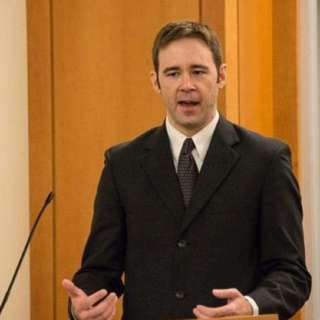

#34 - We use the worst voting system that exists. Here's how Aaron Hamlin is going to fix it.

#34 - We use the worst voting system that exists. Here's how Aaron Hamlin is going to fix it.

In 1991 Edwin Edwards won the Louisiana gubernatorial election. In 2001, he was found guilty of racketeering and received a 10 year invitation to Federal prison. The strange thing about that election? By 1991 Edwards was already notorious for his corruption. Actually, that’s not it.

The truly strange thing is that Edwards was clearly the good guy in the race. How is that possible?

His opponent was former Ku Klux Klan Grand Wizard David Duke.

How could Louisiana end up having to choose between a criminal and a Nazi sympathiser?

It’s not like they lacked other options: the state’s moderate incumbent governor Buddy Roemer ran for re-election. Polling showed that Roemer was massively preferred to both the career criminal and the career bigot, and would easily win a head-to-head election against either.

Unfortunately, in Louisiana every candidate from every party competes in the first round, and the top two then go on to a second - a so-called ‘jungle primary’. Vote splitting squeezed out the middle, and meant that Roemer was eliminated in the first round.

Louisiana voters were left with only terrible options, in a run-off election mostly remembered for the proliferation of bumper stickers reading “Vote for the Crook. It’s Important.”

We could look at this as a cultural problem, exposing widespread enthusiasm for bribery and racism that will take generations to overcome. But according to Aaron Hamlin, Executive Director of The Center for Election Science (CES), there’s a simple way to make sure we never have to elect someone hated by more than half the electorate: change how we vote.

He advocates an alternative voting method called approval voting, in which you can vote for as many candidates as you want, not just one. That means that you can always support your honest favorite candidate, even when an election seems like a choice between the lesser of two evils.

Full transcript, links to learn more, and summary of key points.

If you'd like to meet Aaron he's doing events for CES in San Francisco, DC, Philadelphia, New York and Brooklyn over the next two weeks - RSVP here.

While it might not seem sexy, this single change could transform politics. Approval voting is adored by voting researchers, who regard it as the best simple voting system available.

Which do they regard as unquestionably the worst? First-past-the-post - precisely the disastrous system used and exported around the world by the US and UK.

Aaron has a practical plan to spread approval voting across the US using ballot initiatives - and it just might be our best shot at making politics a bit less unreasonable.

The Center for Election Science is a U.S. non-profit which aims to fix broken government by helping the world adopt smarter election systems. They recently received a $600,000 grant from the Open Philanthropy Project to scale up their efforts.

Get this episode by subscribing to our podcast on the world’s most pressing problems and how to solve them: search for '80,000 Hours' in your podcasting app.

The 80,000 Hours Podcast is produced by Keiran Harris.

Episoder(317)

Why 'Aligned AI' Would Still Kill Democracy | David Duvenaud, ex-Anthropic team lead

Why 'Aligned AI' Would Still Kill Democracy | David Duvenaud, ex-Anthropic team lead

Democracy might be a brief historical blip. That’s the unsettling thesis of a recent paper, which argues AI that can do all the work a human can do inevitably leads to the “gradual disempowerment” of ...

27 Jan 2h 31min

#145 Classic episode – Christopher Brown on why slavery abolition wasn't inevitable

#145 Classic episode – Christopher Brown on why slavery abolition wasn't inevitable

In many ways, humanity seems to have become more humane and inclusive over time. While there’s still a lot of progress to be made, campaigns to give people of different genders, races, sexualities, et...

20 Jan 2h 56min

#233 – James Smith on how to prevent a mirror life catastrophe

#233 – James Smith on how to prevent a mirror life catastrophe

When James Smith first heard about mirror bacteria, he was sceptical. But within two weeks, he’d dropped everything to work on it full time, considering it the worst biothreat that he’d seen described...

13 Jan 2h 9min

#144 Classic episode – Athena Aktipis on why cancer is a fundamental universal phenomena

#144 Classic episode – Athena Aktipis on why cancer is a fundamental universal phenomena

What’s the opposite of cancer? If you answered “cure,” “antidote,” or “antivenom” — you’ve obviously been reading the antonym section at www.merriam-webster.com/thesaurus/cancer.But today’s guest Athe...

9 Jan 3h 30min

#142 Classic episode – John McWhorter on why the optimal number of languages might be one, and other provocative claims about language

#142 Classic episode – John McWhorter on why the optimal number of languages might be one, and other provocative claims about language

John McWhorter is a linguistics professor at Columbia University specialising in research on creole languages. He's also a content-producing machine, never afraid to give his frank opinion on anything...

6 Jan 1h 35min

2025 Highlight-o-thon: Oops! All Bests

2025 Highlight-o-thon: Oops! All Bests

It’s that magical time of year once again — highlightapalooza! Stick around for one top bit from each episode we recorded this year, including:Kyle Fish explaining how Anthropic’s AI Claude descends i...

29 Des 20251h 40min

#232 – Andreas Mogensen on what we owe 'philosophical Vulcans' and unconscious beings

#232 – Andreas Mogensen on what we owe 'philosophical Vulcans' and unconscious beings

Most debates about the moral status of AI systems circle the same question: is there something that it feels like to be them? But what if that’s the wrong question to ask? Andreas Mogensen — a senior ...

19 Des 20252h 37min

#231 – Paul Scharre on how AI-controlled robots will and won't change war

#231 – Paul Scharre on how AI-controlled robots will and won't change war

In 1983, Stanislav Petrov, a Soviet lieutenant colonel, sat in a bunker watching a red screen flash “MISSILE LAUNCH.” Protocol demanded he report it to superiors, which would very likely trigger a ret...

17 Des 20252h 45min

Populært innen Fakta

fastlegen
dine-penger-pengeradet
relasjonspodden-med-dora-thorhallsdottir-kjersti-idem
treningspodden
foreldreradet
merry-quizmas
dopet
sovnlos
jakt-og-fiskepodden
rss-strid-de-norske-borgerkrigene
sinnsyn
podme-bio-3
rss-kull
gravid-uke-for-uke
hverdagspsyken
rss-kunsten-a-leve
tomprat-med-gunnar-tjomlid
fryktlos
level-up-med-anniken-binz
rss-var-forste-kaffe