

#40 - Katja Grace on forecasting future technology & how much we should trust expert predictions

#40 - Katja Grace on forecasting future technology & how much we should trust expert predictions

Experts believe that artificial intelligence will be better than humans at driving trucks by 2027, working in retail by 2031, writing bestselling books by 2049, and working as surgeons by 2053. But how seriously should we take these predictions?

Katja Grace, lead author of ‘When Will AI Exceed Human Performance?’, thinks we should treat such guesses as only weak evidence. But she also says there might be much better ways to forecast transformative technology, and that anticipating such advances could be one of our most important projects.

Note: Katja's organisation AI Impacts is currently hiring part- and full-time researchers.

There’s often pessimism around making accurate predictions in general, and some areas of artificial intelligence might be particularly difficult to forecast.

But there are also many things we’re able to predict confidently today -- like the climate of Oxford in five years -- that we no longer give ourselves much credit for.

Some aspects of transformative technologies could fall into this category. And these easier predictions could give us some structure on which to base the more complicated ones.

Links to learn more, summary and full transcript.

One controversial debate surrounds the idea of an intelligence explosion; how likely is it that there will be a sudden jump in AI capability?

And one way to tackle this is to investigate a more concrete question: what’s the base rate of any technology having a big discontinuity?

A significant historical example was the development of nuclear weapons. Over thousands of years, the efficacy of explosives didn’t increase by much. Then within a few years, it got thousands of times better. Discovering what leads to such anomalies may allow us to better predict the possibility of a similar jump in AI capabilities.

In today’s interview we also discuss:

* Why is AI impacts one of the most important projects in the world?
* How do you structure important surveys? Why do you get such different answers when asking what seem to be very similar questions?
* How does writing an academic paper differ from posting a summary online?
* When will unguided machines be able to produce better and cheaper work than humans for every possible task?
* What’s one of the most likely jobs to be automated soon?
* Are people always just predicting the same timelines for new technologies?
* How do AGI researchers different from other AI researchers in their predictions?
* What are attitudes to safety research like within ML? Are there regional differences?
* How much should we believe experts generally?
* How does the human brain compare to our best supercomputers? How many human brains are worth all the hardware in the world?
* How quickly has the processing capacity for machine learning problems been increasing?
* What can we learn from the development of previous technologies in figuring out how fast transformative AI will arrive?
* What should we expect from a post AI dominated economy?
* How much influence can people ever have on things that will happen in 20 years? Are there any examples of people really trying to do this?

Get this episode by subscribing to our podcast on the world’s most pressing problems and how to solve them: type 80,000 Hours into your podcasting app. Or read the transcript below.

The 80,000 Hours podcast is produced by Keiran Harris.

Episoder(333)

#132 – Nova DasSarma on why information security may be critical to the safe development of AI systems

#132 – Nova DasSarma on why information security may be critical to the safe development of AI systems

If a business has spent $100 million developing a product, it's a fair bet that they don't want it stolen in two seconds and uploaded to the web where anyone can use it for free. This problem exists...

14 Jun 20222h 42min

#131 – Lewis Dartnell on getting humanity to bounce back faster in a post-apocalyptic world

#131 – Lewis Dartnell on getting humanity to bounce back faster in a post-apocalyptic world

“We’re leaving these 16 contestants on an island with nothing but what they can scavenge from an abandoned factory and apartment block. Over the next 365 days, they’ll try to rebuild as much of civili...

3 Jun 20221h 5min

#130 – Will MacAskill on balancing frugality with ambition, whether you need longtermism, & mental health under pressure

#130 – Will MacAskill on balancing frugality with ambition, whether you need longtermism, & mental health under pressure

Imagine you lead a nonprofit that operates on a shoestring budget. Staff are paid minimum wage, lunch is bread and hummus, and you're all bunched up on a few tables in a basement office. But over a fe...

23 Mai 20222h 16min
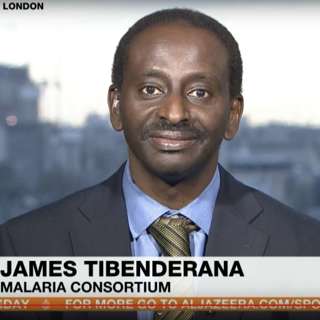
#129 – James Tibenderana on the state of the art in malaria control and elimination

#129 – James Tibenderana on the state of the art in malaria control and elimination

The good news is deaths from malaria have been cut by a third since 2005. The bad news is it still causes 250 million cases and 600,000 deaths a year, mostly among young children in sub-Saharan Africa...

9 Mai 20223h 19min

#128 – Chris Blattman on the five reasons wars happen

#128 – Chris Blattman on the five reasons wars happen

In nature, animals roar and bare their teeth to intimidate adversaries — but one side usually backs down, and real fights are rare. The wisdom of evolution is that the risk of violence is just too gre...

28 Apr 20222h 46min

#127 – Sam Bankman-Fried on taking a high-risk approach to crypto and doing good

#127 – Sam Bankman-Fried on taking a high-risk approach to crypto and doing good

On this episode of the show, host Rob Wiblin interviews Sam Bankman-Fried. This interview was recorded in February 2022, and released in April 2022. But on November 11 2022, Sam Bankman-Fried's co...

14 Apr 20223h 20min

#126 – Bryan Caplan on whether lazy parenting is OK, what really helps workers, and betting on beliefs

#126 – Bryan Caplan on whether lazy parenting is OK, what really helps workers, and betting on beliefs

Everybody knows that good parenting has a big impact on how kids turn out. Except that maybe they don't, because it doesn't.Incredible though it might seem, according to today's guest — economist Brya...

5 Apr 20222h 15min

#125 – Joan Rohlfing on how to avoid catastrophic nuclear blunders

#125 – Joan Rohlfing on how to avoid catastrophic nuclear blunders

Since the Soviet Union split into different countries in 1991, the pervasive fear of catastrophe that people lived with for decades has gradually faded from memory, and nuclear warhead stockpiles have...

29 Mar 20222h 13min

Populært innen Fakta

fastlegen
dine-penger-pengeradet
relasjonspodden-med-dora-thorhallsdottir-kjersti-idem
mikkels-paskenotter
rss-strid-de-norske-borgerkrigene
rss-bisarr-historie
foreldreradet
treningspodden
jakt-og-fiskepodden
takk-og-lov-med-anine-kierulf
ukast
rss-sunn-okonomi
rss-bak-luftfarten
sinnsyn
lederskap-nhhs-podkast-om-ledelse
fryktlos
hverdagspsyken
rss-kull
gravid-uke-for-uke
level-up-med-anniken-binz