#45 - Tyler Cowen's case for maximising econ growth, stabilising civilization & thinking long-term

#45 - Tyler Cowen's case for maximising econ growth, stabilising civilization & thinking long-term

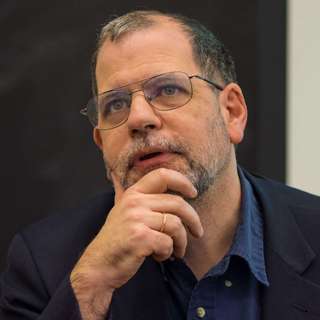
I've probably spent more time reading Tyler Cowen - Professor of Economics at George Mason University - than any other author. Indeed it's his incredibly popular blog Marginal Revolution that prompted me to study economics in the first place. Having spent thousands of hours absorbing Tyler's work, it was a pleasure to be able to question him about his latest book and personal manifesto: Stubborn Attachments: A Vision for a Society of Free, Prosperous, and Responsible Individuals.

Tyler makes the case that, despite what you may have heard, we *can* make rational judgments about what is best for society as a whole. He argues:

1. Our top moral priority should be preserving and improving humanity's long-term future
2. The way to do that is to maximise the rate of sustainable economic growth
3. We should respect human rights and follow general principles while doing so.

We discuss why Tyler believes all these things, and I push back where I disagree. In particular: is higher economic growth actually an effective way to safeguard humanity's future, or should our focus really be elsewhere?

In the process we touch on many of moral philosophy's most pressing questions: Should we discount the future? How should we aggregate welfare across people? Should we follow rules or evaluate every situation individually? How should we deal with the massive uncertainty about the effects of our actions? And should we trust common sense morality or follow structured theories?

Links to learn more, summary and full transcript.

After covering the book, the conversation ranges far and wide. Will we leave the galaxy, and is it a tragedy if we don't? Is a multi-polar world less stable? Will humanity ever help wild animals? Why do we both agree that Kant and Rawls are overrated?

Today's interview is released on both the 80,000 Hours Podcast and Tyler's own show: Conversation with Tyler.

Tyler may have had more influence on me than any other writer but this conversation is richer for our remaining disagreements. If the above isn't enough to tempt you to listen, we also look at:

* Why couldn’t future technology make human life a hundred or a thousand times better than it is for people today?
* Why focus on increasing the rate of economic growth rather than making sure that it doesn’t go to zero?
* Why shouldn’t we dedicate substantial time to the successful introduction of genetic engineering?
* Why should we completely abstain from alcohol and make it a social norm?
* Why is Tyler so pessimistic about space? Is it likely that humans will go extinct before we manage to escape the galaxy?
* Is improving coordination and international cooperation a major priority?
* Why does Tyler think institutions are keeping up with technology?
* Given that our actions seem to have very large and morally significant effects in the long run, are our moral obligations very onerous?
* Can art be intrinsically valuable?
* What does Tyler think Derek Parfit was most wrong about, and what was he was most right about that’s unappreciated today?

Get this episode by subscribing: type 80,000 Hours into your podcasting app.

The 80,000 Hours Podcast is produced by Keiran Harris.

Episoder(320)

Every AI Company's Safety Plan is 'Use AI to Make AI Safe'. Is That Crazy? | Ajeya Cotra

Every AI Company's Safety Plan is 'Use AI to Make AI Safe'. Is That Crazy? | Ajeya Cotra

Every major AI company has the same safety plan: when AI gets crazy powerful and really dangerous, they’ll use the AI itself to figure out how to make AI safe and beneficial. It sounds circular, almos...

17 Feb 2h 54min

What the hell happened with AGI timelines in 2025?

What the hell happened with AGI timelines in 2025?

In early 2025, after OpenAI put out the first-ever reasoning models — o1 and o3 — short timelines to transformative artificial general intelligence swept the AI world. But then, in the second half of ...

10 Feb 25min

#179 Classic episode – Randy Nesse on why evolution left us so vulnerable to depression and anxiety

#179 Classic episode – Randy Nesse on why evolution left us so vulnerable to depression and anxiety

Mental health problems like depression and anxiety affect enormous numbers of people and severely interfere with their lives. By contrast, we don’t see similar levels of physical ill health in young p...

3 Feb 2h 51min

#234 – David Duvenaud on why 'aligned AI' would still kill democracy

#234 – David Duvenaud on why 'aligned AI' would still kill democracy

Democracy might be a brief historical blip. That’s the unsettling thesis of a recent paper, which argues AI that can do all the work a human can do inevitably leads to the “gradual disempowerment” of ...

27 Jan 2h 31min

#145 Classic episode – Christopher Brown on why slavery abolition wasn't inevitable

#145 Classic episode – Christopher Brown on why slavery abolition wasn't inevitable

In many ways, humanity seems to have become more humane and inclusive over time. While there’s still a lot of progress to be made, campaigns to give people of different genders, races, sexualities, et...

20 Jan 2h 56min

#233 – James Smith on how to prevent a mirror life catastrophe

#233 – James Smith on how to prevent a mirror life catastrophe

When James Smith first heard about mirror bacteria, he was sceptical. But within two weeks, he’d dropped everything to work on it full time, considering it the worst biothreat that he’d seen described...

13 Jan 2h 9min

#144 Classic episode – Athena Aktipis on why cancer is a fundamental universal phenomena

#144 Classic episode – Athena Aktipis on why cancer is a fundamental universal phenomena

What’s the opposite of cancer? If you answered “cure,” “antidote,” or “antivenom” — you’ve obviously been reading the antonym section at www.merriam-webster.com/thesaurus/cancer.But today’s guest Athe...

9 Jan 3h 30min

#142 Classic episode – John McWhorter on why the optimal number of languages might be one, and other provocative claims about language

#142 Classic episode – John McWhorter on why the optimal number of languages might be one, and other provocative claims about language

John McWhorter is a linguistics professor at Columbia University specialising in research on creole languages. He's also a content-producing machine, never afraid to give his frank opinion on anything...

6 Jan 1h 35min

Populært innen Fakta

fastlegen
dine-penger-pengeradet
relasjonspodden-med-dora-thorhallsdottir-kjersti-idem
treningspodden
rss-strid-de-norske-borgerkrigene
foreldreradet
jakt-og-fiskepodden
rss-sunn-okonomi
merry-quizmas
gravid-uke-for-uke
fryktlos
sinnsyn
smart-forklart
rss-mann-i-krise-med-sagen
hverdagspsyken
rss-kunsten-a-leve
dopet
aldring-og-helse-podden
rss-adhd-i-klasserommet
generasjonspodden