#45 - Tyler Cowen's case for maximising econ growth, stabilising civilization & thinking long-term

#45 - Tyler Cowen's case for maximising econ growth, stabilising civilization & thinking long-term

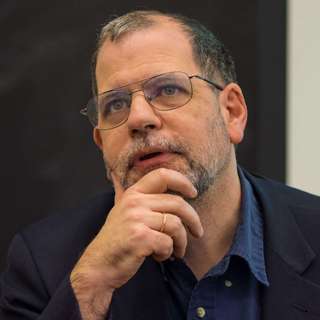
I've probably spent more time reading Tyler Cowen - Professor of Economics at George Mason University - than any other author. Indeed it's his incredibly popular blog Marginal Revolution that prompted me to study economics in the first place. Having spent thousands of hours absorbing Tyler's work, it was a pleasure to be able to question him about his latest book and personal manifesto: Stubborn Attachments: A Vision for a Society of Free, Prosperous, and Responsible Individuals.

Tyler makes the case that, despite what you may have heard, we *can* make rational judgments about what is best for society as a whole. He argues:

1. Our top moral priority should be preserving and improving humanity's long-term future
2. The way to do that is to maximise the rate of sustainable economic growth
3. We should respect human rights and follow general principles while doing so.

We discuss why Tyler believes all these things, and I push back where I disagree. In particular: is higher economic growth actually an effective way to safeguard humanity's future, or should our focus really be elsewhere?

In the process we touch on many of moral philosophy's most pressing questions: Should we discount the future? How should we aggregate welfare across people? Should we follow rules or evaluate every situation individually? How should we deal with the massive uncertainty about the effects of our actions? And should we trust common sense morality or follow structured theories?

Links to learn more, summary and full transcript.

After covering the book, the conversation ranges far and wide. Will we leave the galaxy, and is it a tragedy if we don't? Is a multi-polar world less stable? Will humanity ever help wild animals? Why do we both agree that Kant and Rawls are overrated?

Today's interview is released on both the 80,000 Hours Podcast and Tyler's own show: Conversation with Tyler.

Tyler may have had more influence on me than any other writer but this conversation is richer for our remaining disagreements. If the above isn't enough to tempt you to listen, we also look at:

* Why couldn’t future technology make human life a hundred or a thousand times better than it is for people today?
* Why focus on increasing the rate of economic growth rather than making sure that it doesn’t go to zero?
* Why shouldn’t we dedicate substantial time to the successful introduction of genetic engineering?
* Why should we completely abstain from alcohol and make it a social norm?
* Why is Tyler so pessimistic about space? Is it likely that humans will go extinct before we manage to escape the galaxy?
* Is improving coordination and international cooperation a major priority?
* Why does Tyler think institutions are keeping up with technology?
* Given that our actions seem to have very large and morally significant effects in the long run, are our moral obligations very onerous?
* Can art be intrinsically valuable?
* What does Tyler think Derek Parfit was most wrong about, and what was he was most right about that’s unappreciated today?

Get this episode by subscribing: type 80,000 Hours into your podcasting app.

The 80,000 Hours Podcast is produced by Keiran Harris.

Episoder(320)

OpenAI: The nonprofit refuses to be killed (with Tyler Whitmer)

OpenAI: The nonprofit refuses to be killed (with Tyler Whitmer)

Last December, the OpenAI business put forward a plan to completely sideline its nonprofit board. But two state attorneys general have now blocked that effort and kept that board very much alive and k...

11 Nov 20251h 56min

#227 – Helen Toner on the geopolitics of AGI in China and the Middle East

#227 – Helen Toner on the geopolitics of AGI in China and the Middle East

With the US racing to develop AGI and superintelligence ahead of China, you might expect the two countries to be negotiating how they’ll deploy AI, including in the military, without coming to blows. ...

5 Nov 20252h 20min

#226 – Holden Karnofsky on unexploited opportunities to make AI safer — and all his AGI takes

#226 – Holden Karnofsky on unexploited opportunities to make AI safer — and all his AGI takes

For years, working on AI safety usually meant theorising about the ‘alignment problem’ or trying to convince other people to give a damn. If you could find any way to help, the work was frustrating an...

30 Okt 20254h 30min

#225 – Daniel Kokotajlo on what a hyperspeed robot economy might look like

#225 – Daniel Kokotajlo on what a hyperspeed robot economy might look like

When Daniel Kokotajlo talks to security experts at major AI labs, they tell him something chilling: “Of course we’re probably penetrated by the CCP already, and if they really wanted something, they c...

27 Okt 20252h 12min

#224 – There's a cheap and low-tech way to save humanity from any engineered disease | Andrew Snyder-Beattie

#224 – There's a cheap and low-tech way to save humanity from any engineered disease | Andrew Snyder-Beattie

Conventional wisdom is that safeguarding humanity from the worst biological risks — microbes optimised to kill as many as possible — is difficult bordering on impossible, making bioweapons humanity’s ...

2 Okt 20252h 31min

Inside the Biden admin’s AI policy approach | Jake Sullivan, Biden’s NSA | via The Cognitive Revolution

Inside the Biden admin’s AI policy approach | Jake Sullivan, Biden’s NSA | via The Cognitive Revolution

Jake Sullivan was the US National Security Advisor from 2021-2025. He joined our friends on The Cognitive Revolution podcast in August to discuss AI as a critical national security issue. We thought i...

26 Sep 20251h 5min

#223 – Neel Nanda on leading a Google DeepMind team at 26 – and advice if you want to work at an AI company (part 2)

#223 – Neel Nanda on leading a Google DeepMind team at 26 – and advice if you want to work at an AI company (part 2)

At 26, Neel Nanda leads an AI safety team at Google DeepMind, has published dozens of influential papers, and mentored 50 junior researchers — seven of whom now work at major AI companies. His secret?...

15 Sep 20251h 46min

#222 – Can we tell if an AI is loyal by reading its mind? DeepMind's Neel Nanda (part 1)

#222 – Can we tell if an AI is loyal by reading its mind? DeepMind's Neel Nanda (part 1)

We don’t know how AIs think or why they do what they do. Or at least, we don’t know much. That fact is only becoming more troubling as AIs grow more capable and appear on track to wield enormous cultu...

8 Sep 20253h 1min

Populært innen Fakta

fastlegen
dine-penger-pengeradet
relasjonspodden-med-dora-thorhallsdottir-kjersti-idem
treningspodden
rss-strid-de-norske-borgerkrigene
foreldreradet
jakt-og-fiskepodden
rss-sunn-okonomi
merry-quizmas
gravid-uke-for-uke
fryktlos
sinnsyn
smart-forklart
rss-mann-i-krise-med-sagen
hverdagspsyken
rss-kunsten-a-leve
dopet
aldring-og-helse-podden
rss-adhd-i-klasserommet
generasjonspodden