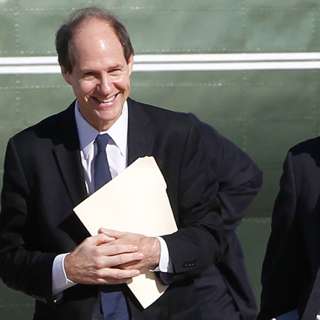
#59 – Cass Sunstein on how change happens, and why it's so often abrupt & unpredictable

#59 – Cass Sunstein on how change happens, and why it's so often abrupt & unpredictable

It can often feel hopeless to be an activist seeking social change on an obscure issue where most people seem opposed or at best indifferent to you. But according to a new book by Professor Cass Sunstein, they shouldn't despair. Large social changes are often abrupt and unexpected, arising in an environment of seeming public opposition.

The Communist Revolution in Russia spread so swiftly it confounded even Lenin. Seventy years later the Soviet Union collapsed just as quickly and unpredictably.

In the modern era we have gay marriage, #metoo and the Arab Spring, as well as nativism, Euroskepticism and Hindu nationalism.

How can a society that so recently seemed to support the status quo bring about change in years, months, or even weeks?

Sunstein — coauthor of Nudge, Obama White House official, and by far the most cited legal scholar of the late 2000s — aims to unravel the mystery and figure out the implications in his new book How Change Happens.

He pulls together three phenomena which social scientists have studied in recent decades: preference falsification, variable thresholds for action, and group polarisation. If Sunstein is to be believed, together these are a cocktail for social shifts that are chaotic and fundamentally unpredictable.

Links to learn more, summary and full transcript.
80,000 Hours Annual Review 2018.
How to donate to 80,000 Hours.

In brief, people constantly misrepresent their true views, even to close friends and family. They themselves aren't quite sure how socially acceptable their feelings would have to become, before they revealed them, or joined a campaign for social change. And a chance meeting between a few strangers can be the spark that radicalises a handful of people, who then find a message that can spread their views to millions.

According to Sunstein, it's "much, much easier" to create social change when large numbers of people secretly or latently agree with you. But 'preference falsification' is so pervasive that it's no simple matter to figure out when that's the case.

In today's interview, we debate with Sunstein whether this model of cultural change is accurate, and if so, what lessons it has for those who would like to shift the world in a more humane direction. We discuss:

• How much people misrepresent their views in democratic countries.
• Whether the finding that groups with an existing view tend towards a more extreme position would stand up in the replication crisis.
• When is it justified to encourage your own group to polarise?
• Sunstein's difficult experiences as a pioneer of animal rights law.
• Whether activists can do better by spending half their resources on public opinion surveys.
• Should people be more or less outspoken about their true views?
• What might be the next social revolution to take off?
• How can we learn about social movements that failed and disappeared?
• How to find out what people really think.

Chapters:
• Rob’s intro (00:00:00)
• Cass's Harvard lecture on How Change Happens (00:02:59)
• Rob & Cass's conversation about the book (00:41:43)

The 80,000 Hours Podcast is produced by Keiran Harris.

Episoder(324)

#44 Classic episode - Paul Christiano on finding real solutions to the AI alignment problem

#44 Classic episode - Paul Christiano on finding real solutions to the AI alignment problem

Rebroadcast: this episode was originally released in October 2018. Paul Christiano is one of the smartest people I know. After our first session produced such great material, we decided to do a seco...

15 Jan 20203h 51min
#33 Classic episode - Anders Sandberg on cryonics, solar flares, and the annual odds of nuclear war

#33 Classic episode - Anders Sandberg on cryonics, solar flares, and the annual odds of nuclear war

Rebroadcast: this episode was originally released in May 2018. Joseph Stalin had a life-extension program dedicated to making himself immortal. What if he had succeeded? According to Bryan Caplan ...

8 Jan 20201h 25min
#17 Classic episode - Will MacAskill on moral uncertainty, utilitarianism & how to avoid being a moral monster

#17 Classic episode - Will MacAskill on moral uncertainty, utilitarianism & how to avoid being a moral monster

Rebroadcast: this episode was originally released in January 2018. Immanuel Kant is a profoundly influential figure in modern philosophy, and was one of the earliest proponents for universal democracy...

31 Des 20191h 52min

#67 – David Chalmers on the nature and ethics of consciousness

#67 – David Chalmers on the nature and ethics of consciousness

What is it like to be you right now? You're seeing this text on the screen, smelling the coffee next to you, and feeling the warmth of the cup. There’s a lot going on in your head — your conscious exp...

16 Des 20194h 41min

#66 – Peter Singer on being provocative, effective altruism, & how his moral views have changed

#66 – Peter Singer on being provocative, effective altruism, & how his moral views have changed

In 1989, the professor of moral philosophy Peter Singer was all over the news for his inflammatory opinions about abortion. But the controversy stemmed from Practical Ethics — a book he’d actually rel...

5 Des 20192h 1min

#65 – Ambassador Bonnie Jenkins on 8 years pursuing WMD arms control, & diversity in diplomacy

#65 – Ambassador Bonnie Jenkins on 8 years pursuing WMD arms control, & diversity in diplomacy

"…it started when the Soviet Union fell apart and there was a real desire to ensure security of nuclear materials and pathogens, and that scientists with [WMD-related] knowledge could get paid so that...

19 Nov 20191h 40min
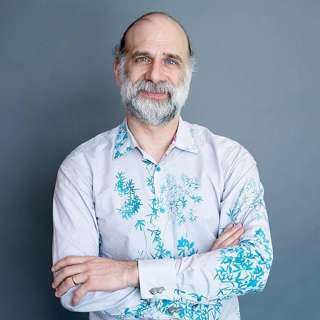
#64 – Bruce Schneier on how insecure electronic voting could break the United States — and surveillance without tyranny

#64 – Bruce Schneier on how insecure electronic voting could break the United States — and surveillance without tyranny

November 3 2020, 10:32PM: CNN, NBC, and FOX report that Donald Trump has narrowly won Florida, and with it, re-election.  November 3 2020, 11:46PM: The NY Times and Wall Street Journal report that so...

25 Okt 20192h 11min
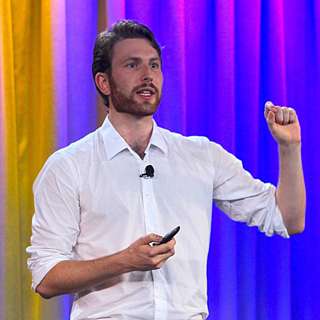
Rob Wiblin on plastic straws, nicotine, doping, & whether changing the long-term is really possible

Rob Wiblin on plastic straws, nicotine, doping, & whether changing the long-term is really possible

Today's episode is a compilation of interviews I recently recorded for two other shows, Love Your Work and The Neoliberal Podcast.  If you've listened to absolutely everything on this podcast feed, y...

25 Sep 20193h 14min

Populært innen Fakta

fastlegen
dine-penger-pengeradet
relasjonspodden-med-dora-thorhallsdottir-kjersti-idem
treningspodden
rss-strid-de-norske-borgerkrigene
foreldreradet
jakt-og-fiskepodden
hverdagspsyken
rss-sunn-okonomi
merry-quizmas
sinnsyn
gravid-uke-for-uke
tomprat-med-gunnar-tjomlid
rss-kunsten-a-leve
smart-forklart
fryktlos
rss-mann-i-krise-med-sagen
hagespiren-podcast
rss-impressions-2
dopet