#72 - Toby Ord on the precipice and humanity's potential futures

#72 - Toby Ord on the precipice and humanity's potential futures

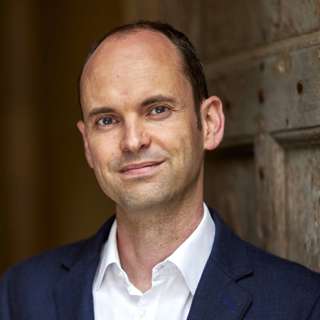
This week Oxford academic and 80,000 Hours trustee Dr Toby Ord released his new book The Precipice: Existential Risk and the Future of Humanity. It's about how our long-term future could be better than almost anyone believes, but also how humanity's recklessness is putting that future at grave risk — in Toby's reckoning, a 1 in 6 chance of being extinguished this century.

I loved the book and learned a great deal from it (buy it here, US and audiobook release March 24). While preparing for this interview I copied out 87 facts that were surprising, shocking or important. Here's a sample of 16:

1. The probability of a supervolcano causing a civilisation-threatening catastrophe in the next century is estimated to be 100x that of asteroids and comets combined.

2. The Biological Weapons Convention — a global agreement to protect humanity — has just four employees, and a smaller budget than an average McDonald’s.

3. In 2008 a 'gamma ray burst' reached Earth from another galaxy, 10 billion light years away. It was still bright enough to be visible to the naked eye. We aren't sure what generates gamma ray bursts but one cause may be two neutron stars colliding.

4. Before detonating the first nuclear weapon, scientists in the Manhattan Project feared that the high temperatures in the core, unprecedented for Earth, might be able to ignite the hydrogen in water. This would set off a self-sustaining reaction that would burn off the Earth’s oceans, killing all life above ground. They thought this was unlikely, but many atomic scientists feared their calculations could be missing something. As far as we know, the US President was never informed of this possibility, but similar risks were one reason Hitler stopped…

N.B. I've had to cut off this list as we only get 4,000 characters in these show notes, so:

Click here to read the whole list, see a full transcript, and find related links.

And if you like the list, you can get a free copy of the introduction and first chapter by joining our mailing list.

While I've been studying these topics for years and known Toby for the last eight, a remarkable amount of what's in The Precipice was new to me.

Of course the book isn't a series of isolated amusing facts, but rather a systematic review of the many ways humanity's future could go better or worse, how we might know about them, and what might be done to improve the odds.

And that's how we approach this conversation, first talking about each of the main threats, then how we can learn about things that have never happened before, then finishing with what a great future for humanity might look like and how it might be achieved.

Toby is a famously good explainer of complex issues — a bit of a modern Carl Sagan character — so as expected this was a great interview, and one which Arden Koehler and I barely even had to work for.

Some topics Arden and I ask about include:

• What Toby changed his mind about while writing the book
• Are people exaggerating when they say that climate change could actually end civilization?
• What can we learn from historical pandemics?
• Toby’s estimate of unaligned AI causing human extinction in the next century
• Is this century the most important time in human history, or is that a narcissistic delusion?
• Competing vision for humanity's ideal future
• And more.

Get this episode by subscribing: type '80,000 Hours' into your podcasting app. Or read the linked transcript.

Producer: Keiran Harris.
Audio mastering: Ben Cordell.
Transcriptions: Zakee Ulhaq.

Episoder(321)

#32 - Bryan Caplan on whether his Case Against Education holds up, totalitarianism, & open borders

#32 - Bryan Caplan on whether his Case Against Education holds up, totalitarianism, & open borders

Bryan Caplan’s claim in *The Case Against Education* is striking: education doesn’t teach people much, we use little of what we learn, and college is mostly about trying to seem smarter than other peo...

22 Mai 20182h 25min
#31 - Allan Dafoe on defusing the political & economic risks posed by existing AI capabilities

#31 - Allan Dafoe on defusing the political & economic risks posed by existing AI capabilities

The debate around the impacts of artificial intelligence often centres on ‘superintelligence’ - a general intellect that is much smarter than the best humans, in practically every field. But according...

18 Mai 201848min
#30 - Eva Vivalt on how little social science findings generalize from one study to another

#30 - Eva Vivalt on how little social science findings generalize from one study to another

If we have a study on the impact of a social program in a particular place and time, how confident can we be that we’ll get a similar result if we study the same program again somewhere else? Dr Eva V...

15 Mai 20182h 1min
#29 - Anders Sandberg on 3 new resolutions for the Fermi paradox & how to colonise the universe

#29 - Anders Sandberg on 3 new resolutions for the Fermi paradox & how to colonise the universe

Part 2 out now: #33 - Dr Anders Sandberg on what if we ended ageing, solar flares & the annual risk of nuclear war The universe is so vast, yet we don’t see any alien civilizations. If they exist, whe...

8 Mai 20181h 21min
#28 - Owen Cotton-Barratt on why scientists should need insurance, PhD strategy & fast AI progresses

#28 - Owen Cotton-Barratt on why scientists should need insurance, PhD strategy & fast AI progresses

A researcher is working on creating a new virus – one more dangerous than any that exist naturally. They believe they’re being as careful as possible. After all, if things go wrong, their own life and...

27 Apr 20181h 3min
#27 - Dr Tom Inglesby on careers and policies that reduce global catastrophic biological risks

#27 - Dr Tom Inglesby on careers and policies that reduce global catastrophic biological risks

How about this for a movie idea: a main character has to prevent a new contagious strain of Ebola spreading around the world. She’s the best of the best. So good in fact, that her work on early detect...

18 Apr 20182h 16min
#26 - Marie Gibbons on how exactly clean meat is made & what's needed to get it in every supermarket

#26 - Marie Gibbons on how exactly clean meat is made & what's needed to get it in every supermarket

First, decide on the type of animal. Next, pick the cell type. Then take a small, painless biopsy, and put the cells in a solution that makes them feel like they’re still in the body. Once the cells a...

10 Apr 20181h 44min
#25 - Robin Hanson on why we have to lie to ourselves about why we do what we do

#25 - Robin Hanson on why we have to lie to ourselves about why we do what we do

On February 2, 1685, England’s King Charles II was struck by a sudden illness. Fortunately his physicians were the best of the best. To reassure the public they kept them abreast of the King’s treatme...

28 Mar 20182h 39min

Populært innen Fakta

fastlegen
dine-penger-pengeradet
relasjonspodden-med-dora-thorhallsdottir-kjersti-idem
treningspodden
rss-strid-de-norske-borgerkrigene
foreldreradet
jakt-og-fiskepodden
rss-sunn-okonomi
merry-quizmas
hverdagspsyken
gravid-uke-for-uke
sinnsyn
rss-mann-i-krise-med-sagen
rss-impressions-2
rss-kunsten-a-leve
hagespiren-podcast
fryktlos
babyverden
level-up-med-anniken-binz
nevropodden