#77 – Marc Lipsitch on whether we're winning or losing against COVID-19

#77 – Marc Lipsitch on whether we're winning or losing against COVID-19

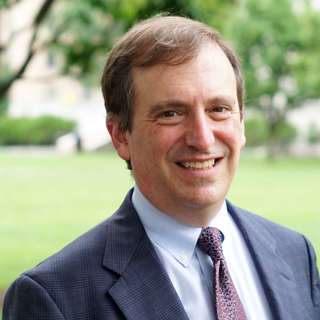
In March Professor Marc Lipsitch — Director of Harvard's Center for Communicable Disease Dynamics — abruptly found himself a global celebrity, his social media following growing 40-fold and journalists knocking down his door, as everyone turned to him for information they could trust.

Here he lays out where the fight against COVID-19 stands today, why he's open to deliberately giving people COVID-19 to speed up vaccine development, and how we could do better next time.

As Marc tells us, island nations like Taiwan and New Zealand are successfully suppressing SARS-COV-2. But everyone else is struggling.

Links to learn more, summary and full transcript.

Even Singapore, with plenty of warning and one of the best test and trace systems in the world, lost control of the virus in mid-April after successfully holding back the tide for 2 months.

This doesn't bode well for how the US or Europe will cope as they ease their lockdowns. It also suggests it would have been exceedingly hard for China to stop the virus before it spread overseas.

But sadly, there's no easy way out.

The original estimates of COVID-19's infection fatality rate, of 0.5-1%, have turned out to be basically right. And the latest serology surveys indicate only 5-10% of people in countries like the US, UK and Spain have been infected so far, leaving us far short of herd immunity. To get there, even these worst affected countries would need to endure something like ten times the number of deaths they have so far.

Marc has one good piece of news: research suggests that most of those who get infected do indeed develop immunity, for a while at least.

To escape the COVID-19 trap sooner rather than later, Marc recommends we go hard on all the familiar options — vaccines, antivirals, and mass testing — but also open our minds to creative options we've so far left on the shelf.

Despite the importance of his work, even now the training and grant programs that produced the community of experts Marc is a part of, are shrinking. We look at a new article he's written about how to instead build and improve the field of epidemiology, so humanity can respond faster and smarter next time we face a disease that could kill millions and cost tens of trillions of dollars.

We also cover:

• How listeners might contribute as future contagious disease experts, or donors to current projects
• How we can learn from cross-country comparisons
• Modelling that has gone wrong in an instructive way
• What governments should stop doing
• How people can figure out who to trust, and who has been most on the mark this time
• Why Marc supports infecting people with COVID-19 to speed up the development of a vaccines
• How we can ensure there's population-level surveillance early during the next pandemic
• Whether people from other fields trying to help with COVID-19 has done more good than harm
• Whether it's experts in diseases, or experts in forecasting, who produce better disease forecasts

Chapters:

  • Rob’s intro (00:00:00)
  • The interview begins (00:01:45)
  • Things Rob wishes he knew about COVID-19 (00:05:23)
  • Cross-country comparisons (00:10:53)
  • Any government activities we should stop? (00:21:24)
  • Lessons from COVID-19 (00:33:31)
  • Global catastrophic biological risks (00:37:58)
  • Human challenge trials (00:43:12)
  • Disease surveillance (00:50:07)
  • Who should we trust? (00:58:12)
  • Epidemiology as a field (01:13:05)
  • Careers (01:31:28)


Producer: Keiran Harris.
Audio mastering: Ben Cordell.
Transcriptions: Zakee Ulhaq.

Episoder(321)

#205 – Sébastien Moro on the most insane things fish can do

#205 – Sébastien Moro on the most insane things fish can do

"You have a tank split in two parts: if the fish gets in the compartment with a red circle, it will receive food, and food will be delivered in the other tank as well. If the fish takes the blue trian...

23 Okt 20243h 11min
#204 – Nate Silver on making sense of SBF, and his biggest critiques of effective altruism

#204 – Nate Silver on making sense of SBF, and his biggest critiques of effective altruism

Rob Wiblin speaks with FiveThirtyEight election forecaster and author Nate Silver about his new book: On the Edge: The Art of Risking Everything.Links to learn more, highlights, video, and full transc...

16 Okt 20241h 57min
#203 – Peter Godfrey-Smith on interfering with wild nature, accepting death, and the origin of complex civilisation

#203 – Peter Godfrey-Smith on interfering with wild nature, accepting death, and the origin of complex civilisation

"In the human case, it would be mistaken to give a kind of hour-by-hour accounting. You know, 'I had +4 level of experience for this hour, then I had -2 for the next hour, and then I had -1' — and you...

3 Okt 20241h 25min

Luisa and Keiran on free will, and the consequences of never feeling enduring guilt or shame

Luisa and Keiran on free will, and the consequences of never feeling enduring guilt or shame

In this episode from our second show, 80k After Hours, Luisa Rodriguez and Keiran Harris chat about the consequences of letting go of enduring guilt, shame, anger, and pride.Links to learn more, highl...

27 Sep 20241h 36min
#202 – Venki Ramakrishnan on the cutting edge of anti-ageing science

#202 – Venki Ramakrishnan on the cutting edge of anti-ageing science

"For every far-out idea that turns out to be true, there were probably hundreds that were simply crackpot ideas. In general, [science] advances building on the knowledge we have, and seeing what the n...

19 Sep 20242h 20min

#201 – Ken Goldberg on why your robot butler isn’t here yet

#201 – Ken Goldberg on why your robot butler isn’t here yet

"Perception is quite difficult with cameras: even if you have a stereo camera, you still can’t really build a map of where everything is in space. It’s just very difficult. And I know that sounds surp...

13 Sep 20242h 1min
#200 – Ezra Karger on what superforecasters and experts think about existential risks

#200 – Ezra Karger on what superforecasters and experts think about existential risks

"It’s very hard to find examples where people say, 'I’m starting from this point. I’m starting from this belief.' So we wanted to make that very legible to people. We wanted to say, 'Experts think thi...

4 Sep 20242h 49min
#199 – Nathan Calvin on California’s AI bill SB 1047 and its potential to shape US AI policy

#199 – Nathan Calvin on California’s AI bill SB 1047 and its potential to shape US AI policy

"I do think that there is a really significant sentiment among parts of the opposition that it’s not really just that this bill itself is that bad or extreme — when you really drill into it, it feels ...

29 Aug 20241h 12min

Populært innen Fakta

fastlegen
dine-penger-pengeradet
relasjonspodden-med-dora-thorhallsdottir-kjersti-idem
treningspodden
rss-strid-de-norske-borgerkrigene
foreldreradet
jakt-og-fiskepodden
rss-sunn-okonomi
merry-quizmas
hverdagspsyken
gravid-uke-for-uke
sinnsyn
rss-mann-i-krise-med-sagen
rss-impressions-2
rss-kunsten-a-leve
hagespiren-podcast
fryktlos
babyverden
level-up-med-anniken-binz
nevropodden