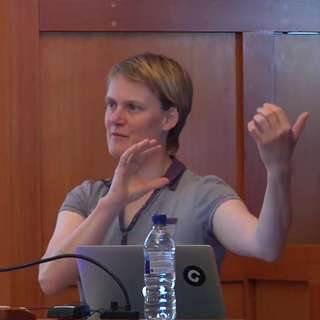
#86 – Hilary Greaves on Pascal's mugging, strong longtermism, and whether existing can be good for us

#86 – Hilary Greaves on Pascal's mugging, strong longtermism, and whether existing can be good for us

Had World War 1 never happened, you might never have existed.

It’s very unlikely that the exact chain of events that led to your conception would have happened otherwise — so perhaps you wouldn't have been born.

Would that mean that it's better for you that World War 1 happened (regardless of whether it was better for the world overall)?

On the one hand, if you're living a pretty good life, you might think the answer is yes – you get to live rather than not.

On the other hand, it sounds strange to say that it's better for you to be alive, because if you'd never existed there'd be no you to be worse off. But if you wouldn't be worse off if you hadn't existed, can you be better off because you do?

In this episode, philosophy professor Hilary Greaves – Director of Oxford University’s Global Priorities Institute – helps untangle this puzzle for us and walks me and Rob through the space of possible answers. She argues that philosophers have been too quick to conclude what she calls existence non-comparativism – i.e, that it can't be better for someone to exist vs. not.

Links to learn more, summary and full transcript.

Where we come down on this issue matters. If people are not made better off by existing and having good lives, you might conclude that bringing more people into existence isn't better for them, and thus, perhaps, that it's not better at all.

This would imply that bringing about a world in which more people live happy lives might not actually be a good thing (if the people wouldn't otherwise have existed) — which would affect how we try to make the world a better place.

Those wanting to have children in order to give them the pleasure of a good life would in some sense be mistaken. And if humanity stopped bothering to have kids and just gradually died out we would have no particular reason to be concerned.

Furthermore it might mean we should deprioritise issues that primarily affect future generations, like climate change or the risk of humanity accidentally wiping itself out.

This is our second episode with Professor Greaves. The first one was a big hit, so we thought we'd come back and dive into even more complex ethical issues.

We discuss:

• The case for different types of ‘strong longtermism’ — the idea that we ought morally to try to make the very long run future go as well as possible
• What it means for us to be 'clueless' about the consequences of our actions
• Moral uncertainty -- what we should do when we don't know which moral theory is correct
• Whether we should take a bet on a really small probability of a really great outcome
• The field of global priorities research at the Global Priorities Institute and beyond

Chapters:

  • The interview begins (00:02:53)
  • The Case for Strong Longtermism (00:05:49)
  • Compatible moral views (00:20:03)
  • Defining cluelessness (00:39:26)
  • Why cluelessness isn’t an objection to longtermism (00:51:05)
  • Theories of what to do under moral uncertainty (01:07:42)
  • Pascal’s mugging (01:16:37)
  • Comparing Existence and Non-Existence (01:30:58)
  • Philosophers who reject existence comparativism (01:48:56)
  • Lives framework (02:01:52)
  • Global priorities research (02:09:25)


Get this episode by subscribing: type 80,000 Hours into your podcasting app. Or read the linked transcript.

Producer: Keiran Harris.
Audio mastering: Ben Cordell.
Transcriptions: Zakee Ulhaq.

Episoder(325)

#67 Classic episode – David Chalmers on the nature and ethics of consciousness

#67 Classic episode – David Chalmers on the nature and ethics of consciousness

Rebroadcast: this episode was originally released in December 2019. What is it like to be you right now? You're seeing this text on the screen, smelling the coffee next to you, and feeling the warmth...

3 Jan 20224h 42min
#59 Classic episode - Cass Sunstein on how change happens, and why it's so often abrupt & unpredictable

#59 Classic episode - Cass Sunstein on how change happens, and why it's so often abrupt & unpredictable

Rebroadcast: this episode was originally released in June 2019. It can often feel hopeless to be an activist seeking social change on an obscure issue where most people seem opposed or at best indiff...

27 Des 20211h 43min

#119 – Andrew Yang on our very long-term future, and other topics most politicians won’t touch

#119 – Andrew Yang on our very long-term future, and other topics most politicians won’t touch

Andrew Yang — past presidential candidate, founder of the Forward Party, and leader of the 'Yang Gang' — is kind of a big deal, but is particularly popular among listeners to The 80,000 Hours Podcast....

20 Des 20211h 25min
#118 – Jaime Yassif on safeguarding bioscience to prevent catastrophic lab accidents and bioweapons development

#118 – Jaime Yassif on safeguarding bioscience to prevent catastrophic lab accidents and bioweapons development

If a rich country were really committed to pursuing an active biological weapons program, there’s not much we could do to stop them. With enough money and persistence, they’d be able to buy equipment,...

13 Des 20212h 15min
#117 – David Denkenberger on using paper mills and seaweed to feed everyone in a catastrophe, ft Sahil Shah

#117 – David Denkenberger on using paper mills and seaweed to feed everyone in a catastrophe, ft Sahil Shah

If there's a nuclear war followed by nuclear winter, and the sun is blocked out for years, most of us are going to starve, right? Well, currently, probably we would, because humanity hasn't done much ...

29 Nov 20213h 8min

#116 – Luisa Rodriguez on why global catastrophes seem unlikely to kill us all

#116 – Luisa Rodriguez on why global catastrophes seem unlikely to kill us all

If modern human civilisation collapsed — as a result of nuclear war, severe climate change, or a much worse pandemic than COVID-19 — billions of people might die.That's terrible enough to contemplate....

19 Nov 20213h 45min
#115 – David Wallace on the many-worlds theory of quantum mechanics and its implications

#115 – David Wallace on the many-worlds theory of quantum mechanics and its implications

Quantum mechanics — our best theory of atoms, molecules, and the subatomic particles that make them up — underpins most of modern physics. But there are varying interpretations of what it means, all o...

12 Nov 20213h 9min

#114 – Maha Rehman on working with governments to rapidly deliver masks to millions of people

#114 – Maha Rehman on working with governments to rapidly deliver masks to millions of people

It’s hard to believe, but until recently there had never been a large field trial that addressed these simple and obvious questions:1. When ordinary people wear face masks, does it actually reduce the...

22 Okt 20211h 42min

Populært innen Fakta

fastlegen
dine-penger-pengeradet
relasjonspodden-med-dora-thorhallsdottir-kjersti-idem
treningspodden
rss-strid-de-norske-borgerkrigene
foreldreradet
jakt-og-fiskepodden
rss-sunn-okonomi
takk-og-lov-med-anine-kierulf
sinnsyn
merry-quizmas
rss-kunsten-a-leve
lederskap-nhhs-podkast-om-ledelse
gravid-uke-for-uke
smart-forklart
hagespiren-podcast
hverdagspsyken
fryktlos
level-up-med-anniken-binz
rss-mann-i-krise-med-sagen