#101 – Robert Wright on using cognitive empathy to save the world

#101 – Robert Wright on using cognitive empathy to save the world

In 2003, Saddam Hussein refused to let Iraqi weapons scientists leave the country to be interrogated. Given the overwhelming domestic support for an invasion at the time, most key figures in the U.S. took that as confirmation that he had something to hide — probably an active WMD program.

But what about alternative explanations? Maybe those scientists knew about past crimes. Or maybe they’d defect. Or maybe giving in to that kind of demand would have humiliated Hussein in the eyes of enemies like Iran and Saudi Arabia.

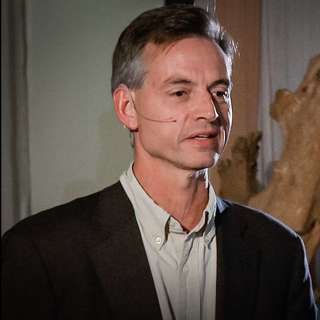
According to today’s guest Robert Wright, host of the popular podcast The Wright Show, these are the kinds of things that might have come up if people were willing to look at things from Saddam Hussein’s perspective.

Links to learn more, summary and full transcript.

He calls this ‘cognitive empathy’. It's not feeling-your-pain-type empathy — it's just trying to understand how another person thinks.

He says if you pitched this kind of thing back in 2003 you’d be shouted down as a 'Saddam apologist' — and he thinks the same is true today when it comes to regimes in China, Russia, Iran, and North Korea.

The two Roberts in today’s episode — Bob Wright and Rob Wiblin — agree that removing this taboo against perspective taking, even with people you consider truly evil, could potentially significantly improve discourse around international relations.

They feel that if we could spread the meme that if you’re able to understand what dictators are thinking and calculating, based on their country’s history and interests, it seems like we’d be less likely to make terrible foreign policy errors.

But how do you actually do that?

Bob’s new ‘Apocalypse Aversion Project’ is focused on creating the necessary conditions for solving non-zero-sum global coordination problems, something most people are already on board with.

And in particular he thinks that might come from enough individuals “transcending the psychology of tribalism”. He doesn’t just mean rage and hatred and violence, he’s also talking about cognitive biases.

Bob makes the striking claim that if enough people in the U.S. had been able to combine perspective taking with mindfulness — the ability to notice and identify thoughts as they arise — then the U.S. might have even been able to avoid the invasion of Iraq.

Rob pushes back on how realistic this approach really is, asking questions like:

• Haven’t people been trying to do this since the beginning of time?
• Is there a great novel angle that will change how a lot of people think and behave?
• Wouldn’t it be better to focus on a much narrower task, like getting more mindfulness and meditation and reflectiveness among the U.S. foreign policy elite?

But despite the differences in approaches, Bob has a lot of common ground with 80,000 Hours — and the result is a fun back-and-forth about the best ways to achieve shared goals.

Bob starts by questioning Rob about effective altruism, and they go on to cover a bunch of other topics, such as:

• Specific risks like climate change and new technologies
• How to achieve social cohesion
• The pros and cons of society-wide surveillance
• How Rob got into effective altruism

If you're interested to hear more of Bob's interviews you can subscribe to The Wright Show anywhere you're getting this one. You can also watch videos of this and all his other episodes on Bloggingheads.tv.

Producer: Keiran Harris.
Audio mastering: Ben Cordell.
Transcriptions: Sofia Davis-Fogel.

Episoder(317)

Why 'Aligned AI' Would Still Kill Democracy | David Duvenaud, ex-Anthropic team lead

Why 'Aligned AI' Would Still Kill Democracy | David Duvenaud, ex-Anthropic team lead

Democracy might be a brief historical blip. That’s the unsettling thesis of a recent paper, which argues AI that can do all the work a human can do inevitably leads to the “gradual disempowerment” of ...

27 Jan 2h 31min

#145 Classic episode – Christopher Brown on why slavery abolition wasn't inevitable

#145 Classic episode – Christopher Brown on why slavery abolition wasn't inevitable

In many ways, humanity seems to have become more humane and inclusive over time. While there’s still a lot of progress to be made, campaigns to give people of different genders, races, sexualities, et...

20 Jan 2h 56min

#233 – James Smith on how to prevent a mirror life catastrophe

#233 – James Smith on how to prevent a mirror life catastrophe

When James Smith first heard about mirror bacteria, he was sceptical. But within two weeks, he’d dropped everything to work on it full time, considering it the worst biothreat that he’d seen described...

13 Jan 2h 9min

#144 Classic episode – Athena Aktipis on why cancer is a fundamental universal phenomena

#144 Classic episode – Athena Aktipis on why cancer is a fundamental universal phenomena

What’s the opposite of cancer? If you answered “cure,” “antidote,” or “antivenom” — you’ve obviously been reading the antonym section at www.merriam-webster.com/thesaurus/cancer.But today’s guest Athe...

9 Jan 3h 30min

#142 Classic episode – John McWhorter on why the optimal number of languages might be one, and other provocative claims about language

#142 Classic episode – John McWhorter on why the optimal number of languages might be one, and other provocative claims about language

John McWhorter is a linguistics professor at Columbia University specialising in research on creole languages. He's also a content-producing machine, never afraid to give his frank opinion on anything...

6 Jan 1h 35min

2025 Highlight-o-thon: Oops! All Bests

2025 Highlight-o-thon: Oops! All Bests

It’s that magical time of year once again — highlightapalooza! Stick around for one top bit from each episode we recorded this year, including:Kyle Fish explaining how Anthropic’s AI Claude descends i...

29 Des 20251h 40min

#232 – Andreas Mogensen on what we owe 'philosophical Vulcans' and unconscious beings

#232 – Andreas Mogensen on what we owe 'philosophical Vulcans' and unconscious beings

Most debates about the moral status of AI systems circle the same question: is there something that it feels like to be them? But what if that’s the wrong question to ask? Andreas Mogensen — a senior ...

19 Des 20252h 37min

#231 – Paul Scharre on how AI-controlled robots will and won't change war

#231 – Paul Scharre on how AI-controlled robots will and won't change war

In 1983, Stanislav Petrov, a Soviet lieutenant colonel, sat in a bunker watching a red screen flash “MISSILE LAUNCH.” Protocol demanded he report it to superiors, which would very likely trigger a ret...

17 Des 20252h 45min

Populært innen Fakta

fastlegen
dine-penger-pengeradet
relasjonspodden-med-dora-thorhallsdottir-kjersti-idem
treningspodden
foreldreradet
dopet
merry-quizmas
jakt-og-fiskepodden
rss-strid-de-norske-borgerkrigene
sinnsyn
sovnlos
podme-bio-3
hverdagspsyken
rss-kull
gravid-uke-for-uke
tomprat-med-gunnar-tjomlid
rss-kunsten-a-leve
fryktlos
level-up-med-anniken-binz
rss-var-forste-kaffe