#105 – Alexander Berger on improving global health and wellbeing in clear and direct ways

#105 – Alexander Berger on improving global health and wellbeing in clear and direct ways

The effective altruist research community tries to identify the highest impact things people can do to improve the world. Unsurprisingly, given the difficulty of such a massive and open-ended project, very different schools of thought have arisen about how to do the most good.

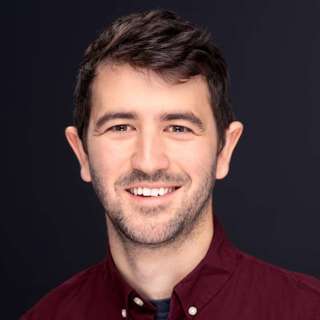
Today's guest, Alexander Berger, leads Open Philanthropy's 'Global Health and Wellbeing' programme, where he oversees around $175 million in grants each year, and ultimately aspires to disburse billions in the most impactful ways he and his team can identify.

This programme is the flagship effort representing one major effective altruist approach: try to improve the health and wellbeing of humans and animals that are alive today, in clearly identifiable ways, applying an especially analytical and empirical mindset.

Links to learn more, summary, Open Phil jobs, and full transcript.

The programme makes grants to tackle easily-prevented illnesses among the world's poorest people, offer cash to people living in extreme poverty, prevent cruelty to billions of farm animals, advance biomedical science, and improve criminal justice and immigration policy in the United States.

Open Philanthropy's researchers rely on empirical information to guide their decisions where it's available, and where it's not, they aim to maximise expected benefits to recipients through careful analysis of the gains different projects would offer and their relative likelihoods of success.

This 'global health and wellbeing' approach — sometimes referred to as 'neartermism' — contrasts with another big school of thought in effective altruism, known as 'longtermism', which aims to direct the long-term future of humanity and its descendants in a positive direction. Longtermism bets that while it's harder to figure out how to benefit future generations than people alive today, the total number of people who might live in the future is far greater than the number alive today, and this gain in scale more than offsets that lower tractability.

The debate between these two very different theories of how to best improve the world has been one of the most significant within effective altruist research since its inception. Alexander first joined the influential charity evaluator GiveWell in 2011, and since then has conducted research alongside top thinkers on global health and wellbeing and longtermism alike, ultimately deciding to dedicate his efforts to improving the world today in identifiable ways.

In this conversation Alexander advocates for that choice, explaining the case in favour of adopting the 'global health and wellbeing' mindset, while going through the arguments for the longtermist approach that he finds most and least convincing.

Rob and Alexander also tackle:

• Why it should be legal to sell your kidney, and why Alexander donated his to a total stranger
• Why it's shockingly hard to find ways to give away large amounts of money that are more cost effective than distributing anti-malaria bed nets
• How much you gain from working with tight feedback loops
• Open Philanthropy's biggest wins
• Why Open Philanthropy engages in 'worldview diversification' by having both a global health and wellbeing programme and a longtermist programme as well
• Whether funding science and political advocacy is a good way to have more social impact
• Whether our effects on future generations are predictable or unforeseeable
• What problems the global health and wellbeing team works to solve and why
• Opportunities to work at Open Philanthropy

Get this episode by subscribing to our podcast on the world’s most pressing problems and how to solve them: type 80,000 Hours into your podcasting app.

Producer: Keiran Harris
Audio mastering: Ben Cordell
Transcriptions: Sofia Davis-Fogel

Episoder(317)

Why 'Aligned AI' Would Still Kill Democracy | David Duvenaud, ex-Anthropic team lead

Why 'Aligned AI' Would Still Kill Democracy | David Duvenaud, ex-Anthropic team lead

Democracy might be a brief historical blip. That’s the unsettling thesis of a recent paper, which argues AI that can do all the work a human can do inevitably leads to the “gradual disempowerment” of ...

27 Jan 2h 31min

#145 Classic episode – Christopher Brown on why slavery abolition wasn't inevitable

#145 Classic episode – Christopher Brown on why slavery abolition wasn't inevitable

In many ways, humanity seems to have become more humane and inclusive over time. While there’s still a lot of progress to be made, campaigns to give people of different genders, races, sexualities, et...

20 Jan 2h 56min

#233 – James Smith on how to prevent a mirror life catastrophe

#233 – James Smith on how to prevent a mirror life catastrophe

When James Smith first heard about mirror bacteria, he was sceptical. But within two weeks, he’d dropped everything to work on it full time, considering it the worst biothreat that he’d seen described...

13 Jan 2h 9min

#144 Classic episode – Athena Aktipis on why cancer is a fundamental universal phenomena

#144 Classic episode – Athena Aktipis on why cancer is a fundamental universal phenomena

What’s the opposite of cancer? If you answered “cure,” “antidote,” or “antivenom” — you’ve obviously been reading the antonym section at www.merriam-webster.com/thesaurus/cancer.But today’s guest Athe...

9 Jan 3h 30min

#142 Classic episode – John McWhorter on why the optimal number of languages might be one, and other provocative claims about language

#142 Classic episode – John McWhorter on why the optimal number of languages might be one, and other provocative claims about language

John McWhorter is a linguistics professor at Columbia University specialising in research on creole languages. He's also a content-producing machine, never afraid to give his frank opinion on anything...

6 Jan 1h 35min

2025 Highlight-o-thon: Oops! All Bests

2025 Highlight-o-thon: Oops! All Bests

It’s that magical time of year once again — highlightapalooza! Stick around for one top bit from each episode we recorded this year, including:Kyle Fish explaining how Anthropic’s AI Claude descends i...

29 Des 20251h 40min

#232 – Andreas Mogensen on what we owe 'philosophical Vulcans' and unconscious beings

#232 – Andreas Mogensen on what we owe 'philosophical Vulcans' and unconscious beings

Most debates about the moral status of AI systems circle the same question: is there something that it feels like to be them? But what if that’s the wrong question to ask? Andreas Mogensen — a senior ...

19 Des 20252h 37min

#231 – Paul Scharre on how AI-controlled robots will and won't change war

#231 – Paul Scharre on how AI-controlled robots will and won't change war

In 1983, Stanislav Petrov, a Soviet lieutenant colonel, sat in a bunker watching a red screen flash “MISSILE LAUNCH.” Protocol demanded he report it to superiors, which would very likely trigger a ret...

17 Des 20252h 45min

Populært innen Fakta

fastlegen
dine-penger-pengeradet
relasjonspodden-med-dora-thorhallsdottir-kjersti-idem
treningspodden
foreldreradet
dopet
merry-quizmas
jakt-og-fiskepodden
rss-strid-de-norske-borgerkrigene
sinnsyn
sovnlos
podme-bio-3
hverdagspsyken
rss-kull
gravid-uke-for-uke
tomprat-med-gunnar-tjomlid
rss-kunsten-a-leve
fryktlos
level-up-med-anniken-binz
rss-var-forste-kaffe