#123 – Samuel Charap on why Putin invaded Ukraine, the risk of escalation, and how to prevent disaster

#123 – Samuel Charap on why Putin invaded Ukraine, the risk of escalation, and how to prevent disaster

Russia's invasion of Ukraine is devastating the lives of Ukrainians, and so long as it continues there's a risk that the conflict could escalate to include other countries or the use of nuclear weapons. It's essential that NATO, the US, and the EU play their cards right to ideally end the violence, maintain Ukrainian sovereignty, and discourage any similar invasions in the future.

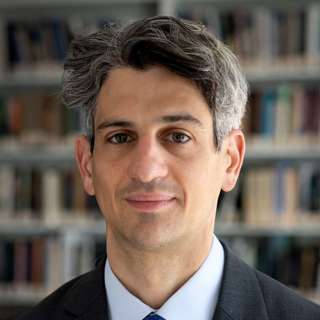
But how? To pull together the most valuable information on how to react to this crisis, we spoke with Samuel Charap — a senior political scientist at the RAND Corporation, one of the US's foremost experts on Russia's relationship with former Soviet states, and co-author of Everyone Loses: The Ukraine Crisis and the Ruinous Contest for Post-Soviet Eurasia.

Links to learn more, summary and full transcript.

Samuel believes that Putin views the alignment of Ukraine with NATO as an existential threat to Russia — a perhaps unreasonable view, but a sincere one nevertheless. Ukraine has been drifting further into Western Europe's orbit and improving its defensive military capabilities, so Putin has concluded that if Russia wants to put a stop to that, there will never be a better time to act in the future.

Despite early successes holding off the Russian military, Samuel is sceptical that time is on the Ukrainian side. If the war is to end before much of Ukraine is reduced to rubble, it will likely have to be through negotiation, rather than Russian defeat.

The US policy response has so far been largely good, successfully balancing the need to punish Russia to dissuade large nations from bullying small ones in the future, while preventing NATO from being drawn into the war directly — which would pose a horrifying risk of escalation to a full nuclear exchange. The pressure from the general public to 'do something' might eventually cause national leaders to confront Russia more directly, but so far they are sensibly showing no interest in doing so.

However, use of nuclear weapons remains a low but worrying possibility.

Samuel is also worried that Russia may deploy chemical and biological weapons and blame it on the Ukrainians.

Before war broke out, it's possible Russia could have been satisfied if Ukraine followed through on the Minsk agreements and committed not to join the EU and NATO. Or it might not have, if Putin was committed to war, come what may. In any case, most Ukrainians found those terms intolerable.

At this point, the situation is even worse, and it's hard to see how an enduring ceasefire could be agreed upon. On top of the above, Russia is also demanding recognition that Crimea is part of Russia, and acceptance of the independence of the so-called Donetsk and Luhansk People's Republics. These conditions — especially the second — are entirely unacceptable to the Ukrainians. Hence the war continues, and could grind on for months or even years until one side is sufficiently beaten down to compromise on their core demands.

Rob and Samuel discuss all of the above and also:

• The chances that this conflict leads to a nuclear exchange
• The chances of regime change in Russia
• Whether the West should deliver MiG fighter jets to Ukraine
• What are the implications if Sweden and/or Finland decide to join NATO?
• What should NATO do now, and did it make any mistakes in the past?
• What's the most likely situation for us to be looking at in three months' time?
• Can Ukraine effectively win the war?

Chapters:

  • Rob’s intro (00:00:00)
  • The interview begins (00:01:40)
  • Putin's true motive (00:02:29)
  • What the West could have done differently (00:07:44)
  • Chances of Ukraine holding out (00:11:40)
  • Chances of regime change in Russia (00:14:59)
  • The good and the bad from the West so far (00:17:55)
  • Should the West deliver MiG fighter jets to Ukraine? (00:19:57)
  • "No-fly zones" (00:21:32)
  • Chances that this conflict leads to a nuclear exchange (00:26:06)
  • What listeners should do (00:36:01)
  • Chances of biological or chemical weapons use (00:37:59)
  • Best realistic outcome from here (00:39:29)
  • Keeping the broader conversation sane (00:49:29)
  • Why not promise to remove sanctions? (00:51:05)
  • Pros and cons of Sweden and FInland joining NATO (00:52:53)
  • The most likely situation in 3 months (00:53:58)

Producer: Keiran Harris
Audio mastering: Ben Cordell
Transcriptions: Katy Moore

Episoder(320)

#75 – Michelle Hutchinson on what people most often ask 80,000 Hours

#75 – Michelle Hutchinson on what people most often ask 80,000 Hours

Since it was founded, 80,000 Hours has done one-on-one calls to supplement our online content and offer more personalised advice. We try to help people get clear on their most plausible paths, the key...

28 Apr 20202h 13min
#74 – Dr Greg Lewis on COVID-19 & catastrophic biological risks

#74 – Dr Greg Lewis on COVID-19 & catastrophic biological risks

Our lives currently revolve around the global emergency of COVID-19; you’re probably reading this while confined to your house, as the death toll from the worst pandemic since 1918 continues to rise. ...

17 Apr 20202h 37min
Article: Reducing global catastrophic biological risks

Article: Reducing global catastrophic biological risks

In a few days we'll be putting out a conversation with Dr Greg Lewis, who studies how to prevent global catastrophic biological risks at Oxford's Future of Humanity Institute. Greg also wrote a new ...

15 Apr 20201h 4min
Emergency episode: Rob & Howie on the menace of COVID-19, and what both governments & individuals might do to help

Emergency episode: Rob & Howie on the menace of COVID-19, and what both governments & individuals might do to help

From home isolation Rob and Howie just recorded an episode on: 1. How many could die in the crisis, and the risk to your health personally. 2. What individuals might be able to do help tackle the coro...

19 Mar 20201h 52min
#73 – Phil Trammell on patient philanthropy and waiting to do good

#73 – Phil Trammell on patient philanthropy and waiting to do good

To do good, most of us look to use our time and money to affect the world around us today. But perhaps that's all wrong. If you took $1,000 you were going to donate and instead put it in the stock mar...

17 Mar 20202h 35min
#72 - Toby Ord on the precipice and humanity's potential futures

#72 - Toby Ord on the precipice and humanity's potential futures

This week Oxford academic and 80,000 Hours trustee Dr Toby Ord released his new book The Precipice: Existential Risk and the Future of Humanity. It's about how our long-term future could be better tha...

7 Mar 20203h 14min
#71 - Benjamin Todd on the key ideas of 80,000 Hours

#71 - Benjamin Todd on the key ideas of 80,000 Hours

The 80,000 Hours Podcast is about “the world’s most pressing problems and how you can use your career to solve them”, and in this episode we tackle that question in the most direct way possible. Las...

2 Mar 20202h 57min

Arden & Rob on demandingness, work-life balance & injustice (80k team chat #1)

Arden & Rob on demandingness, work-life balance & injustice (80k team chat #1)

Today's bonus episode of the podcast is a quick conversation between me and my fellow 80,000 Hours researcher Arden Koehler about a few topics, including the demandingness of morality, work-life balan...

25 Feb 202044min

Populært innen Fakta

fastlegen
dine-penger-pengeradet
relasjonspodden-med-dora-thorhallsdottir-kjersti-idem
treningspodden
rss-strid-de-norske-borgerkrigene
foreldreradet
jakt-og-fiskepodden
rss-sunn-okonomi
merry-quizmas
fryktlos
gravid-uke-for-uke
rss-mann-i-krise-med-sagen
sinnsyn
hverdagspsyken
generasjonspodden
rss-kunsten-a-leve
dopet
teknologi-og-mennesker
rss-adhd-i-klasserommet
hr-podden-2