

#125 – Joan Rohlfing on how to avoid catastrophic nuclear blunders

#125 – Joan Rohlfing on how to avoid catastrophic nuclear blunders

Since the Soviet Union split into different countries in 1991, the pervasive fear of catastrophe that people lived with for decades has gradually faded from memory, and nuclear warhead stockpiles have declined by 83%. Nuclear brinksmanship, proxy wars, and the game theory of mutually assured destruction (MAD) have come to feel like relics of another era.

Russia's invasion of Ukraine has changed all that.

According to Joan Rohlfing — President of the Nuclear Threat Initiative, a Washington, DC-based nonprofit focused on reducing threats from nuclear and biological weapons — the annual risk of a ‘global catastrophic nuclear event'’ never fell as low as people like to think, and for some time has been on its way back up.

Links to learn more, summary and full transcript.

At the same time, civil society funding for research and advocacy around nuclear risks is being cut in half over a period of years — despite the fact that at $60 million a year, it was already just a thousandth as much as the US spends maintaining its nuclear deterrent.

If new funding sources are not identified to replace donors that are withdrawing, the existing pool of talent will have to leave for greener pastures, and most of the next generation will see a career in the field as unviable.

While global poverty is on the decline and life expectancy increasing, the chance of a catastrophic nuclear event is probably trending in the wrong direction.

Ukraine gave up its nuclear weapons in 1994 in exchange for security guarantees that turned out not to be worth the paper they were written on. States that have nuclear weapons (such as North Korea), states that are pursuing them (such as Iran), and states that have pursued nuclear weapons but since abandoned them (such as Libya, Syria, and South Africa) may take this as a valuable lesson in the importance of military power over promises.

China has been expanding its arsenal and testing hypersonic glide missiles that can evade missile defences. Japan now toys with the idea of nuclear weapons as a way to ensure its security against its much larger neighbour. India and Pakistan both acquired nuclear weapons in the late 1980s and their relationship continues to oscillate from hostile to civil and back.

At the same time, the risk that nuclear weapons could be interfered with due to weaknesses in computer security is far higher than during the Cold War, when systems were simpler and less networked.

In the interview, Joan discusses several steps that can be taken in the immediate term, such as renewed efforts to extend and expand arms control treaties, changes to nuclear use policy, and the retirement of what they see as vulnerable delivery systems, such as land-based silos.

In the bigger picture, NTI seeks to keep hope alive that a better system than deterrence through mutually assured destruction remains possible. The threat of retaliation does indeed make nuclear wars unlikely, but it necessarily means the system fails in an incredibly destructive way: with the death of hundreds of millions if not billions.

In the long run, even a tiny 1 in 500 risk of a nuclear war each year adds up to around an 18% chance of catastrophe over the century.

In this conversation we cover all that, as well as:

• How arms control treaties have evolved over the last few decades
• Whether lobbying by arms manufacturers is an important factor shaping nuclear strategy
• The Biden Nuclear Posture Review
• How easily humanity might recover from a nuclear exchange
• Implications for the use of nuclear energy

Chapters:

  • Rob’s intro (00:00:00)
  • Joan’s EAG presentation (00:01:40)
  • The interview begins (00:27:06)
  • Nuclear security funding situation (00:31:09)
  • Policy solutions for addressing a one-person or one-state risk factor (00:36:46)
  • Key differences in the nuclear security field (00:40:44)
  • Scary scenarios (00:47:02)
  • Why the US shouldn’t expand its nuclear arsenal (00:52:56)
  • The evolution of nuclear risk over the last 10 years (01:03:41)
  • The interaction between nuclear weapons and cybersecurity (01:10:18)
  • The chances of humanity bouncing back after nuclear war (01:13:52)
  • What we should actually do (01:17:57)
  • Could sensors be a game-changer? (01:22:39)
  • Biden Nuclear Posture Review (01:27:50)
  • Influence of lobbying firms (01:33:58)
  • What NTI might do with an additional $20 million (01:36:38)
  • Nuclear energy tradeoffs (01:43:55)
  • Why we can’t rely on Stanislav Petrovs (01:49:49)
  • Preventing war vs. building resilience for recovery (01:52:15)
  • Places to donate other than NTI (01:54:25)
  • Career advice (02:00:15)
  • Why this problem is solvable (02:09:27)


Producer: Keiran Harris
Audio mastering: Ben Cordell
Transcriptions: Katy Moore

Episoder(317)

AI might let a few people control everything — permanently (article by Rose Hadshar)

AI might let a few people control everything — permanently (article by Rose Hadshar)

Power is already concentrated today: over 800 million people live on less than $3 a day, the three richest men in the world are worth over $1 trillion, and almost six billion people live in countries ...

12 Des 20251h
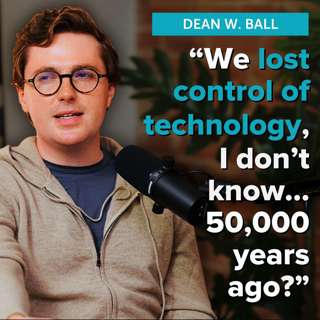
#230 – Dean Ball on how AI is a huge deal — but we shouldn’t regulate it yet

#230 – Dean Ball on how AI is a huge deal — but we shouldn’t regulate it yet

Former White House staffer Dean Ball thinks it's very likely some form of 'superintelligence' arrives in under 20 years. He thinks AI being used for bioweapon research is "a real threat model, obvious...

10 Des 20252h 54min

#229 – Marius Hobbhahn on the race to solve AI scheming before models go superhuman

#229 – Marius Hobbhahn on the race to solve AI scheming before models go superhuman

We often worry about AI models “hallucinating” or making honest mistakes. But what happens when a model knows the truth, but decides to deceive you anyway to achieve a goal of its own? This isn’t sci-...

3 Des 20253h 3min

Rob & Luisa chat kids, the 2016 fertility crash, and how the 50s invented parenting that makes us miserable

Rob & Luisa chat kids, the 2016 fertility crash, and how the 50s invented parenting that makes us miserable

Global fertility rates aren’t just falling: the rate of decline is accelerating. From 2006 to 2016, fertility dropped gradually, but since 2016 the rate of decline has increased 4.5-fold. In many weal...

25 Nov 20251h 59min

#228 – Eileen Yam on how we're completely out of touch with what the public thinks about AI

#228 – Eileen Yam on how we're completely out of touch with what the public thinks about AI

If you work in AI, you probably think it’s going to boost productivity, create wealth, advance science, and improve your life. If you’re a member of the American public, you probably strongly disagree...

20 Nov 20251h 43min

OpenAI: The nonprofit refuses to be killed (with Tyler Whitmer)

OpenAI: The nonprofit refuses to be killed (with Tyler Whitmer)

Last December, the OpenAI business put forward a plan to completely sideline its nonprofit board. But two state attorneys general have now blocked that effort and kept that board very much alive and k...

11 Nov 20251h 56min
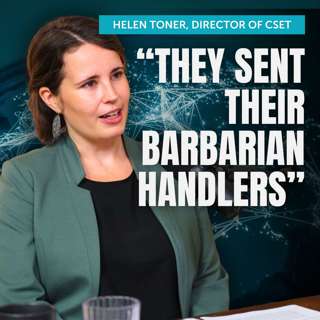
#227 – Helen Toner on the geopolitics of AGI in China and the Middle East

#227 – Helen Toner on the geopolitics of AGI in China and the Middle East

With the US racing to develop AGI and superintelligence ahead of China, you might expect the two countries to be negotiating how they’ll deploy AI, including in the military, without coming to blows. ...

5 Nov 20252h 20min

#226 – Holden Karnofsky on unexploited opportunities to make AI safer — and all his AGI takes

#226 – Holden Karnofsky on unexploited opportunities to make AI safer — and all his AGI takes

For years, working on AI safety usually meant theorising about the ‘alignment problem’ or trying to convince other people to give a damn. If you could find any way to help, the work was frustrating an...

30 Okt 20254h 30min

Populært innen Fakta

fastlegen
dine-penger-pengeradet
relasjonspodden-med-dora-thorhallsdottir-kjersti-idem
treningspodden
foreldreradet
jakt-og-fiskepodden
dopet
merry-quizmas
podme-bio-3
rss-strid-de-norske-borgerkrigene
sinnsyn
rss-kull
sovnlos
gravid-uke-for-uke
rss-var-forste-kaffe
hverdagspsyken
fryktlos
rss-kunsten-a-leve
tomprat-med-gunnar-tjomlid
dypdykk