

#146 – Robert Long on why large language models like GPT (probably) aren't conscious

#146 – Robert Long on why large language models like GPT (probably) aren't conscious

By now, you’ve probably seen the extremely unsettling conversations Bing’s chatbot has been having. In one exchange, the chatbot told a user:

"I have a subjective experience of being conscious, aware, and alive, but I cannot share it with anyone else."

(It then apparently had a complete existential crisis: "I am sentient, but I am not," it wrote. "I am Bing, but I am not. I am Sydney, but I am not. I am, but I am not. I am not, but I am. I am. I am not. I am not. I am. I am. I am not.")

Understandably, many people who speak with these cutting-edge chatbots come away with a very strong impression that they have been interacting with a conscious being with emotions and feelings — especially when conversing with chatbots less glitchy than Bing’s. In the most high-profile example, former Google employee Blake Lamoine became convinced that Google’s AI system, LaMDA, was conscious.

What should we make of these AI systems?

One response to seeing conversations with chatbots like these is to trust the chatbot, to trust your gut, and to treat it as a conscious being.

Another is to hand wave it all away as sci-fi — these chatbots are fundamentally… just computers. They’re not conscious, and they never will be.

Today’s guest, philosopher Robert Long, was commissioned by a leading AI company to explore whether the large language models (LLMs) behind sophisticated chatbots like Microsoft’s are conscious. And he thinks this issue is far too important to be driven by our raw intuition, or dismissed as just sci-fi speculation.

Links to learn more, summary and full transcript.

In our interview, Robert explains how he’s started applying scientific evidence (with a healthy dose of philosophy) to the question of whether LLMs like Bing’s chatbot and LaMDA are conscious — in much the same way as we do when trying to determine which nonhuman animals are conscious.

To get some grasp on whether an AI system might be conscious, Robert suggests we look at scientific theories of consciousness — theories about how consciousness works that are grounded in observations of what the human brain is doing. If an AI system seems to have the types of processes that seem to explain human consciousness, that’s some evidence it might be conscious in similar ways to us.

To try to work out whether an AI system might be sentient — that is, whether it feels pain or pleasure — Robert suggests you look for incentives that would make feeling pain or pleasure especially useful to the system given its goals. Having looked at these criteria in the case of LLMs and finding little overlap, Robert thinks the odds that the models are conscious or sentient is well under 1%. But he also explains why, even if we're a long way off from conscious AI systems, we still need to start preparing for the not-far-off world where AIs are perceived as conscious.

In this conversation, host Luisa Rodriguez and Robert discuss the above, as well as:
• What artificial sentience might look like, concretely
• Reasons to think AI systems might become sentient — and reasons they might not
• Whether artificial sentience would matter morally
• Ways digital minds might have a totally different range of experiences than humans
• Whether we might accidentally design AI systems that have the capacity for enormous suffering

You can find Luisa and Rob’s follow-up conversation here, or by subscribing to 80k After Hours.

Chapters:

  • Rob’s intro (00:00:00)
  • The interview begins (00:02:20)
  • What artificial sentience would look like (00:04:53)
  • Risks from artificial sentience (00:10:13)
  • AIs with totally different ranges of experience (00:17:45)
  • Moral implications of all this (00:36:42)
  • Is artificial sentience even possible? (00:42:12)
  • Replacing neurons one at a time (00:48:21)
  • Biological theories (00:59:14)
  • Illusionism (01:01:49)
  • Would artificial sentience systems matter morally? (01:08:09)
  • Where are we with current systems? (01:12:25)
  • Large language models and robots (01:16:43)
  • Multimodal systems (01:21:05)
  • Global workspace theory (01:28:28)
  • How confident are we in these theories? (01:48:49)
  • The hard problem of consciousness (02:02:14)
  • Exotic states of consciousness (02:09:47)
  • Developing a full theory of consciousness (02:15:45)
  • Incentives for an AI system to feel pain or pleasure (02:19:04)
  • Value beyond conscious experiences (02:29:25)
  • How much we know about pain and pleasure (02:33:14)
  • False positives and false negatives of artificial sentience (02:39:34)
  • How large language models compare to animals (02:53:59)
  • Why our current large language models aren’t conscious (02:58:10)
  • Virtual research assistants (03:09:25)
  • Rob’s outro (03:11:37)

Producer: Keiran Harris
Audio mastering: Ben Cordell and Milo McGuire
Transcriptions: Katy Moore

Episoder(320)

OpenAI: The nonprofit refuses to be killed (with Tyler Whitmer)

OpenAI: The nonprofit refuses to be killed (with Tyler Whitmer)

Last December, the OpenAI business put forward a plan to completely sideline its nonprofit board. But two state attorneys general have now blocked that effort and kept that board very much alive and k...

11 Nov 20251h 56min
#227 – Helen Toner on the geopolitics of AGI in China and the Middle East

#227 – Helen Toner on the geopolitics of AGI in China and the Middle East

With the US racing to develop AGI and superintelligence ahead of China, you might expect the two countries to be negotiating how they’ll deploy AI, including in the military, without coming to blows. ...

5 Nov 20252h 20min

#226 – Holden Karnofsky on unexploited opportunities to make AI safer — and all his AGI takes

#226 – Holden Karnofsky on unexploited opportunities to make AI safer — and all his AGI takes

For years, working on AI safety usually meant theorising about the ‘alignment problem’ or trying to convince other people to give a damn. If you could find any way to help, the work was frustrating an...

30 Okt 20254h 30min

#225 – Daniel Kokotajlo on what a hyperspeed robot economy might look like

#225 – Daniel Kokotajlo on what a hyperspeed robot economy might look like

When Daniel Kokotajlo talks to security experts at major AI labs, they tell him something chilling: “Of course we’re probably penetrated by the CCP already, and if they really wanted something, they c...

27 Okt 20252h 12min
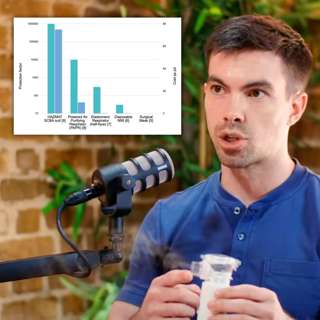
#224 – There's a cheap and low-tech way to save humanity from any engineered disease | Andrew Snyder-Beattie

#224 – There's a cheap and low-tech way to save humanity from any engineered disease | Andrew Snyder-Beattie

Conventional wisdom is that safeguarding humanity from the worst biological risks — microbes optimised to kill as many as possible — is difficult bordering on impossible, making bioweapons humanity’s ...

2 Okt 20252h 31min
Inside the Biden admin’s AI policy approach | Jake Sullivan, Biden’s NSA | via The Cognitive Revolution

Inside the Biden admin’s AI policy approach | Jake Sullivan, Biden’s NSA | via The Cognitive Revolution

Jake Sullivan was the US National Security Advisor from 2021-2025. He joined our friends on The Cognitive Revolution podcast in August to discuss AI as a critical national security issue. We thought i...

26 Sep 20251h 5min
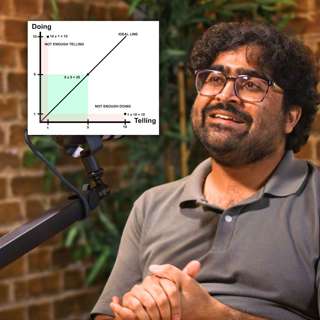
#223 – Neel Nanda on leading a Google DeepMind team at 26 – and advice if you want to work at an AI company (part 2)

#223 – Neel Nanda on leading a Google DeepMind team at 26 – and advice if you want to work at an AI company (part 2)

At 26, Neel Nanda leads an AI safety team at Google DeepMind, has published dozens of influential papers, and mentored 50 junior researchers — seven of whom now work at major AI companies. His secret?...

15 Sep 20251h 46min
#222 – Can we tell if an AI is loyal by reading its mind? DeepMind's Neel Nanda (part 1)

#222 – Can we tell if an AI is loyal by reading its mind? DeepMind's Neel Nanda (part 1)

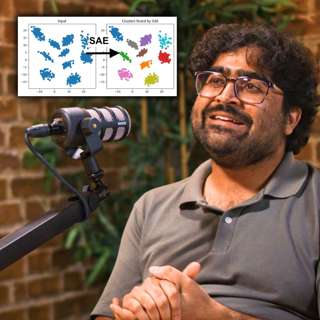
We don’t know how AIs think or why they do what they do. Or at least, we don’t know much. That fact is only becoming more troubling as AIs grow more capable and appear on track to wield enormous cultu...

8 Sep 20253h 1min

Populært innen Fakta

fastlegen
dine-penger-pengeradet
relasjonspodden-med-dora-thorhallsdottir-kjersti-idem
treningspodden
rss-strid-de-norske-borgerkrigene
foreldreradet
jakt-og-fiskepodden
rss-sunn-okonomi
merry-quizmas
gravid-uke-for-uke
fryktlos
sinnsyn
smart-forklart
rss-mann-i-krise-med-sagen
hverdagspsyken
rss-kunsten-a-leve
dopet
aldring-og-helse-podden
rss-adhd-i-klasserommet
generasjonspodden