#157 – Ezra Klein on existential risk from AI and what DC could do about it

#157 – Ezra Klein on existential risk from AI and what DC could do about it

In Oppenheimer, scientists detonate a nuclear weapon despite thinking there's some 'near zero' chance it would ignite the atmosphere, putting an end to life on Earth. Today, scientists working on AI think the chance their work puts an end to humanity is vastly higher than that.

In response, some have suggested we launch a Manhattan Project to make AI safe via enormous investment in relevant R&D. Others have suggested that we need international organisations modelled on those that slowed the proliferation of nuclear weapons. Others still seek a research slowdown by labs while an auditing and licencing scheme is created.

Today's guest — journalist Ezra Klein of The New York Times — has watched policy discussions and legislative battles play out in DC for 20 years.

Links to learn more, summary and full transcript.

Like many people he has also taken a big interest in AI this year, writing articles such as “This changes everything.” In his first interview on the show in 2021, he flagged AI as one topic that DC would regret not having paid more attention to. So we invited him on to get his take on which regulatory proposals have promise, and which seem either unhelpful or politically unviable.

Out of the ideas on the table right now, Ezra favours a focus on direct government funding — both for AI safety research and to develop AI models designed to solve problems other than making money for their operators. He is sympathetic to legislation that would require AI models to be legible in a way that none currently are — and embraces the fact that that will slow down the release of models while businesses figure out how their products actually work.

By contrast, he's pessimistic that it's possible to coordinate countries around the world to agree to prevent or delay the deployment of dangerous AI models — at least not unless there's some spectacular AI-related disaster to create such a consensus. And he fears attempts to require licences to train the most powerful ML models will struggle unless they can find a way to exclude and thereby appease people working on relatively safe consumer technologies rather than cutting-edge research.

From observing how DC works, Ezra expects that even a small community of experts in AI governance can have a large influence on how the the US government responds to AI advances. But in Ezra's view, that requires those experts to move to DC and spend years building relationships with people in government, rather than clustering elsewhere in academia and AI labs.

In today's brisk conversation, Ezra and host Rob Wiblin cover the above as well as:

They cover:

  • Whether it's desirable to slow down AI research
  • The value of engaging with current policy debates even if they don't seem directly important
  • Which AI business models seem more or less dangerous
  • Tensions between people focused on existing vs emergent risks from AI
  • Two major challenges of being a new parent

Get this episode by subscribing to our podcast on the world’s most pressing problems and how to solve them: type ‘80,000 Hours’ into your podcasting app. Or read the transcript below.

Producer: Keiran Harris
Audio Engineering Lead: Ben Cordell

Technical editing: Milo McGuire

Transcriptions: Katy Moore

Episoder(320)

#112 Classic episode – Carl Shulman on the common-sense case for existential risk work and its practical implications

#112 Classic episode – Carl Shulman on the common-sense case for existential risk work and its practical implications

Preventing the apocalypse may sound like an idiosyncratic activity, and it sometimes is justified on exotic grounds, such as the potential for humanity to become a galaxy-spanning civilisation.But the...

8 Jan 20243h 50min

#111 Classic episode – Mushtaq Khan on using institutional economics to predict effective government reforms

#111 Classic episode – Mushtaq Khan on using institutional economics to predict effective government reforms

If you’re living in the Niger Delta in Nigeria, your best bet at a high-paying career is probably ‘artisanal refining’ — or, in plain language, stealing oil from pipelines.The resulting oil spills dam...

4 Jan 20243h 22min

2023 Mega-highlights Extravaganza

2023 Mega-highlights Extravaganza

Happy new year! We've got a different kind of holiday release for you today. Rather than a 'classic episode,' we've put together one of our favourite highlights from each episode of the show that came...

31 Des 20231h 53min
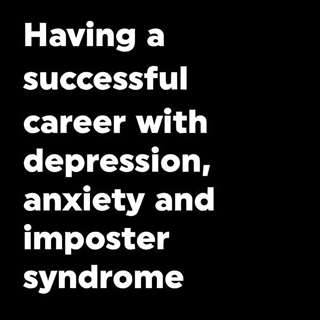
#100 Classic episode – Having a successful career with depression, anxiety, and imposter syndrome

#100 Classic episode – Having a successful career with depression, anxiety, and imposter syndrome

Today’s episode is one of the most remarkable and really, unique, pieces of content we’ve ever produced (and I can say that because I had almost nothing to do with making it!).The producer of this sho...

27 Des 20232h 51min

#176 – Nathan Labenz on the final push for AGI, understanding OpenAI's leadership drama, and red-teaming frontier models

#176 – Nathan Labenz on the final push for AGI, understanding OpenAI's leadership drama, and red-teaming frontier models

OpenAI says its mission is to build AGI — an AI system that is better than human beings at everything. Should the world trust them to do that safely?That’s the central theme of today’s episode with Na...

22 Des 20233h 46min

#175 – Lucia Coulter on preventing lead poisoning for $1.66 per child

#175 – Lucia Coulter on preventing lead poisoning for $1.66 per child

Lead is one of the most poisonous things going. A single sugar sachet of lead, spread over a park the size of an American football field, is enough to give a child that regularly plays there lead pois...

14 Des 20232h 14min

#174 – Nita Farahany on the neurotechnology already being used to convict criminals and manipulate workers

#174 – Nita Farahany on the neurotechnology already being used to convict criminals and manipulate workers

"It will change everything: it will change our workplaces, it will change our interactions with the government, it will change our interactions with each other. It will make all of us unwitting neurom...

7 Des 20232h

#173 – Jeff Sebo on digital minds, and how to avoid sleepwalking into a major moral catastrophe

#173 – Jeff Sebo on digital minds, and how to avoid sleepwalking into a major moral catastrophe

"We do have a tendency to anthropomorphise nonhumans — which means attributing human characteristics to them, even when they lack those characteristics. But we also have a tendency towards anthropoden...

22 Nov 20232h 38min

Populært innen Fakta

fastlegen
dine-penger-pengeradet
relasjonspodden-med-dora-thorhallsdottir-kjersti-idem
rss-strid-de-norske-borgerkrigene
treningspodden
jakt-og-fiskepodden
rss-sunn-okonomi
foreldreradet
merry-quizmas
rss-mann-i-krise-med-sagen
gravid-uke-for-uke
generasjonspodden
fryktlos
hverdagspsyken
sinnsyn
teknologi-og-mennesker
rss-kunsten-a-leve
rss-mind-body-podden
dopet
rss-kull