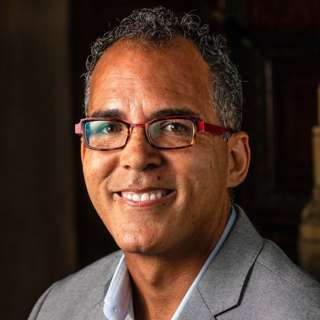

#157 – Ezra Klein on existential risk from AI and what DC could do about it

#157 – Ezra Klein on existential risk from AI and what DC could do about it

In Oppenheimer, scientists detonate a nuclear weapon despite thinking there's some 'near zero' chance it would ignite the atmosphere, putting an end to life on Earth. Today, scientists working on AI think the chance their work puts an end to humanity is vastly higher than that.

In response, some have suggested we launch a Manhattan Project to make AI safe via enormous investment in relevant R&D. Others have suggested that we need international organisations modelled on those that slowed the proliferation of nuclear weapons. Others still seek a research slowdown by labs while an auditing and licencing scheme is created.

Today's guest — journalist Ezra Klein of The New York Times — has watched policy discussions and legislative battles play out in DC for 20 years.

Links to learn more, summary and full transcript.

Like many people he has also taken a big interest in AI this year, writing articles such as “This changes everything.” In his first interview on the show in 2021, he flagged AI as one topic that DC would regret not having paid more attention to. So we invited him on to get his take on which regulatory proposals have promise, and which seem either unhelpful or politically unviable.

Out of the ideas on the table right now, Ezra favours a focus on direct government funding — both for AI safety research and to develop AI models designed to solve problems other than making money for their operators. He is sympathetic to legislation that would require AI models to be legible in a way that none currently are — and embraces the fact that that will slow down the release of models while businesses figure out how their products actually work.

By contrast, he's pessimistic that it's possible to coordinate countries around the world to agree to prevent or delay the deployment of dangerous AI models — at least not unless there's some spectacular AI-related disaster to create such a consensus. And he fears attempts to require licences to train the most powerful ML models will struggle unless they can find a way to exclude and thereby appease people working on relatively safe consumer technologies rather than cutting-edge research.

From observing how DC works, Ezra expects that even a small community of experts in AI governance can have a large influence on how the the US government responds to AI advances. But in Ezra's view, that requires those experts to move to DC and spend years building relationships with people in government, rather than clustering elsewhere in academia and AI labs.

In today's brisk conversation, Ezra and host Rob Wiblin cover the above as well as:

They cover:

  • Whether it's desirable to slow down AI research
  • The value of engaging with current policy debates even if they don't seem directly important
  • Which AI business models seem more or less dangerous
  • Tensions between people focused on existing vs emergent risks from AI
  • Two major challenges of being a new parent

Get this episode by subscribing to our podcast on the world’s most pressing problems and how to solve them: type ‘80,000 Hours’ into your podcasting app. Or read the transcript below.

Producer: Keiran Harris
Audio Engineering Lead: Ben Cordell

Technical editing: Milo McGuire

Transcriptions: Katy Moore

Episoder(321)

#81 - Ben Garfinkel on scrutinising classic AI risk arguments

#81 - Ben Garfinkel on scrutinising classic AI risk arguments

80,000 Hours, along with many other members of the effective altruism movement, has argued that helping to positively shape the development of artificial intelligence may be one of the best ways to ha...

9 Jul 20202h 38min

Advice on how to read our advice (Article)

Advice on how to read our advice (Article)

This is the fourth release in our new series of audio articles. If you want to read the original article or check out the links within it, you can find them here. "We’ve found that readers sometimes...

29 Jun 202015min
#80 – Stuart Russell on why our approach to AI is broken and how to fix it

#80 – Stuart Russell on why our approach to AI is broken and how to fix it

Stuart Russell, Professor at UC Berkeley and co-author of the most popular AI textbook, thinks the way we approach machine learning today is fundamentally flawed. In his new book, Human Compatible, he...

22 Jun 20202h 13min

What anonymous contributors think about important life and career questions (Article)

What anonymous contributors think about important life and career questions (Article)

Today we’re launching the final entry of our ‘anonymous answers' series on the website. It features answers to 23 different questions including “How have you seen talented people fail in their work?...

5 Jun 202037min

#79 – A.J. Jacobs on radical honesty, following the whole Bible, and reframing global problems as puzzles

#79 – A.J. Jacobs on radical honesty, following the whole Bible, and reframing global problems as puzzles

Today’s guest, New York Times bestselling author A.J. Jacobs, always hated Judge Judy. But after he found out that she was his seventh cousin, he thought, "You know what? She's not so bad." Hijacking ...

1 Jun 20202h 38min

#78 – Danny Hernandez on forecasting and the drivers of AI progress

#78 – Danny Hernandez on forecasting and the drivers of AI progress

Companies use about 300,000 times more computation training the best AI systems today than they did in 2012 and algorithmic innovations have also made them 25 times more efficient at the same tasks.Th...

22 Mai 20202h 11min

#77 – Marc Lipsitch on whether we're winning or losing against COVID-19

#77 – Marc Lipsitch on whether we're winning or losing against COVID-19

In March Professor Marc Lipsitch — Director of Harvard's Center for Communicable Disease Dynamics — abruptly found himself a global celebrity, his social media following growing 40-fold and journalist...

18 Mai 20201h 37min

Article: Ways people trying to do good accidentally make things worse, and how to avoid them

Article: Ways people trying to do good accidentally make things worse, and how to avoid them

Today’s release is the second experiment in making audio versions of our articles. The first was a narration of Greg Lewis’ terrific problem profile on ‘Reducing global catastrophic biological risks...

12 Mai 202026min

Populært innen Fakta

fastlegen
dine-penger-pengeradet
relasjonspodden-med-dora-thorhallsdottir-kjersti-idem
treningspodden
rss-strid-de-norske-borgerkrigene
foreldreradet
jakt-og-fiskepodden
rss-sunn-okonomi
merry-quizmas
hverdagspsyken
rss-mann-i-krise-med-sagen
gravid-uke-for-uke
generasjonspodden
sinnsyn
fryktlos
rss-impressions-2
rss-kunsten-a-leve
hagespiren-podcast
rss-kull
rss-ifengsel-podden