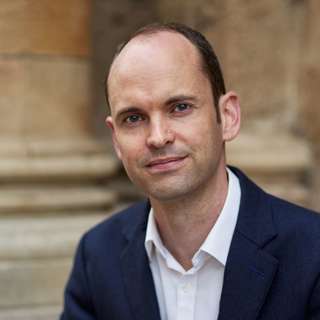

#163 – Toby Ord on the perils of maximising the good that you do

#163 – Toby Ord on the perils of maximising the good that you do

Effective altruism is associated with the slogan "do the most good." On one level, this has to be unobjectionable: What could be bad about helping people more and more?

But in today's interview, Toby Ord — moral philosopher at the University of Oxford and one of the founding figures of effective altruism — lays out three reasons to be cautious about the idea of maximising the good that you do. He suggests that rather than “doing the most good that we can,” perhaps we should be happy with a more modest and manageable goal: “doing most of the good that we can.”

Links to learn more, summary and full transcript.

Toby was inspired to revisit these ideas by the possibility that Sam Bankman-Fried, who stands accused of committing severe fraud as CEO of the cryptocurrency exchange FTX, was motivated to break the law by a desire to give away as much money as possible to worthy causes.

Toby's top reason not to fully maximise is the following: if the goal you're aiming at is subtly wrong or incomplete, then going all the way towards maximising it will usually cause you to start doing some very harmful things.

This result can be shown mathematically, but can also be made intuitive, and may explain why we feel instinctively wary of going “all-in” on any idea, or goal, or way of living — even something as benign as helping other people as much as possible.

Toby gives the example of someone pursuing a career as a professional swimmer. Initially, as our swimmer takes their training and performance more seriously, they adjust their diet, hire a better trainer, and pay more attention to their technique. While swimming is the main focus of their life, they feel fit and healthy and also enjoy other aspects of their life as well — family, friends, and personal projects.

But if they decide to increase their commitment further and really go all-in on their swimming career, holding back nothing back, then this picture can radically change. Their effort was already substantial, so how can they shave those final few seconds off their racing time? The only remaining options are those which were so costly they were loath to consider them before.

To eke out those final gains — and go from 80% effort to 100% — our swimmer must sacrifice other hobbies, deprioritise their relationships, neglect their career, ignore food preferences, accept a higher risk of injury, and maybe even consider using steroids.

Now, if maximising one's speed at swimming really were the only goal they ought to be pursuing, there'd be no problem with this. But if it's the wrong goal, or only one of many things they should be aiming for, then the outcome is disastrous. In going from 80% to 100% effort, their swimming speed was only increased by a tiny amount, while everything else they were accomplishing dropped off a cliff.

The bottom line is simple: a dash of moderation makes you much more robust to uncertainty and error.

As Toby notes, this is similar to the observation that a sufficiently capable superintelligent AI, given any one goal, would ruin the world if it maximised it to the exclusion of everything else. And it follows a similar pattern to performance falling off a cliff when a statistical model is 'overfit' to its data.

In the full interview, Toby also explains the “moral trade” argument against pursuing narrow goals at the expense of everything else, and how consequentialism changes if you judge not just outcomes or acts, but everything according to its impacts on the world.

Toby and Rob also discuss:

  • The rise and fall of FTX and some of its impacts
  • What Toby hoped effective altruism would and wouldn't become when he helped to get it off the ground
  • What utilitarianism has going for it, and what's wrong with it in Toby's view
  • How to mathematically model the importance of personal integrity
  • Which AI labs Toby thinks have been acting more responsibly than others
  • How having a young child affects Toby’s feelings about AI risk
  • Whether infinities present a fundamental problem for any theory of ethics that aspire to be fully impartial
  • How Toby ended up being the source of the highest quality images of the Earth from space

Get this episode by subscribing to our podcast on the world’s most pressing problems and how to solve them: type ‘80,000 Hours’ into your podcasting app. Or read the transcript.

Producer and editor: Keiran Harris
Audio Engineering Lead: Ben Cordell
Technical editing: Simon Monsour
Transcriptions: Katy Moore

Episoder(321)

#61 - Helen Toner on emerging technology, national security, and China

#61 - Helen Toner on emerging technology, national security, and China

From 1870 to 1950, the introduction of electricity transformed life in the US and UK, as people gained access to lighting, radio and a wide range of household appliances for the first time. Electricit...

17 Jul 20191h 54min
#60 - Phil Tetlock on why accurate forecasting matters for everything, and how you can do it better

#60 - Phil Tetlock on why accurate forecasting matters for everything, and how you can do it better

Have you ever been infuriated by a doctor's unwillingness to give you an honest, probabilistic estimate about what to expect? Or a lawyer who won't tell you the chances you'll win your case? Their beh...

28 Jun 20192h 11min
#59 – Cass Sunstein on how change happens, and why it's so often abrupt & unpredictable

#59 – Cass Sunstein on how change happens, and why it's so often abrupt & unpredictable

It can often feel hopeless to be an activist seeking social change on an obscure issue where most people seem opposed or at best indifferent to you. But according to a new book by Professor Cass Sunst...

17 Jun 20191h 43min
#58 – Pushmeet Kohli of DeepMind on designing robust & reliable AI systems and how to succeed in AI

#58 – Pushmeet Kohli of DeepMind on designing robust & reliable AI systems and how to succeed in AI

When you're building a bridge, responsibility for making sure it won't fall over isn't handed over to a few 'bridge not falling down engineers'. Making sure a bridge is safe to use and remains standin...

3 Jun 20191h 30min

Rob Wiblin on human nature, new technology, and living a happy, healthy & ethical life

Rob Wiblin on human nature, new technology, and living a happy, healthy & ethical life

This is a cross-post of some interviews Rob did recently on two other podcasts — Mission Daily (from 2m) and The Good Life (from 1h13m). Some of the content will be familiar to regular listeners — bu...

13 Mai 20192h 18min
#57 – Tom Kalil on how to do the most good in government

#57 – Tom Kalil on how to do the most good in government

You’re 29 years old, and you’ve just been given a job in the White House. How do you quickly figure out how the US Executive Branch behemoth actually works, so that you can have as much impact as poss...

23 Apr 20192h 50min

#56 - Persis Eskander on wild animal welfare and what, if anything, to do about it

#56 - Persis Eskander on wild animal welfare and what, if anything, to do about it

Elephants in chains at travelling circuses; pregnant pigs trapped in coffin sized crates at factory farms; deers living in the wild. We should welcome the last as a pleasant break from the horror, rig...

15 Apr 20192h 57min

#55 – Lutter & Winter on founding charter cities with outstanding governance to end poverty

#55 – Lutter & Winter on founding charter cities with outstanding governance to end poverty

Governance matters. Policy change quickly took China from famine to fortune; Singapore from swamps to skyscrapers; and Hong Kong from fishing village to financial centre. Unfortunately, many governmen...

31 Mar 20192h 31min

Populært innen Fakta

fastlegen
dine-penger-pengeradet
relasjonspodden-med-dora-thorhallsdottir-kjersti-idem
rss-strid-de-norske-borgerkrigene
treningspodden
foreldreradet
jakt-og-fiskepodden
merry-quizmas
rss-sunn-okonomi
hverdagspsyken
gravid-uke-for-uke
rss-mann-i-krise-med-sagen
sinnsyn
rss-kunsten-a-leve
fryktlos
hagespiren-podcast
rss-impressions-2
rss-ifengsel-podden
babyverden
generasjonspodden