
377: Living with Regrets, Part 2 of 2

377: Living with Regrets, Part 2 of 2

Jessica Malvicino Live Work With Jessica-- Living with Regrets

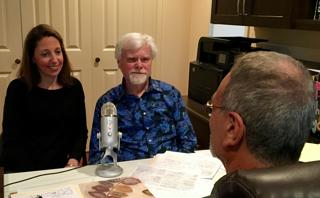
Rhonda and I recently did live work at a TEAM-CBT intensive in Mexico City. Our "patient" was a 40 year old mental health professional named Jessica with many years of unhappiness because of a decision she made when she was just 17. Perhaps you've also looked back on your life and thought, "If only I would have . . . " done something I didn't do," as well as, "I wish I hadn't done X, when I was young."

Last week you heard the initial Testing and Empathy portions of the session with Jessica. Today you'll hear the Assessment of Resistance, Methods, and final Testing..

Part 2 of the Jessica Session A = Assessment of Resistance

Jessica said her goal for the session was learning to accept life and move on, and not have such constant feelings of emptiness, with so many "I should have" thoughts running through her brain.

Although Jessica, like most people, said she'd press the Magic Button to make all of her negative thoughts and feelings disappear, we decided to do some Positive Reframing first, to see if there were some positives hiding in her negative feelings. We asked the following questions about a number of her negative feelings and thoughts:

  1. Why might this thought or feeling be appropriate and healthy?
  2. Why might this thought or feeling be helpful to you?
  3. Why does this thought or feeling show about you and your core values that's positive and awesome. ?

As you probably know, the goal of there are two goals for this paradoxical exercise: First, we want to bring the patient's subconscious resistance to conscious awareness. Second, we want her to see that her struggling and suffering is NOT the result of what's WRONG with her, but rather, what's RIGHT with her.

The moment that people really "see" and "get" this, there's often a sharp and sudden reduction in feelings of shame, and a strong burst of motivation to crush the negative thoughts at the heart of her misery.

Here are some of the Positives we listed:

SADNESS

My sadness shows my passion and love of dancing.

It shows my dedication to the idea of having a fulfilling career.

It shows that I'm a very loving person.

ANXIETY, WORRY, NERVOUSNESS

These feelings

  • show that I'm responsible
  • motivate me to complete tasks
  • help me avoid procrastination
  • make me vigilant and protect me from danger
SHAME
  • These feeling show that
  • I'm concerned about others
  • I'm human
  • I want to please others with my career
  • I admire my mom and want to make her proud
  • I want her to admire me
  • I'm humble
  • I want to feel close to others
ANGER
  • These feelings show that
  • I'm a caring and passionate person
  • I have character
  • I have a moral compass
  • I'm feisty and strong
  • I'm accountable
  • My anger also empowers me

After listing these and other positives, Jessica decided to use the Magic Dial to reduce her negative feelings to lower levels, but not necessarily all the way to zero, as you can see in the goal column on her emotions table:

Emotions % Now % Goal % After Emotions % Now % Goal % After Sad, depressed, unhappy 90 20 Foolish 100 0 Anxious, worried, nervous 90 10 Discouraged 97 5 Bad, ashamed 95 0 Frustrated, stuck, defeated 100 5 Inadequate 90 0 Angry, mad, resentful, annoyed 95 10 Lonely 92 5 Other

Then we went on to

M = Methods

These were some of the negative thoughts that Jessica wanted to challenge, along with the percent she initially believed each of them:

  1. I'm a failure. 90%
  2. My mom is to blame for not understanding the career path that I wanted. 90%
  3. I was an idiot for not following my dreams. 100%
  4. Nothing will truly fulfill my professional career. 100%
  5. I have to "settle" for my professional career now.100%

She had many others ad well.

We used a variety of techniques to challenge and crush these thoughts, including the Externalization of Voices with Self-Defense, the Acceptance Paradox, and the CAT (Counter-Attack Technique), and used frequent role reversals to help Jessica get to "huge" wins when she was in the role of her positive thoughts.

Here you can see Jessica's scores in the "% After" column. As you can see, her scores were extraordinarily low, which is terrific.

Emotions % Now % Goal % After Emotions % Now % Goal % After Sad, depressed, unhappy 90 20 0 Foolish 100 0 3 Anxious, worried, nervous 90 10 0 Discouraged 97 5 0 Bad, ashamed 95 0 0 Frustrated, stuck, defeated 100 5 10 Inadequate 90 0 0 Angry, mad, resentful, annoyed 95 10 5 Lonely 92 5 0 Other

Typically, such drastic and sudden reductions in negative feelings not only indicate "recovery," but the experience of feelings of joy and enlightenment.

At the end we asked Jessica two questions:

  1. Are the scores valid, or is she just trying to please us?
  2. If they are valid, what were the most healing and helpful aspects of the session?

As you listen to the end of the live session, you'll find out what she said!

Rhonda and I hope you enjoyed the session with Jessica. We believe that live work with real people, and not role players who are pretending to be in therapy, is invaluable, and one of the best—and only—ways to learn many of the subtleties of rapid and effective treatment. And if you are a general citizen, and not a therapist, I hope your found our work with the brave and wonderful Jessica to be inspirational and educational, especially if you have also sometimes felt depressed, anxious, or ashamed, and if you have found that regrets about the past can put a real damper on your capacity to live and enjoy your precious present moments!

Our best teaching is usually through live work, and so we give you, Jessica, a warm thanks and salute for the great teaching YOU have done today!

Thanks for listening, everybody!

Jessica, Rhonda and David

Episoder(512)

031: Live Session (Mark) — Agenda Setting Phase (Part 3)

031: Live Session (Mark) — Agenda Setting Phase (Part 3)

In the early days of my career, I (Dr. Burns) would have assumed that Mark definitely wanted to change--after all, he'd been in a lot of pain for a long time, and he came to the session because he wan...

10 Apr 201731min

030: Live Session (Mark) — Empathy Phase (Part 2)

030: Live Session (Mark) — Empathy Phase (Part 2)

After reviewing Mark's scores on the Brief Mood Survey, the Empathy phase of the session unfolds. During this phase of the session, David and Jill will not try to help, rescue, or save Mark. They will...

3 Apr 201747min

029: Live Session (Mark) — Introduction & Testing Phase (Part 1)

029: Live Session (Mark) — Introduction & Testing Phase (Part 1)

This is the first in a series of podcasts that will feature live therapy. As you listen, you'll have the opportunity to peak behind closed doors to see how TEAM-CBT actually works in a real-world sett...

27 Mar 201730min
028: Scared Stiff — The Motivational Model (Part 6)

028: Scared Stiff — The Motivational Model (Part 6)

The key is bringing the patient's subconscious resistance to conscious awareness, and melting it away with paradoxical techniques. This is absolutely critical if you are hoping to see a complete elimi...

20 Mar 201746min

027: Scared Stiff — The Hidden Emotion Model (Part 5)

027: Scared Stiff — The Hidden Emotion Model (Part 5)

David reminds us about the differences between healthy fear and unhealthy, neurotic anxiety, or an anxiety "disorder" like a phobia, or OCD, and so forth. He explains that negative thoughts, and not e...

13 Mar 201726min

026: Scared Stiff — The Exposure Model (Part 4)

026: Scared Stiff — The Exposure Model (Part 4)

We begin by describing the three different deaths of the ego that are required for recovery from depression, anxiety, or a relationship conflict, respectively. For depression recovery often results fr...

6 Mar 201744min

025: Ask David — How do you handle a patient you don't like (or who bores you)?

025: Ask David — How do you handle a patient you don't like (or who bores you)?

David answers these questions: How do you deal with a patient (or friend) who is boring? How do you deal with a patient (or friend) you don't like? How do you get patients to do their psychotherapy ho...

27 Feb 201737min

024: Scared Stiff — The Cognitive Model (Part 3)

024: Scared Stiff — The Cognitive Model (Part 3)

The cognitive model of anxiety is based on three powerful ideas: Anxiety always results from negative thought (NTs) that involve the prediction of danger. For example, if you have public speaking anx...

20 Feb 201751min

Populært innen Fakta

fastlegen
dine-penger-pengeradet
relasjonspodden-med-dora-thorhallsdottir-kjersti-idem
treningspodden
rss-strid-de-norske-borgerkrigene
foreldreradet
jakt-og-fiskepodden
hverdagspsyken
rss-sunn-okonomi
merry-quizmas
sinnsyn
gravid-uke-for-uke
tomprat-med-gunnar-tjomlid
rss-kunsten-a-leve
smart-forklart
fryktlos
rss-mann-i-krise-med-sagen
hagespiren-podcast
rss-impressions-2
dopet