Why don't microwaves spark off themselves?
The Naked Scientists tackle your questions, from how hail storms come about to why the Mediterranean Sea has such small tides. And why do people often favour walking on one particular side of the road...
7 Jan 20141h

Hydrogen-powered Party Poppers
It's Christmas, and we're celebrating in style with a look at the science behind the things that grace the festive period. In a special programme recorded live in the kitchen, we produce our own home-...
24 Des 201353min
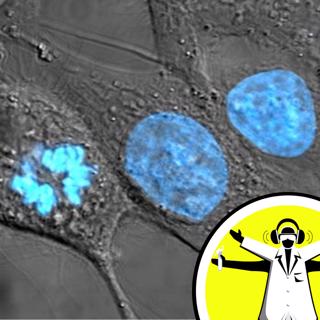
Super-shape me!
How balls of cells assemble into a baby, why cell shape is crucial in cancer, telling cells where to go in an embryo, and getting a handle on how limbs develop: this week's Naked Scientists explores t...
17 Des 201356min
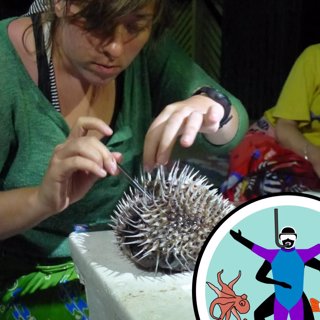
Diving into Ocean Conservation
The bid to create the world's largest marine reserve, diseases threatening corals in the Caribbean, what is the best way to conserve coral reefs in Fiji, and why fish microbes matter too. Plus news of...
10 Des 201353min
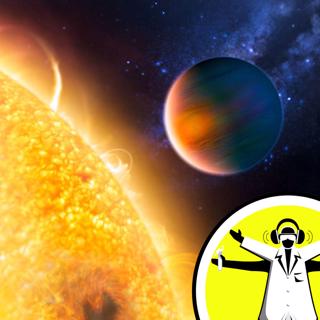
Life, The Universe and Everything
Live on location at the Cambridge Science Centre, Chris Smith is joined by guests Didier Queloz, who discovered the first exoplanet, Alan Tunnacliffe who investigates organisms which might be able to ...
3 Des 201359min

Sniff! Sniff!
This week, smells, pheromones and anosmia. We talk to a patient with no sense of smell, hear why odours might be more down to the way molecules vibrate that how they are shaped, we look at the role th...
26 Nov 201353min

Restore, repair, retain!
This week we discover how we repair and restore everything from ancient manuscripts to the human heart! The team visits the BBC to find out how recently re-discovered episodes of the classic sci-fi...
19 Nov 201354min

Stopping Multiple Sclerosis
What is multiple sclerosis (MS), what causes it, why do some people suffer from it, and how can we treat it? This week we hear about a drug that can halt the disease in its tracks for some patients, a...
12 Nov 201358min