

Happy New Year 2026: The Boring Path to an Interesting Life
Only take vacations you can afford—debt and relaxation should never meet. If it needs installments and isn’t food or medicine, you don’t need it. Credit card debt is just regret charging interest—kill it first. Don’t enroll in college by muscle memory; 2026 doesn’t care about tradition. If you switch careers, pick a role that actually matters—vibes don’t pay rent. Skipping AI in 2026 is like skipping email in 1999—bold, but stupid. Invest real money if you can, fake money if you can’t, ignorance is not an option. Park far away—walking is free cardio and cheaper than therapy. Eat because you’re hungry, not because the fridge made eye contact. There is no perfect time—there’s only now and a lot of excuses. Build a side hustle so layoffs don’t decide your personality. If every year feels the same, congratulations—you’re on career autopilot. Social media isn’t real life—it’s a heavily filtered lie with Wi-Fi. Comparison kills joy, and titles won’t fix insecurity. Everything important takes longer than promised—welcome to reality. Ignore naysayers—they’re deeply committed to being comfortable. One focused person with AI can now replace a small team—choose wisely. If your car works, keep it—nobody’s impressed by your loan balance. Be selfish enough to protect your time, energy, and sanity. Nothing is saturated—most people just quit early.
2 Jan 31min
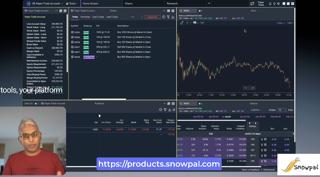
What Paper Trading Teaches You About Risk and Discipline: Practice First, Profit Later
As 2025 comes to a close, it’s a good time to reflect, experiment, and learn—especially if you’re interested in investing, trading, or building fintech products. On the final trading day of the year, I spent some time walking through live paper trades using a desktop trading platform, sharing practical insights along the way. This article distills those lessons into a beginner-friendly guide for anyone curious about trading, risk, and tools.
31 Des 202534min
Why We’re Building Our Next API in FinTech — And Why Timing Matters More Than Ever
At Snowpal, we’ve spent years building and running production-grade software products across multiple domains. Most recently, our focus has been on B2B APIs — tools designed to help teams move faster, build reliably, and scale without reinventing the wheel. As we head into 2026, we’re starting work on our next API product. It will begin life as an API, but over time, it will grow into something broader — firmly rooted in the fintech space.
30 Des 202514min

Understanding the Infrastructure That Powers AI: Data Centers, Chips, and the New Energy Reality
Unless you’ve been completely disconnected from the news cycle, it’s impossible to ignore the explosion of conversation around data centers, energy demand, and AI infrastructure. These topics aren’t abstract anymore—they’re reshaping local communities, capital markets, and the future of technology itself. Living in Northern Virginia, particularly Loudoun County, makes this reality impossible to miss. This region is now the largest data center market in the United States by capacity, with more than 3,000 megawatts of installed power—roughly six times larger than the next biggest market, the Dallas–Fort Worth area. That concentration alone tells a powerful story about where the digital backbone of the modern economy is being built.
30 Des 202522min

The Hidden Moat in Institutional Research (feat. Greg Irwin)
In this conversation, Greg Irwin, co-founder of BWG Global, discusses the role of his company in providing fundamental research for institutional investors. He emphasizes the importance of community and networking in the tech industry, the logistics of organizing expert discussions, and the balance between art and science in research methodologies. The conversation also explores the transformative impact of AI on research and enterprise software, the geopolitical implications of technology, and the evolving landscape of investing in AI and technology stocks. Greg shares insights on lock-in strategies in technology and the role of AI coding tools in modern development, concluding with reflections on the future of enterprise software.
30 Des 20251h 37min

You Can’t Debug the Stock Market (feat. Dr. Adam Link)
In this episode of the Snowpal podcast, Dr. Adam Link, founder of Fireweed Capital, shares his unique journey from software engineering to wealth management. He discusses common financial mistakes engineers make, the differences between active and passive investment strategies, and the importance of personality in financial decision-making. Dr. Link also highlights the tools and technologies used in wealth management and explores the future of trading in the context of AI and 24/7 markets. The conversation concludes with insights on how individuals should approach investing based on their personal circumstances.
30 Des 202550min
AI Writes Code, Engineers Build Systems (feat. Ran Aroussi)
In this conversation, Krish Palaniappan interviews Ran Aroussi, founder of AutoMaze, discussing the transformative impact of AI on software development and the training of junior developers. Ran shares insights on how AI tools are reshaping coding practices, the importance of understanding software architecture over syntax, and the evolving role of non-developers in the coding process. The discussion also touches on the future of consulting in the age of AI and the reimagining of user interfaces to enhance user experience.
22 Des 20251h
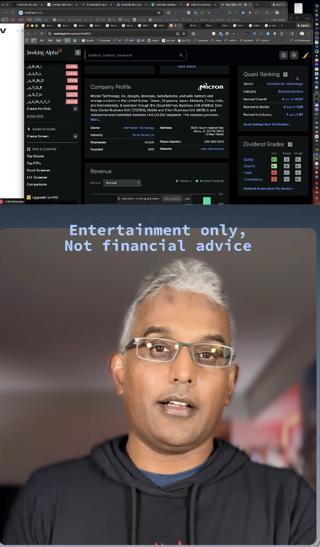
Micron Technology: From Memory Commodity to AI Infrastructure Powerhouse
Micron Technology (NASDAQ: MU) is often described as a memory and storage company—but that label significantly understates what the company has become. While memory has historically been viewed as a commodity business, Micron’s recent performance and strategic positioning suggest a very different story.
18 Des 202528min