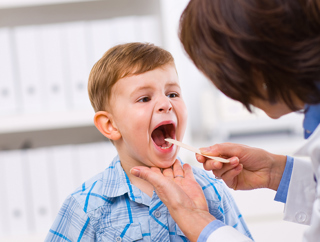

Podcast #315: Retropharyngeal Infections in Pediatrics

Podcast #315: Retropharyngeal Infections in Pediatrics

Author: Dr. Karen Woolf, MD

Educational Pearls:

  • Anatomy : base of skull to posterior mediastinum, anteriorly bounded by middle layer of deep cervical fascia and posteriorly by the deep layer, communicates to lateral pharyngeal space bounded by carotid sheath. Lymph node chains draining nasopharynx, sinuses, middle ear, etc. run through it.
  • Epidemiology & Microbiology: most common kids 2-4, (neonates too). Polymicrobial (GAS, MSSA, MRSA, respiratory anaerobes).
  • Signs and symptoms can include pharyngitis, dysphagia, odynophagia, drooling, torticollis, muffled voice, respiratory distress, stridor, neck swelling, and trismus.
  • Exam may show drooling, posterior pharyngeal swelling, anterior cervical LAD, or a neck mass.
  • Imaging: Get CT neck w/IV contrast!
  • DDx: epiglottis, croup, bacterial tracheitis, peritonsillar abscess, trauma, foreign body, angioedema, cystic hygroma, meningitis, osteomyelitis, tetanus toxin.
  • Tx: Unasyn, if not responding add Vancomycin or Linezolid; surgical drainage if airway is compromised.
  • Complications: airway obstruction, sepsis, aspiration pneumonia, IJ thrombosis, carotid artery rupture, mediastinitis.

References:

Craig FW, Schunk JE. Retropharyngeal abscess in children: clinical presentation, utility of imaging, and current management. Pediatrics 2003; 111:1394.

Fleisher GR. Infectious disease emergencies. In: Textbook of Pediatric Emergency Medicine, 5th ed, Fleisher GR, Ludwig S, Henretig FM (Eds), Lippincott Williams & Wilkins, Philadelphia 2006. p.783.

Goldstein NA, Hammersclag MR. Peritonsillar, retropharyngeal, and parapharyngeal abscesses. In: Textbook of Pediatric Infectious Diseases, 6th ed, Feigin RD, Cherry JD, Demmler-Harrison GJ, Kaplan SL (Eds), Saunders, Philadelphia 2009. P.177

Episoder(1145)

Episode 951: Pediatric Febrile Seizures

Episode 951: Pediatric Febrile Seizures

Contributor: Taylor Lynch, MD Educational Pearls: Pediatric febrile seizures are defined as seizures that occur between the ages of six months to five years in the presence of a fever greater than o...

7 Apr 20256min

Episode 950: Ultrasound Pulse Check During Cardiac Arrest

Episode 950: Ultrasound Pulse Check During Cardiac Arrest

Contributor: Aaron Lessen, MD Educational Pearls: Point-of-care ultrasound (POCUS) is used to assess cardiac activity during cardiac arrest and can identify potential reversible causes such as peric...

31 Mar 20252min

Episode 949: Hoover's Sign

Episode 949: Hoover's Sign

Contributor: Travis Barlock, MD Educational Pearls: What is Hoover's sign used to identify? This physical exam maneuver differentiates between organic vs. functional (previously known as psychogenic...

24 Mar 20251min

Episode 948: CYP Inducers and Inhibitors

Episode 948: CYP Inducers and Inhibitors

Contributor: Jorge Chalit-Hernandez, OMS3 Educational Pearls: CYP enzymes are responsible for the metabolism of many medications, drugs, and other substances CYP3A4 is responsible for the majorit...

17 Mar 20253min

Episode 947: Hypercapnia

Episode 947: Hypercapnia

Educational Pearls: Physiologic stimulation of ventilation occurs through changes in levels of: Arterial carbon dioxide (PaCO2) Arterial oxygen (PaO2) Hypercapnia is an elevated level of CO2...

10 Mar 20253min

Episode 946: Time to Defibrillation

Episode 946: Time to Defibrillation

Contributor: Aaron Lessen, MD Educational Pearls: Quick background info Cardiac arrest is when the heart stops pumping blood for any reason. This is different from a heart attack in which the heart ...

3 Mar 20252min

Episode 945: Ketorolac vs. Ibuprofen

Episode 945: Ketorolac vs. Ibuprofen

Contributor: Ricky Dhaliwal, MD Educational Pearls:  Ketorolac and ibuprofen are NSAIDs with equivalent efficacy for pain in the emergency department Oral ibuprofen provides the same relief as in...

24 Feb 20253min

Episode 944: Colchicine Overdose

Episode 944: Colchicine Overdose

Contributor: Aaron Lessen, MD Educational Pearls: Colchicine is most commonly used for the prevention and treatment of gout There is research investigating the anti-inflammatory and cardioprotect...

17 Feb 20253min

Populært innen Vitenskap

fastlegen
smart-forklart
jss
tingenes-tilstand
villmarksliv
rekommandert
vett-og-vitenskap-med-gaute-einevoll
sinnsyn
forskningno
rss-rekommandert
fjellsportpodden
rss-paradigmepodden
tomprat-med-gunnar-tjomlid
aldring-og-helse-podden
pod-britannia
rss-nysgjerrige-norge
nordnorsk-historie
diagnose
tidlose-historier
rss-overskuddsliv