

Podcast 552: PE Management and Risk Stratification

Podcast 552: PE Management and Risk Stratification

Contributor: Dylan Luyten, MD

Educational Pearls:

  • After you diagnose a pulmonary embolism (PE) via CT or VQ scan, we need to categorize the PE as massive, sub-massive, or just PE to dictate treatment.
  • Massive PE: shock with hypotension due to an embolism, and the treatment of choice is thrombolysis with IV tPA with anticoagulation after lysis. Catheter thrombolysis is not used in the hemodynamically unstable patient but can be done after they are stable.
  • Sub-massive: signs of right heart strain/failure but hemodynamically stable. This can be EKG changes, positive biomarkers, or imaging findings. These patients can be treated with IV heparin as there may benefit from catheter directed thrombolysis which has been shown to lead to better functional outcomes.
  • Everything else can be stratified to determine whether inpatient even outpatient treatment is necessary
  • Pulmonary Embolism Severity Index (PESI) or Hestia criteria and can help determine if the patient is better suited for in or outpatient management.
  • Non massive or sub-massive PEs are treated with heparin/Lovenox bridged to Warfarin, a factor Xa inhibitor (ex. Xarelto), or direct oral anticoagulants (DOAC).

Editor's note: intravenous heparin is preferable to other anticoagulants when considering interventional radiology as it can be shut off and/or reversed if necessary prior to procedure

References

1. Sista, A. et al. Stratification, Imaging, and Management of Acute Massive and Submassive Pulmonary Embolism. 2017 Jul;284(1):5-24

2. Aujesky D, Obrosky DS, Stone RA, Auble TE, Perrier A, Cornuz J, Roy PM, Fine MJ. Derivation and validation of a prognostic model for pulmonary embolism. Am J Respir Crit Care Med. 2005 Oct 15;172(8):1041-6

3. Jimenez, D. et al. Risk stratification of patients with acute symptomatic pulmonary embolism. Intern Emerg Med. 2016 Feb;11(1):11-8.

Summarized by Jackson Roos, MS3 | Edited by Erik Verzemnieks, MD


Episoder(1146)

Podcast 827: Allergies in Peds

Podcast 827: Allergies in Peds

Contributor: Aaron Lessen, MD Educational Pearls: Recent study evaluated if early exposure to an allergen impacted the rate of allergy development later in childhood Children were exposed to peanut, ...

7 Nov 20222min
Podcast 826: STEMI Equivalents

Podcast 826: STEMI Equivalents

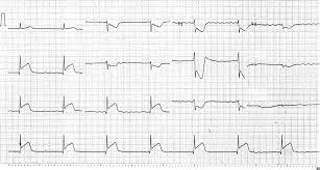
Contributor: Travis Barlock, MD Educational Pearls: The presence of a STEMI has traditionally been used to determine if a patient with acute chest pain requires urgent cath lab management STEMI indi...

1 Nov 20224min

Podcast 825: ALS vs PD Transport

Podcast 825: ALS vs PD Transport

Contributor: Aaron Lessen, MD Educational Pearls: In urban settings, it is becoming more common for police to transport critical patients from scene to hospital A 2022 multicenter observational study...

31 Okt 20222min

Podcast 824: Catheter-Related Blood Infections

Podcast 824: Catheter-Related Blood Infections

Contributor: Travis Barlock, MD Educational Pearls: Catheter related blood infections were thought to be caused by skin flora seeding the catheter. Thus, significant effort is applied to sterility an...

25 Okt 20223min

Podcast 823: Immediate Resuscitative Thoracotomy

Podcast 823: Immediate Resuscitative Thoracotomy

Contributor: Jared Scott, MD Educational Pearls: Immediate resuscitative thoracotomy can be performed in the ED to gain rapid access to the thoracic cavity in cases of traumatic cardiac arrest Wester...

24 Okt 20227min
Podcast 822: Meralgia Paresthetica

Podcast 822: Meralgia Paresthetica

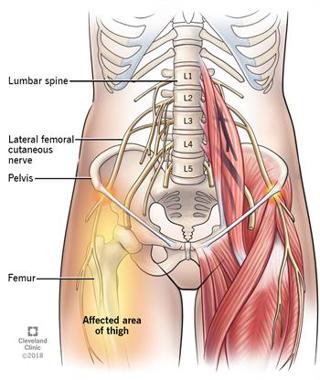
Contributor: Aaron Lessen, MD Educational Pearls: Lateral Cutaneous Femoral Nerve Entrapment Syndrome, also known as Meralgia Paresthetica, results from entrapment of the lateral cutaneous femoral ne...

18 Okt 20223min
Podcast 821: EKGs in Syncope

Podcast 821: EKGs in Syncope

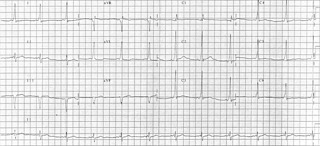
Contributor: Travis Barlock, MD Educational Pearls: An EKG should be obtained quickly after a syncopal event to identify possible life-threatening causes such as ischemia and arrhythmia WOBBLER is a...

17 Okt 20224min

Podcast 820: Who Qualifies for Take-Home Naloxone

Podcast 820: Who Qualifies for Take-Home Naloxone

Contributor: Don Stader, MD Educational Pearls: Home naloxone is traditionally given to those at high risk for opioid overdose such as those in the ED due to an opioid overdose, opioid intoxication, ...

11 Okt 20224min

Populært innen Vitenskap

fastlegen
tingenes-tilstand
rekommandert
jss
rss-rekommandert
rss-nysgjerrige-norge
villmarksliv
forskningno
sinnsyn
rss-paradigmepodden
fjellsportpodden
vett-og-vitenskap-med-gaute-einevoll
nordnorsk-historie
smart-forklart
rss-overskuddsliv
diagnose
abid-nadia-skyld-og-skam
abels-tarn
tomprat-med-gunnar-tjomlid
aldring-og-helse-podden