
Podcast 552: PE Management and Risk Stratification

Podcast 552: PE Management and Risk Stratification

Contributor: Dylan Luyten, MD

Educational Pearls:

  • After you diagnose a pulmonary embolism (PE) via CT or VQ scan, we need to categorize the PE as massive, sub-massive, or just PE to dictate treatment.
  • Massive PE: shock with hypotension due to an embolism, and the treatment of choice is thrombolysis with IV tPA with anticoagulation after lysis. Catheter thrombolysis is not used in the hemodynamically unstable patient but can be done after they are stable.
  • Sub-massive: signs of right heart strain/failure but hemodynamically stable. This can be EKG changes, positive biomarkers, or imaging findings. These patients can be treated with IV heparin as there may benefit from catheter directed thrombolysis which has been shown to lead to better functional outcomes.
  • Everything else can be stratified to determine whether inpatient even outpatient treatment is necessary
  • Pulmonary Embolism Severity Index (PESI) or Hestia criteria and can help determine if the patient is better suited for in or outpatient management.
  • Non massive or sub-massive PEs are treated with heparin/Lovenox bridged to Warfarin, a factor Xa inhibitor (ex. Xarelto), or direct oral anticoagulants (DOAC).

Editor's note: intravenous heparin is preferable to other anticoagulants when considering interventional radiology as it can be shut off and/or reversed if necessary prior to procedure

References

1. Sista, A. et al. Stratification, Imaging, and Management of Acute Massive and Submassive Pulmonary Embolism. 2017 Jul;284(1):5-24

2. Aujesky D, Obrosky DS, Stone RA, Auble TE, Perrier A, Cornuz J, Roy PM, Fine MJ. Derivation and validation of a prognostic model for pulmonary embolism. Am J Respir Crit Care Med. 2005 Oct 15;172(8):1041-6

3. Jimenez, D. et al. Risk stratification of patients with acute symptomatic pulmonary embolism. Intern Emerg Med. 2016 Feb;11(1):11-8.

Summarized by Jackson Roos, MS3 | Edited by Erik Verzemnieks, MD


Episoder(1147)

Buprenorphine after Naloxone

Buprenorphine after Naloxone

EMM would like to extend a large thank you to the Pain Management and Addiction Medicine section of the American College of Emergency Physicians for allowing us to post their webinar panel discussion ...

19 Aug 20201h 18min

Podcast 588: Esmolol for Refractory Ventricular Fibrillation

Podcast 588: Esmolol for Refractory Ventricular Fibrillation

Contributor: Ricky Dhaliwal, MD, JD Educational Pearls: Ventricular Fibrillation (VF) is a potentially fatal cardiac arrhythmia; Refractory VF even more so Epinephrine stimulates alpha and beta recep...

18 Aug 20203min

Podcast 587:  Puppies Preventing Burnout?

Podcast 587: Puppies Preventing Burnout?

Contributor: Jared Scott, MD Educational Pearls: Burnout happens. This study reminds us to take a few minutes on shift to take care of yourself. A new study looked at burnout in ER nurses, residents,...

17 Aug 20204min

On the Streets #7: Burns in the Pre-Hospital and ED Setting

On the Streets #7: Burns in the Pre-Hospital and ED Setting

Burns are low-volume, high-acuity injuries that require special attention and care from the pre-hospital team to the Emergency Department and finally to a dedicated burn unit and ICU. As a first respo...

12 Aug 202048min

Podcast 586:  Toxic Shock Syndrome

Podcast 586: Toxic Shock Syndrome

Contributor: Don Stader, MD Educational Pearls: Toxic shock syndrome (TSS) is a rare cause of shock typically caused by Staph aureus or Strep pyogenes, that produces a toxin that leads to rapid onset...

11 Aug 20206min
Podcast 585:  You Sure You Want Colchicine for Gout?

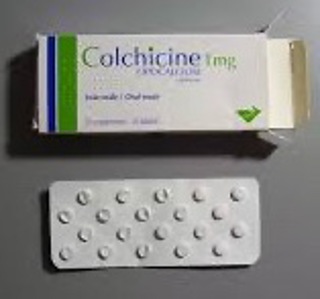
Podcast 585: You Sure You Want Colchicine for Gout?

Contributor: Don Stader, MD Educational Pearls: Gout is an arthritis caused by the deposition of urate crystals into the joint space Colchicine works by disrupting microtubules and prevents white blo...

10 Aug 20203min

Podcast 584:  Ketamine for Depression and Suicidality

Podcast 584: Ketamine for Depression and Suicidality

Contributor: Jared Scott, MD Educational Pearls: Suicide is currently the 10th leading cause of death in the US  Low quality studies have reported ketamine as a potential promising agent in treating ...

4 Aug 20203min

Podcast 583:  Raise Your Hands if You Have Carpal Tunnel Syndrome

Podcast 583: Raise Your Hands if You Have Carpal Tunnel Syndrome

Contributor: Aaron Lessen, MD Educational Pearls: Hand raising test: a simple but effective tool to diagnose carpal tunnel  Patients hold their hands over their head and if symptoms of carpal tunnel ...

3 Aug 20202min

Populært innen Vitenskap

fastlegen
rekommandert
tingenes-tilstand
rss-rekommandert
jss
liberal-halvtime
villmarksliv
rss-paradigmepodden
forskningno
sinnsyn
fjellsportpodden
pod-britannia
nevropodden
rss-nysgjerrige-norge
tidlose-historier
hva-er-greia-med
diagnose
rss-overskuddsliv
smart-forklart
rss-lundqvist-podden