
Podcast 552: PE Management and Risk Stratification

Podcast 552: PE Management and Risk Stratification

Contributor: Dylan Luyten, MD

Educational Pearls:

  • After you diagnose a pulmonary embolism (PE) via CT or VQ scan, we need to categorize the PE as massive, sub-massive, or just PE to dictate treatment.
  • Massive PE: shock with hypotension due to an embolism, and the treatment of choice is thrombolysis with IV tPA with anticoagulation after lysis. Catheter thrombolysis is not used in the hemodynamically unstable patient but can be done after they are stable.
  • Sub-massive: signs of right heart strain/failure but hemodynamically stable. This can be EKG changes, positive biomarkers, or imaging findings. These patients can be treated with IV heparin as there may benefit from catheter directed thrombolysis which has been shown to lead to better functional outcomes.
  • Everything else can be stratified to determine whether inpatient even outpatient treatment is necessary
  • Pulmonary Embolism Severity Index (PESI) or Hestia criteria and can help determine if the patient is better suited for in or outpatient management.
  • Non massive or sub-massive PEs are treated with heparin/Lovenox bridged to Warfarin, a factor Xa inhibitor (ex. Xarelto), or direct oral anticoagulants (DOAC).

Editor's note: intravenous heparin is preferable to other anticoagulants when considering interventional radiology as it can be shut off and/or reversed if necessary prior to procedure

References

1. Sista, A. et al. Stratification, Imaging, and Management of Acute Massive and Submassive Pulmonary Embolism. 2017 Jul;284(1):5-24

2. Aujesky D, Obrosky DS, Stone RA, Auble TE, Perrier A, Cornuz J, Roy PM, Fine MJ. Derivation and validation of a prognostic model for pulmonary embolism. Am J Respir Crit Care Med. 2005 Oct 15;172(8):1041-6

3. Jimenez, D. et al. Risk stratification of patients with acute symptomatic pulmonary embolism. Intern Emerg Med. 2016 Feb;11(1):11-8.

Summarized by Jackson Roos, MS3 | Edited by Erik Verzemnieks, MD


Episoder(1147)

Rapid Fire Pharmacy Review with Adis Keric of ER-Rx

Rapid Fire Pharmacy Review with Adis Keric of ER-Rx

Meet Adis Keric, Board Certified Pharmacotherapy Specialist and a Board Certified Critical Care pharmacist who works in the Emergency Department and ICU of level 1 trauma center Regions Hospital in Sa...

29 Jul 202018min
Podcast 582:  Gadolinium - The Contrast of MRI

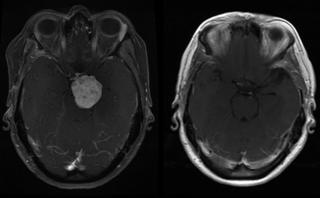
Podcast 582: Gadolinium - The Contrast of MRI

Contributor: Michael Hunt, MD Educational Pearls: Contrast agents are commonly used for X-rays and CT's to better characterize disease, but contrast doesn't work with MRI. That's where the element Ga...

28 Jul 20204min

Podcast 581:  Alcohol Complications

Podcast 581: Alcohol Complications

\Contributor: Don Stader, MD Educational Pearls: Altered mental status/confusion are major symptoms associated with both alcohol use and withdrawal. Wernicke's encephalopathy is a triad of symptoms o...

27 Jul 20206min

On The Streets #6: Artificial Intelligence Detection for LVOs

On The Streets #6: Artificial Intelligence Detection for LVOs

Meet Michelle Whaley, Clinical Nurse Specialist and Stroke Program Coordinator at Sky Ridge Medical Center in Lone Tree, Colorado. Jordan and Michelle discuss advances in Artificial Intelligence techn...

22 Jul 202021min

Podcast 580:  Origin of PPE

Podcast 580: Origin of PPE

Contributor: Michael Hunt, MD Educational Pearls: PPE, or personal protective equipment, has become a major talking point since the emergence of the novel coronavirus (COVID 19). While ubiquitous now...

21 Jul 20204min

Podcast 579:  Yersinia Pestis

Podcast 579: Yersinia Pestis

Contributor: Don Stader, MD Educational Pearls: Yersinia Pestis is the bacteria that caused the black plague. It was first discovered to be the cause of the bubonic plague in 1800s in China during th...

20 Jul 20203min
Podcast 578: Brown-Sequard Syndrome

Podcast 578: Brown-Sequard Syndrome

Author: Eric Miller, MD Educational Pearls: Brown-Sequard Syndrome is a neurological deficit that results from hemisection of the spinal cord  This is usually from traumatic injury (blunt or penetrat...

14 Jul 20202min

Podcast 577:  Immunotherapies

Podcast 577: Immunotherapies

Contributor: Don Stader, MD Educational Pearls: Checkpoint inhibition normally helps our body detect abnormal cells and terminate it but cancerous cells often are able to avoid this countermeasure Mo...

13 Jul 20206min

Populært innen Vitenskap

fastlegen
rekommandert
tingenes-tilstand
rss-rekommandert
jss
liberal-halvtime
villmarksliv
rss-paradigmepodden
forskningno
sinnsyn
fjellsportpodden
pod-britannia
nevropodden
rss-nysgjerrige-norge
tidlose-historier
hva-er-greia-med
diagnose
rss-overskuddsliv
smart-forklart
rss-lundqvist-podden