
Podcast 579:  Yersinia Pestis

Podcast 579: Yersinia Pestis

Contributor: Don Stader, MD

Educational Pearls:

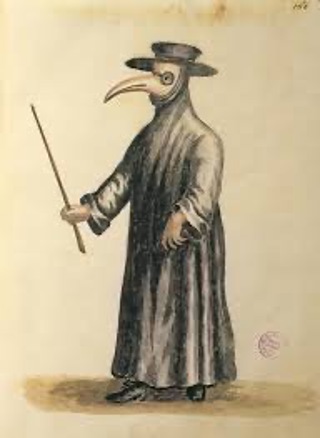
  • Yersinia Pestis is the bacteria that caused the black plague. It was first discovered to be the cause of the bubonic plague in 1800s in China during the 3rd bubonic plague where 10-20 million people died
  • Causes 3 types of plague:
    • Bubonic plague: characterized by severe swelling of lymph nodes called buboes, most commonly in the groin, also axillary and olecranon lymph nodes.
    • Septicemic plague: characterized by severe sepsis, no lymphadenopathy. This strain famously causes disseminated intravascular coagulopathy (DIC) and can lead to limb necrosis and fingers turning black. Hence the name the Black Death.
    • Pneumonic: most dangerous of the plagues and characterized by PNA on CXR with pronounced mediastinal lymphadenopathy
  • Fleas are the largest reservoir, although prairie dogs and squirrels have been known to carry the bacteria as well.
  • Yersinia Pestis creates a microfilm inside the stomach of fleas and renders them incapable of digesting your blood when they try to eat it and they vomit the bacteria into your blood.
  • Doxycycline and Ciprofloxacin are the mainstay of treatment.

References

Achtman M, Zurth K, Morelli G, Torrea G, Guiyoule A. Carniel E. Yersinia pestis, the cause of plague, is a recently emerged clone of Yersinia pseudotuberculosis. Proc Natl Acad Sci U S A. 1999. doi:10.1073/pnas.96.24.14043

Galimand M, Carniel E, Courvalin P. Resistance of Yersinia pestis to Antimicrobial Agents. Antimicrob Agents Chemother. 2006;50(10):3233 LP - 3236. doi:10.1128/AAC.00306-06

Sexton D, Stout J. Clinical Manifestations, Diagnosis, And Treatment Of Plague (Yersinia Pestis Infection). Waltham, MA: UpToDate; 2020.

Summarized by Mason Tuttle & Jackson Roos, MS4 | Edited by Erik Verzemnieks, MD


Denne episoden er hentet fra en åpen RSS-feed og er ikke publisert av Podme. Den kan derfor inneholde annonser.

Episoder(1169)

Podcast 1014: Eating and Drinking on Shift

Podcast 1014: Eating and Drinking on Shift

Contributor; Aaron Lessen, MD Educational Pearls: A 2026 survey asked Canadian emergency medicine (EM) physicians about their eating and drinking habits while on shift. Among 527 respondents, 35%...

27 Jul 2min

Podcast 1013: Thoracotomy Indications

Podcast 1013: Thoracotomy Indications

Contributor; Taylor Lynch, MD Educational Pearls: Thoracotomy  Thoracotomy is used in traumatic cardiac arrest to replace conventional CPR with direct access to the chest. Goals include identif...

20 Jul 3min

Podcast 1012: Meth Sedation

Podcast 1012: Meth Sedation

Contributor: Aaron Lessen, MD Educational Pearls:    Agitated patients who are intoxicated with methamphetamine pose a unique challenge when selecting a sedative to counter their symptoms. Is there ...

13 Jul 1min

Podcast 1011: Creepy Crawlies

Podcast 1011: Creepy Crawlies

Contributor: Meghan Hurley, MD Educational Pearls: What animal is the most lethal to humans?  Depending on how we define lethal, and animal, this answer is actually not straight forward.  Globall...

6 Jul 7min

Podcast 1010: First Pass Intubation Success

Podcast 1010: First Pass Intubation Success

Contributor: Travis Barlock, MD Educational Pearls:   First-pass success is critical to limit complications from apnea, hypoxia, and airway trauma.  Complication rate for patients intubated on the f...

29 Jun 3min

On the Streets- Zero to Rodeo

On the Streets- Zero to Rodeo

Dan Orbidan, OMS-II and Dr. Travis Barlock, MD discuss a real out of hospital call. This episode covers the implications of a pharmacologically abnormal patient presentation and the pre and post hospi...

22 Jun 35min

Carepoint Journal Club- Neurology

Carepoint Journal Club- Neurology

Carepoint Journal Club is a quarterly series with discussions about a medical topic, brought to you by Carepoint's Emergency Physicians.

15 Jun 36min

Podcast 1009: Prevention for Recurrent UTI

Podcast 1009: Prevention for Recurrent UTI

Contributor: Aaron Lessen, MD Educational Pearls:   UTIs are commonly seen in older women We often see them taking long-term prophylactic antibiotics because of common recurrence. Around 20-30% of...

8 Jun 1min

Populært innen Vitenskap

fastlegen
tingenes-tilstand
jss
rekommandert
liberal-halvtime
sinnsyn
dekodet-2
forskningno
fjellsportpodden
villmarksliv
tomprat-med-gunnar-tjomlid
abels-tarn
rss-overskuddsliv
rss-lundqvist-podden
rss-nysgjerrige-norge
rss-paradigmepodden
rss-rekommandert
kvinnehelsepodden
grunnstoffene
diagnose