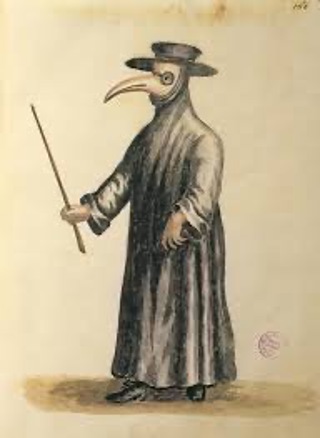

Podcast 579:  Yersinia Pestis

Podcast 579: Yersinia Pestis

Contributor: Don Stader, MD

Educational Pearls:

  • Yersinia Pestis is the bacteria that caused the black plague. It was first discovered to be the cause of the bubonic plague in 1800s in China during the 3rd bubonic plague where 10-20 million people died
  • Causes 3 types of plague:
    • Bubonic plague: characterized by severe swelling of lymph nodes called buboes, most commonly in the groin, also axillary and olecranon lymph nodes.
    • Septicemic plague: characterized by severe sepsis, no lymphadenopathy. This strain famously causes disseminated intravascular coagulopathy (DIC) and can lead to limb necrosis and fingers turning black. Hence the name the Black Death.
    • Pneumonic: most dangerous of the plagues and characterized by PNA on CXR with pronounced mediastinal lymphadenopathy
  • Fleas are the largest reservoir, although prairie dogs and squirrels have been known to carry the bacteria as well.
  • Yersinia Pestis creates a microfilm inside the stomach of fleas and renders them incapable of digesting your blood when they try to eat it and they vomit the bacteria into your blood.
  • Doxycycline and Ciprofloxacin are the mainstay of treatment.

References

Achtman M, Zurth K, Morelli G, Torrea G, Guiyoule A. Carniel E. Yersinia pestis, the cause of plague, is a recently emerged clone of Yersinia pseudotuberculosis. Proc Natl Acad Sci U S A. 1999. doi:10.1073/pnas.96.24.14043

Galimand M, Carniel E, Courvalin P. Resistance of Yersinia pestis to Antimicrobial Agents. Antimicrob Agents Chemother. 2006;50(10):3233 LP - 3236. doi:10.1128/AAC.00306-06

Sexton D, Stout J. Clinical Manifestations, Diagnosis, And Treatment Of Plague (Yersinia Pestis Infection). Waltham, MA: UpToDate; 2020.

Summarized by Mason Tuttle & Jackson Roos, MS4 | Edited by Erik Verzemnieks, MD


Episoder(1145)

Carepoint Journal Club: Trauma Discussion

Carepoint Journal Club: Trauma Discussion

Carepoint Journal Club is a quarterly series with discussions about a medical topic, brought to you by Carepoint's Emergency Physicians.

22 Des 202545min

Episode 987: Cough Suppressants

Episode 987: Cough Suppressants

Contributor: Meghan Hurley, MD Educational Pearls:  OTC Medications Dextromethorphan (DM) Most common OTC cough suppressant Minimal efficacy: Little evidence that it shortens the duration or severit...

15 Des 20257min

Episode 986: Lateral Canthotomy in Emergency Settings

Episode 986: Lateral Canthotomy in Emergency Settings

Contributor: Taylor Lynch, MD Educational Pearls: What is orbital compartment syndrome, and how is it assessed in the emergency room? Orbital compartment syndrome (OCS) is an emergent ophthalmic cond...

8 Des 20254min

Episode 985: Amiodarone vs. Lidocaine

Episode 985: Amiodarone vs. Lidocaine

Contributor: Aaron Lessen, MD Educational Pearls: How do amiodarone and lidocaine work on the heart? Amiodarone Blocks potassium channels (Class III effect). Also blocks sodium and calcium channels....

8 Des 20252min

Episode 984: Fish Hooks

Episode 984: Fish Hooks

Contributor: Megan Hurley, MD Educational Pearls: Assess first: confirm the hook isn't near vital structures. Automatic subspecialty consult for eye involvement or proximity to carotid artery, radial...

24 Nov 20254min

Episode 983: Head-of-Bed Position in Large Vessel Occlusion Strokes

Episode 983: Head-of-Bed Position in Large Vessel Occlusion Strokes

Contributor: Aaron Lessen MD Educational Pearls:  Recent prospective randomized clinical trial assessed optimal head-of-bed positioning in patients with LVO 0º vs. 30º elevation Objective was to det...

18 Nov 20252min

Episode 982: Epistaxis Management

Episode 982: Epistaxis Management

Contributor: Meghan Hurley, MD Educational Pearls: 1. Initial Assessment Start with a physical examination: Determine if the bleed is anterior or posterior. Perform a primary survey: assess ai...

10 Nov 20256min

Episode 981: Electrical Burns

Episode 981: Electrical Burns

Contributor: Travis Barlock, MD Educational Pearls: Quick Statistics on Electrical Burns: Electrical burns compose roughly 2 to 9% of all burns that come into emergency departments. The majority of p...

3 Nov 20253min

Populært innen Vitenskap

fastlegen
tingenes-tilstand
rekommandert
jss
smart-forklart
vett-og-vitenskap-med-gaute-einevoll
rss-rekommandert
forskningno
sinnsyn
villmarksliv
fjellsportpodden
rss-nysgjerrige-norge
rss-paradigmepodden
pod-britannia
aldring-og-helse-podden
nordnorsk-historie
diagnose
tidlose-historier
tomprat-med-gunnar-tjomlid
rss-overskuddsliv