Podcast 557:  COVID-19 Lab Trends

Podcast 557: COVID-19 Lab Trends

Contributor: Don Stader, MD

Educational Pearls:

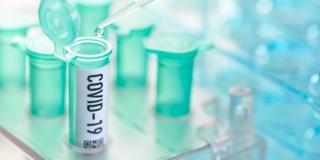
  • COVID-19 is diagnosed with a nasopharyngeal swab (q-tip). This unfortunately can be painful, but if the swab doesn't go deep into the nasal cavity the sample can be inadequate leading to false negatives (missed infections).
  • The sensitivity of the COVID-19 RT PCR test is low, ranging from 66-80% in various studies. Another study has shown 23% of patients who initially tested negative but had COVID-19 symptoms will test positive when re-tested. So test highly suspicious patients twice.

  • COVID has shown to have an effect on CBC. White blood cell counts are often normal (no leukocytosis), but there is often lymphopenia, or low lymphocytes, and thrombocytopenia. Interestingly, low platelets have appeared to have prognostic value in that lower platelets often indicate worse patient outcomes.
  • Coagulation studies are showing very elevated D-Dimers which has sparked the debate as to whether COVID-19 causes a hypercoagulable state. The increased incidence of MI/heart attacks and strokes in COVID patients supports this argument.
  • While D-Dimers can help point towards a diagnosis of pulmonary embolism, in the setting of highly likely COVID-19 infections, getting a CTA looking for a PE is probably unnecessary unless there's also suspicion for PE.
  • C-reactive protein (CRP) and procalcitonin are two common inflammatory markers. A CRP can help indicate how sick a patient is and procalcitonin can help determine if the infection is bacterial or viral in nature.
  • CRP levels are often elevated in COVID patients, and studies are showing a high CRP is linked to worse patient outcomes.
  • Elevations in procalcitonin can be used to see if there's a concomitant bacterial infection, meaning patients need antibiotics in addition to supportive care for the COVID-19.
  • Flu season is coming to a close, but data has shown a 5-10% co-infection rate of COVID-19 with influenza. As expected patient outcomes have been worse in those with both infections.

References

1) Farkas, Josh. "COVID-19." EMCrit Project, 21 Apr. 2020, emcrit.org/ibcc/covid19/#labs.

2) Guan W. et al. Clinical Characteristics of Coronavirus Disease 2019 in China. February 28, 2020, updated on March 6, 2020, at NEJM.org. DOI: 10.1056/NEJMoa2002032

3)Young BE, Ong SWX, Kalimuddin S, et al. Epidemiologic Features and Clinical Course of Patients Infected With SARS-CoV-2 in Singapore. JAMA. 2020;323(15):1488–1494. doi:10.1001/jama.2020.3204

4) Wang M. et al. Clinical diagnosis of 8274 samples with 2019-novel coronavirus in Wuhan. medRxiv 2020.02.12.20022327; doi: https://doi.org/10.1101/2020.02.12.20022327

Summarized by Jackson Roos, MS4 | Edited by Erik Verzemnieks, MD

Episoder(1146)

Podcast 672: Oxygen Things

Podcast 672: Oxygen Things

Contributor: Aaron Lessen , MD Educational Pearls: Patients on 10L or more of oxygen per minute in the ICU were randomized to oxygen goals of 90% or 96% to compare 90-day mortality rates Mortality ra...

18 Mai 20212min

Podcast 671: Scapula Fractures

Podcast 671: Scapula Fractures

Contributor: Adam Barkin, MD Educational Pearls: Represents less than 1% of all fractures that occur, although it has a significant mortality rate of 2-5% Typically occurs in high-energy trauma and ...

17 Mai 20213min

Podcast 670: Operation Tat-Type

Podcast 670: Operation Tat-Type

Contributor: Dave Rosenberg, MD Educational Pearls: In 1951, Operation Tat-Type began tattooing adults with their blood type in an effort to prepare for rapid transfusions in the time of the Cold Wa...

12 Mai 20214min

Podcast 669: VTach Storm

Podcast 669: VTach Storm

Contributor: Gretchen Hinson, MD Educational Pearls: Three episodes of ventricular tachycardia within 24 hours or two episodes back-to-back Treat with IV amiodarone and IV beta-blockers initially as...

11 Mai 20215min
Podcast 668: Opioid-Induced Hyperalgesia

Podcast 668: Opioid-Induced Hyperalgesia

Contributor: Donald Stader, MD Educational Pearls: Opioids target kappa and NMDA receptors that can lead to central nervous system sensitization and therefore increased pain For patients with opioid-...

10 Mai 20214min
Podcast 667: Lactated Ringers for DKA

Podcast 667: Lactated Ringers for DKA

Contributor: Aaron Lessen, MD Educational Pearls: Recent study looked at whether lactated ringers might be a better choice for fluid resuscitation in patients with DKA compared to normal saline Norm...

4 Mai 20213min

Podcast 666: Pain Management & Patient Perspective

Podcast 666: Pain Management & Patient Perspective

Contributor: Jared Scott, MD Educational Pearls: About ½ of the patients in the ED present with some form of pain One study looked at patients presenting in pain and followed up two days after disch...

3 Mai 20215min
Podcast 665: Allergic Reactions after COVID Vaccinations

Podcast 665: Allergic Reactions after COVID Vaccinations

Contributor: Peter Bakes, MD Educational Pearls: Incidence 2.5-10 per million people occurring primarily in those with environmental allergens Typically occurs with mRNA vaccines in lipid nanopartic...

28 Apr 20214min

Populært innen Vitenskap

fastlegen
rekommandert
tingenes-tilstand
jss
rss-rekommandert
liberal-halvtime
villmarksliv
sinnsyn
rss-paradigmepodden
forskningno
fjellsportpodden
nevropodden
rss-nysgjerrige-norge
vett-og-vitenskap-med-gaute-einevoll
diagnose
dekodet-2
smart-forklart
abid-nadia-skyld-og-skam
rss-lundqvist-podden
hva-er-greia-med