Podcast 557:  COVID-19 Lab Trends

Podcast 557: COVID-19 Lab Trends

Contributor: Don Stader, MD

Educational Pearls:

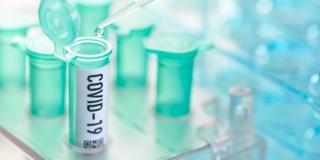
  • COVID-19 is diagnosed with a nasopharyngeal swab (q-tip). This unfortunately can be painful, but if the swab doesn't go deep into the nasal cavity the sample can be inadequate leading to false negatives (missed infections).
  • The sensitivity of the COVID-19 RT PCR test is low, ranging from 66-80% in various studies. Another study has shown 23% of patients who initially tested negative but had COVID-19 symptoms will test positive when re-tested. So test highly suspicious patients twice.

  • COVID has shown to have an effect on CBC. White blood cell counts are often normal (no leukocytosis), but there is often lymphopenia, or low lymphocytes, and thrombocytopenia. Interestingly, low platelets have appeared to have prognostic value in that lower platelets often indicate worse patient outcomes.
  • Coagulation studies are showing very elevated D-Dimers which has sparked the debate as to whether COVID-19 causes a hypercoagulable state. The increased incidence of MI/heart attacks and strokes in COVID patients supports this argument.
  • While D-Dimers can help point towards a diagnosis of pulmonary embolism, in the setting of highly likely COVID-19 infections, getting a CTA looking for a PE is probably unnecessary unless there's also suspicion for PE.
  • C-reactive protein (CRP) and procalcitonin are two common inflammatory markers. A CRP can help indicate how sick a patient is and procalcitonin can help determine if the infection is bacterial or viral in nature.
  • CRP levels are often elevated in COVID patients, and studies are showing a high CRP is linked to worse patient outcomes.
  • Elevations in procalcitonin can be used to see if there's a concomitant bacterial infection, meaning patients need antibiotics in addition to supportive care for the COVID-19.
  • Flu season is coming to a close, but data has shown a 5-10% co-infection rate of COVID-19 with influenza. As expected patient outcomes have been worse in those with both infections.

References

1) Farkas, Josh. "COVID-19." EMCrit Project, 21 Apr. 2020, emcrit.org/ibcc/covid19/#labs.

2) Guan W. et al. Clinical Characteristics of Coronavirus Disease 2019 in China. February 28, 2020, updated on March 6, 2020, at NEJM.org. DOI: 10.1056/NEJMoa2002032

3)Young BE, Ong SWX, Kalimuddin S, et al. Epidemiologic Features and Clinical Course of Patients Infected With SARS-CoV-2 in Singapore. JAMA. 2020;323(15):1488–1494. doi:10.1001/jama.2020.3204

4) Wang M. et al. Clinical diagnosis of 8274 samples with 2019-novel coronavirus in Wuhan. medRxiv 2020.02.12.20022327; doi: https://doi.org/10.1101/2020.02.12.20022327

Summarized by Jackson Roos, MS4 | Edited by Erik Verzemnieks, MD

Episoder(1146)

Podcast 582:  Gadolinium - The Contrast of MRI

Podcast 582: Gadolinium - The Contrast of MRI

Contributor: Michael Hunt, MD Educational Pearls: Contrast agents are commonly used for X-rays and CT's to better characterize disease, but contrast doesn't work with MRI. That's where the element Ga...

28 Jul 20204min

Podcast 581:  Alcohol Complications

Podcast 581: Alcohol Complications

\Contributor: Don Stader, MD Educational Pearls: Altered mental status/confusion are major symptoms associated with both alcohol use and withdrawal. Wernicke's encephalopathy is a triad of symptoms o...

27 Jul 20206min

On The Streets #6: Artificial Intelligence Detection for LVOs

On The Streets #6: Artificial Intelligence Detection for LVOs

Meet Michelle Whaley, Clinical Nurse Specialist and Stroke Program Coordinator at Sky Ridge Medical Center in Lone Tree, Colorado. Jordan and Michelle discuss advances in Artificial Intelligence techn...

22 Jul 202021min
Podcast 580:  Origin of PPE

Podcast 580: Origin of PPE

Contributor: Michael Hunt, MD Educational Pearls: PPE, or personal protective equipment, has become a major talking point since the emergence of the novel coronavirus (COVID 19). While ubiquitous now...

21 Jul 20204min

Podcast 579:  Yersinia Pestis

Podcast 579: Yersinia Pestis

Contributor: Don Stader, MD Educational Pearls: Yersinia Pestis is the bacteria that caused the black plague. It was first discovered to be the cause of the bubonic plague in 1800s in China during th...

20 Jul 20203min

Podcast 578: Brown-Sequard Syndrome

Podcast 578: Brown-Sequard Syndrome

Author: Eric Miller, MD Educational Pearls: Brown-Sequard Syndrome is a neurological deficit that results from hemisection of the spinal cord  This is usually from traumatic injury (blunt or penetrat...

14 Jul 20202min

Podcast 577:  Immunotherapies

Podcast 577: Immunotherapies

Contributor: Don Stader, MD Educational Pearls: Checkpoint inhibition normally helps our body detect abnormal cells and terminate it but cancerous cells often are able to avoid this countermeasure Mo...

13 Jul 20206min

UnfilterED #9: Dr. Steven Bradley

UnfilterED #9: Dr. Steven Bradley

Dr. Steven Bradley is an active duty U.S. Naval officer practicing as a Staff Anesthesiologist in Virginia where also resides on the Medical Ethics Committee for his hospital. He serves as the Anesthe...

8 Jul 202039min

Populært innen Vitenskap

fastlegen
rekommandert
tingenes-tilstand
jss
rss-rekommandert
liberal-halvtime
villmarksliv
forskningno
sinnsyn
fjellsportpodden
rss-paradigmepodden
nevropodden
rss-nysgjerrige-norge
tidlose-historier
vett-og-vitenskap-med-gaute-einevoll
diagnose
smart-forklart
pod-britannia
dekodet-2
hva-er-greia-med