
Podcast 557:  COVID-19 Lab Trends

Podcast 557: COVID-19 Lab Trends

Contributor: Don Stader, MD

Educational Pearls:

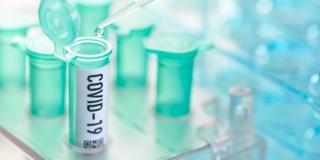
  • COVID-19 is diagnosed with a nasopharyngeal swab (q-tip). This unfortunately can be painful, but if the swab doesn't go deep into the nasal cavity the sample can be inadequate leading to false negatives (missed infections).
  • The sensitivity of the COVID-19 RT PCR test is low, ranging from 66-80% in various studies. Another study has shown 23% of patients who initially tested negative but had COVID-19 symptoms will test positive when re-tested. So test highly suspicious patients twice.

  • COVID has shown to have an effect on CBC. White blood cell counts are often normal (no leukocytosis), but there is often lymphopenia, or low lymphocytes, and thrombocytopenia. Interestingly, low platelets have appeared to have prognostic value in that lower platelets often indicate worse patient outcomes.
  • Coagulation studies are showing very elevated D-Dimers which has sparked the debate as to whether COVID-19 causes a hypercoagulable state. The increased incidence of MI/heart attacks and strokes in COVID patients supports this argument.
  • While D-Dimers can help point towards a diagnosis of pulmonary embolism, in the setting of highly likely COVID-19 infections, getting a CTA looking for a PE is probably unnecessary unless there's also suspicion for PE.
  • C-reactive protein (CRP) and procalcitonin are two common inflammatory markers. A CRP can help indicate how sick a patient is and procalcitonin can help determine if the infection is bacterial or viral in nature.
  • CRP levels are often elevated in COVID patients, and studies are showing a high CRP is linked to worse patient outcomes.
  • Elevations in procalcitonin can be used to see if there's a concomitant bacterial infection, meaning patients need antibiotics in addition to supportive care for the COVID-19.
  • Flu season is coming to a close, but data has shown a 5-10% co-infection rate of COVID-19 with influenza. As expected patient outcomes have been worse in those with both infections.

References

1) Farkas, Josh. "COVID-19." EMCrit Project, 21 Apr. 2020, emcrit.org/ibcc/covid19/#labs.

2) Guan W. et al. Clinical Characteristics of Coronavirus Disease 2019 in China. February 28, 2020, updated on March 6, 2020, at NEJM.org. DOI: 10.1056/NEJMoa2002032

3)Young BE, Ong SWX, Kalimuddin S, et al. Epidemiologic Features and Clinical Course of Patients Infected With SARS-CoV-2 in Singapore. JAMA. 2020;323(15):1488–1494. doi:10.1001/jama.2020.3204

4) Wang M. et al. Clinical diagnosis of 8274 samples with 2019-novel coronavirus in Wuhan. medRxiv 2020.02.12.20022327; doi: https://doi.org/10.1101/2020.02.12.20022327

Summarized by Jackson Roos, MS4 | Edited by Erik Verzemnieks, MD

Episoder(1148)

Podcast # 361: Vertiginous Dizziness

Podcast # 361: Vertiginous Dizziness

Author: Peter Bakes, MD Educational Pearls: Important to find out if patients mean dysequilibrium, lightheadedness, or vertigo when patients say they are "dizzy." Differentiate central vs. periph...

3 Aug 20186min
Podcast # 360: Epidural Abscess Screening

Podcast # 360: Epidural Abscess Screening

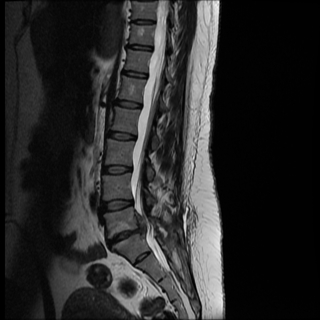
Author: Dylan Luyten, MD. Educational Pearls:   Dangerous causes of back pain: AAA, cauda equina syndrome, epidural abscess. Young person with back pain needs to be evaluated for injection drug use...

2 Aug 20184min
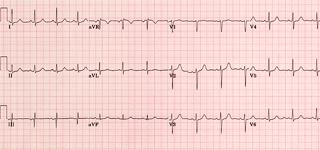
Podcast # 359: Normal EKG

Podcast # 359: Normal EKG

Author: Sam Killian, MD. Educational Pearls: Computer interpretation has a very good negative predictive value of a normal EKG (99%). Of 222 interpreted as "normal," 13 were deemed to have some a...

31 Jul 20184min
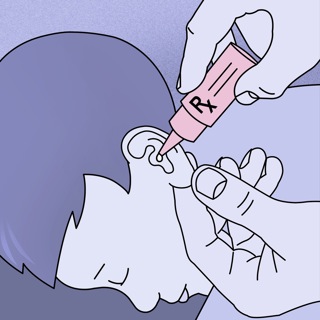
Podcast # 358: Affordable ear drop alternatives

Podcast # 358: Affordable ear drop alternatives

Author: Erik Verzemnieks, MD Educational Pearls: Otic (ear) specific antibiotic drops can be expensive Opthalmic (eye) versions are basically identical and can be used as an affordable substitute...

27 Jul 20181min
Podcast #357: Local Anesthetic Toxicity

Podcast #357: Local Anesthetic Toxicity

Author: Michael Hunt, MD Educational Pearls: Toxicity happens from local anesthetics being given too fast, too much, or in the unintended spot Systemic toxicity manifests first with neurologic sy...

25 Jul 20184min

Podcast # 356: Babies can't be born addicted

Podcast # 356: Babies can't be born addicted

Author: Don Stader, MD. Educational Pearls: A baby can be born dependent on opioids but not addicted to them. Opioid addiction (Opioid Use Disorder) is a disease of mature brains and is character...

23 Jul 20184min

Podcast #355: Syphilis

Podcast #355: Syphilis

Author: Aaron Lessen, MD Educational Pearls: Re-emerging STI. Progresses through distinct phases if untreated: Primary syphilis: frequently overlooked because initial chancre is painless. Sec...

20 Jul 20183min
Podcast # 354: Hematometra

Podcast # 354: Hematometra

Author: Sam Killian, MD Educational Pearls: Hematometra: uterus filled with blood due to obstruction of outflow tract. Most commonly a result congenital abnormalities (imperforate hymen, transverse...

18 Jul 20184min

Populært innen Vitenskap

fastlegen
tingenes-tilstand
rekommandert
jss
sinnsyn
forskningno
villmarksliv
liberal-halvtime
rss-rekommandert
fjellsportpodden
dekodet-2
rss-paradigmepodden
rss-overskuddsliv
tidlose-historier
tomprat-med-gunnar-tjomlid
utenrikshospitalet
katastrofe-i-hjernen
pod-britannia
rss-nysgjerrige-norge
rss-lundqvist-podden