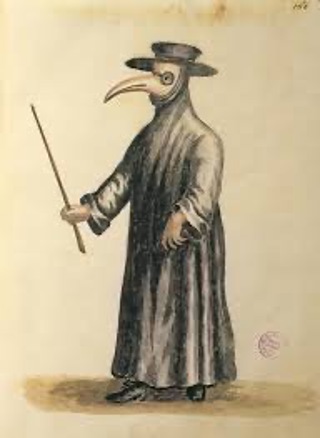

Podcast 579:  Yersinia Pestis

Podcast 579: Yersinia Pestis

Contributor: Don Stader, MD

Educational Pearls:

  • Yersinia Pestis is the bacteria that caused the black plague. It was first discovered to be the cause of the bubonic plague in 1800s in China during the 3rd bubonic plague where 10-20 million people died
  • Causes 3 types of plague:
    • Bubonic plague: characterized by severe swelling of lymph nodes called buboes, most commonly in the groin, also axillary and olecranon lymph nodes.
    • Septicemic plague: characterized by severe sepsis, no lymphadenopathy. This strain famously causes disseminated intravascular coagulopathy (DIC) and can lead to limb necrosis and fingers turning black. Hence the name the Black Death.
    • Pneumonic: most dangerous of the plagues and characterized by PNA on CXR with pronounced mediastinal lymphadenopathy
  • Fleas are the largest reservoir, although prairie dogs and squirrels have been known to carry the bacteria as well.
  • Yersinia Pestis creates a microfilm inside the stomach of fleas and renders them incapable of digesting your blood when they try to eat it and they vomit the bacteria into your blood.
  • Doxycycline and Ciprofloxacin are the mainstay of treatment.

References

Achtman M, Zurth K, Morelli G, Torrea G, Guiyoule A. Carniel E. Yersinia pestis, the cause of plague, is a recently emerged clone of Yersinia pseudotuberculosis. Proc Natl Acad Sci U S A. 1999. doi:10.1073/pnas.96.24.14043

Galimand M, Carniel E, Courvalin P. Resistance of Yersinia pestis to Antimicrobial Agents. Antimicrob Agents Chemother. 2006;50(10):3233 LP - 3236. doi:10.1128/AAC.00306-06

Sexton D, Stout J. Clinical Manifestations, Diagnosis, And Treatment Of Plague (Yersinia Pestis Infection). Waltham, MA: UpToDate; 2020.

Summarized by Mason Tuttle & Jackson Roos, MS4 | Edited by Erik Verzemnieks, MD


Episoder(1146)

Podcast #497: Does my patient with CP have ACS?

Podcast #497: Does my patient with CP have ACS?

Author: Dylan Luyten, MD Educational Pearls: While certain aspects of the history, exam, and EKG may increase likelihood of ACS, there is no one element that performs well on its own Elements of the...

15 Aug 201915min

Podcast # 496: Hallucinogens

Podcast # 496: Hallucinogens

Author: David Holland, MD Educational Pearls: Hallucinogenics have been used for a variety of cultural and religious reasons for thousands of years In the 1960's a Harvard professor began experimenti...

12 Aug 20197min

Podcast # 495: Trauma in the Elderly

Podcast # 495: Trauma in the Elderly

Author: Rachel Brady, MD Educational Pearls: Elderly patients (>65 years old) have a higher trauma mortality compared to younger patients, even though they have lower mechanisms of injury  Elder trau...

6 Aug 20196min

Podcast #494: A Standard Toxicology Approach

Podcast #494: A Standard Toxicology Approach

Contributor: JP Brewer, MD Educational Pearls: Obtaining collateral is often vital to determine the potential drugs accessible to the patient - this may include After this, use ancillary sources such...

2 Aug 20197min

Podcast # 493: One Pill for the Kill

Podcast # 493: One Pill for the Kill

Contributor: JP Brewer, MD Educational Pearls: Because of their smaller size, there are a variety of adult-dose pills that are potentially toxic to children. The most common categories of medication...

31 Jul 20196min
Podcast # 492: Pain While on Buprenorphine

Podcast # 492: Pain While on Buprenorphine

Contributor: Don Stader, MD Educational Pearls: Buprenorphine is a partial Mu-agonist and binds with higher affinity than most opioids Pain management with opioids therefore can be difficult in patie...

26 Jul 20194min

Podcast # 491: Buprenorphine for Withdrawal

Podcast # 491: Buprenorphine for Withdrawal

Educational Pearls: Buprenorphine is a semi-synthetic derivative of the opium poppy FDA approved for the treatment of opiate use disorder and chronic pain Benefit in emergency department use is the c...

24 Jul 20194min

Podcast # 490: Canadian Syncope Rule

Podcast # 490: Canadian Syncope Rule

Contributor: Don Stader, MD Educational Pearls: Syncope is usually benign but can be caused by serious etiologies which include: PE, certain cardiac arrhythmias, AAA, intracranial bleed/stroke The Ca...

22 Jul 20194min

Populært innen Vitenskap

fastlegen
rekommandert
jss
tingenes-tilstand
rss-rekommandert
villmarksliv
liberal-halvtime
sinnsyn
forskningno
rss-paradigmepodden
fjellsportpodden
nevropodden
rss-nysgjerrige-norge
diagnose
vett-og-vitenskap-med-gaute-einevoll
abid-nadia-skyld-og-skam
tidlose-historier
dekodet-2
smart-forklart
hva-er-greia-med