

Mental Health Monthly #5: Borderline Personality Disorder

Mental Health Monthly #5: Borderline Personality Disorder

For this episode of Mental Health Monthly, EMM is honored to collaborate with the hosts of Millennial Mental Health Channel podcast to explain Borderline Personality Disorder and tips to manage patients with this diagnosis in the Emergency Department. Dr. Justin Romano is a third year psychiatry resident in Omaha, Nebraska and Eddie Carrillo is a licensed mental health therapist currently working at partial hospitalization and IOP eating disorder program in Portland, Oregon. Their podcast Millennial Mental Health Channel seeks to explore the world of mental health from their two professional perspectives.

You can listen to their podcast on all major streaming platforms including Apple Podcasts, Spotify and Google Podcasts.

Follow them on Twitter and Instagram @millennialmhc

Contributors: Dr. Justin Romano and Eddie Carrillo, M.A., LPC

Educational Pearls:

  • 4% of the general population has Bipolar Personality Disorder (BPD) and 9% of all emergency room visits involve patients with BPD.
  • BPD is defined as a pervasive pattern of instability of interpersonal relationships, self-image, affect and marked impulsivity beginning by early adulthood and present in a variety of contexts.
  • There are 9 symptoms of BPD. In order to meet criteria for diagnosis you need 5 of the 9.
  • Symptoms include:
    • Frantic efforts to avoid real or imagined abandonment
    • Pattern of unstable and intense interpersonal relationships, characterized by alternating between extremes of idealization and devaluation
    • Identity disturbance: markedly and persistently unstable self-image or sense of self
    • Impulsivity in at least two areas that are potentially self-damaging
    • Recurrent suicidal behaviors, gestures, threats or self-mutilating behavior
    • Affect instability due to marked reactivity of mood
    • Chronic feelings of emptiness
    • Inappropriate intense anger or difficulty controlling anger
    • Transient stress related paranoid ideation or severe dissociative symptoms
  • Pathophysiology behind BPD: Overactivation of the amygdala within the limbic system which controls fear, anxiety and anger.
  • Often patients with BPD have dealt with an increased amount of trauma in their lives. They have one of the highest suicide rates at 10%.
  • Behaviors in individuals with BPD are often due to an invalidating environment in an attempt to reconnect with people they love.
  • Tips to managing patients in the emergency room with BPD.
  • Stay calm, consistent and caring and validate their feelings with:
    • Body language: sit at eye level, make good eye contact, nod your head when they talk, and use repeat back clarification questions.
    • Facial expressions: be cognizant of your facial expressions. Patients with BPD are more likely to interpret a neutral face as angry.
    • Set boundaries and stick to your word. Patients with BPD can be described as manipulative, but often they are unaware they are doing this.
    • Give validating statements. This will ensure the patient you are listening and working with them to solve their problems.

Summarized by Emily Mack, OMSIII

Episoder(1145)

Podcast #262: Pertussis

Podcast #262: Pertussis

Author: Julian Orenstein, M.D. Educational Pearls Colorado has a high population of unvaccinated children, and is at increased risk for pertussis outbreaks. The causative organism is Bordetella pertu...

23 Okt 20174min

Deep Dive #7: Domestic Violence

Deep Dive #7: Domestic Violence

Authors: Katie Sprinkel, MD Emergency Medicine Physician SANE Medical Director, Medical Center of Aurora Amy Ferrin, Senior Deputy District Attorney County Court Supervisor Office of the District A...

16 Okt 201737min
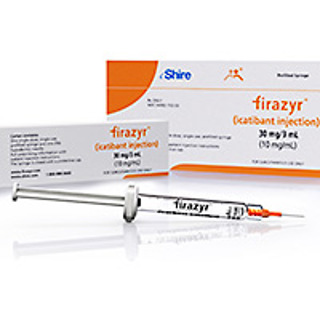
Podcast #261: Icatibant

Podcast #261: Icatibant

Author: Aaron Lessen, M.D. Educational Pearls Icatibant was introduced to treat ACE-inhibitor induced angioendema. This type of angioedema is refractory to epinephrine and antihistamines, and is like...

13 Okt 20172min
Podcast #260: Preoxygenation

Podcast #260: Preoxygenation

Author: David Rosenberg, M.D. Educational Pearls Preoxygenation is done before rapid sequence intubation, and should be done even if SaO2 is at 100%. Preoxygenation is done to fill the lungs with oxy...

11 Okt 20172min

Podcast #259: Transient Ischemic Attacks

Podcast #259: Transient Ischemic Attacks

Podcast #259: TIA Author: Peter Bakes, M.D. Educational Pearls A TIA is defined as focal neurological deficit that resolves within 24 hours and has negative imaging. The etiology is a transient throm...

9 Okt 20177min
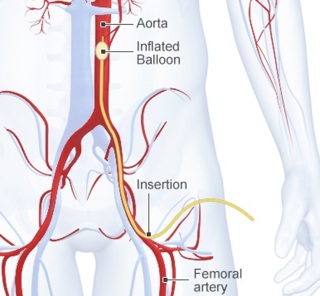
Podcast #258: REBOA

Podcast #258: REBOA

Author: Dylan Luyten, M.D. Educational Pearls Resuscitative Endovascular Balloon Occlusion of the Aorta (REBOA). Exsanguination is a major cause of mortality in trauma One temporizing technique to bu...

6 Okt 20173min

Podcast #257: Strangulation

Podcast #257: Strangulation

Educational Pearls Strangulation is common in cases of domestic violence and sexual assault, and it is associated with higher mortality People who have been strangled have a higher rate of stroke due...

4 Okt 20174min

Podcast #256: Fentanyl Ingestion

Podcast #256: Fentanyl Ingestion

Authors: Don Stader, M.D & Rachael Duncan, PharmD BCPS BCCCP Educational Pearls Fentanyl patches may be abused in many ways, including changing the patches more frequently, chewing them, extracting t...

2 Okt 20175min

Populært innen Vitenskap

fastlegen
tingenes-tilstand
rekommandert
jss
rss-nysgjerrige-norge
rss-rekommandert
vett-og-vitenskap-med-gaute-einevoll
sinnsyn
forskningno
villmarksliv
nordnorsk-historie
fjellsportpodden
rss-paradigmepodden
smart-forklart
rss-overskuddsliv
aldring-og-helse-podden
diagnose
pod-britannia
tomprat-med-gunnar-tjomlid
tidlose-historier