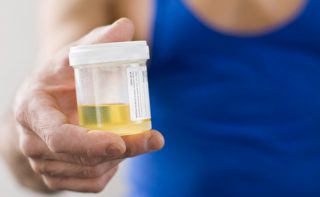

Mental Health Monthly #7: Urine Toxicology in the ED

Mental Health Monthly #7: Urine Toxicology in the ED

This episode of Mental Health Monthly we will be discussing drugs screens in the Emergency Department with Dr. Justin Romano and Eddie Carillo. Dr. Justin Romano is a current psychiatry resident and Eddie Carillo is a licensed mental health therapist. Check out their podcast Millennial Mental Health Channel on all major podcast platforms. Shout out to Dr. Dave Marshall whose grand round presentation this was based on.

Key Points:

  • Try not to judge your patient based on the results of their drug screen
  • Drug screens are used a lot; they are not always accurate
  • Based on one study there was no significant change in outcome, treatment, disposition or psychiatric course when a drug screen was obtained
  • Specific good uses for drug screens include new onset of psychiatric symptoms

Educational Pearls:

  • 1 in 8 ED visits are due to psychiatric complaints which is up 44% since mid 2000's
  • 63% of new psychiatric complaints had a medical cause
  • Physicians use drug screens commonly in the Emergency Department, but often do not understand their limitations and are often not using them in the most clinically effective manner
  • Urine is by far the most commonly used in the Emergency Department
  • UA drug screens are notorious for having false positives and false negatives
  • Length of clearance from the urine:
    • Alcohol 12 hours
    • Methamphetamines/Amphetamines 48 hours
    • Benzodiazepines 3 days
    • Opiates 2-3 days
    • Cocaine 2-4 days
    • Marijuana dependent on use: 3- 15 days
    • Phencyclidine (PCP) 8 days
  • Urine drug screens have a false positive rate of 5-10 % and a false negative rate of 10-15%
  • False Positive; urine drug screen positive, but drug is not in their body
    • False positives for amphetamines: bupropion, trazodone, metformin, promethazine, pseudoephedrine, phentermine and atomoxetine
    • False positives for benzodiazepines: sertraline
    • False positives for cannabis: ibuprofen, naproxen, proton pump inhibitors
    • False positives for opiates: poppy seeds, antibiotics, Benadryl
    • False positives for PCP: venlafaxine, ibuprofen and Ambien
    • False positives for cocaine: amoxicillin
  • False Negative; urine drug screen negative, but drug is in the body
    • Benzodiazepines: such as alprazolam, clonazepam, lorazepam or triazolam
    • Cannabinoids: CBD, synthetic marijuana such as K2
    • Opiates: oxycodone, fentanyl, methadone and tramadol
  • If you get a test that you don't think is accurate you can always send off for a confirmatory test

References

Summarized by Emily Mack OMSIII | Edited by Mason Tuttle

The Emergency Medical Minute is excited to announce that we are now offering AMA PRA Category 1 credits™ via online course modules. To access these and for more information, visit our website at www.emergencymedicalminute.com/cme-courses/ and create an account.

Episoder(1145)

Episode 943: Portal Vein Thrombosis

Episode 943: Portal Vein Thrombosis

Contributor: Travis Barlock, MD Educational Pearls: What is Portal Vein Thrombosis? The formation of a blood clot within the portal vein, which carries blood from the gastrointestinal tract, pancrea...

10 Feb 20252min

Episode 942: Acute Mountain Sickness and High Altitude Cerebral Edema

Episode 942: Acute Mountain Sickness and High Altitude Cerebral Edema

Contributor: Jorge Chalit-Hernandez, OMS3 Educational Pearls: Acute mountain sickness (AMS) is the term given to what is otherwise colloquially known as altitude sickness High altitude cerebral ed...

3 Feb 20253min

Episode 941: Rehydration in Pediatric Gastroenteritis

Episode 941: Rehydration in Pediatric Gastroenteritis

Contributor: Meghan Hurley, MD Educational Pearls: Gastroenteritis clinical diagnoses: Diarrhea with or without vomiting and fever Vomiting in the absence of diarrhea has a large list of diffe...

27 Jan 20253min

Episode 940: Laceration Repair Methods

Episode 940: Laceration Repair Methods

Contributor: Aaron Lessen, MD Educational Pearls: If a patient sustains a cut, the provider has several options on how to close the wound. If they choose to suture the wound closed, it involves need...

20 Jan 20252min

Episode 939: Serotonin Syndrome

Episode 939: Serotonin Syndrome

Contributor: Jorge Chalit-Hernandez, OMS3 Educational Pearls: Serotonin syndrome occurs most commonly due to the combination of monoamine oxidase inhibition with concomitant serotonergic medications...

13 Jan 20253min

Episode 938: AHA Policy on Management of Elevated Blood Pressure (BP) in the Acute Care Setting

Episode 938: AHA Policy on Management of Elevated Blood Pressure (BP) in the Acute Care Setting

Contributor: Aaron Lessen, MD Educational Pearls: Many patients present to the ED with elevated BP Many are referred from outpatient surgery centers or present after an elevated measurement at ho...

6 Jan 20252min

Episode 937: Pneumomediastinum

Episode 937: Pneumomediastinum

Contributor: Megan Hurley MD Educational Pearls: What is the mediastinum? The thoracic cavity is separated into different compartments by membranes The lungs exist in their own pleural cavities, a...

30 Des 20245min

Episode 936: Etomidate vs. Ketamine for Rapid Sequence Intubation

Episode 936: Etomidate vs. Ketamine for Rapid Sequence Intubation

Contributor: Ricky Dhaliwal MD Educational Pearls: Etomidate was previously the drug of choice for rapid sequence intubation (RSI) However, it carries a risk of adrenal insufficiency as an adver...

23 Des 20244min

Populært innen Vitenskap

fastlegen
smart-forklart
jss
tingenes-tilstand
villmarksliv
rekommandert
vett-og-vitenskap-med-gaute-einevoll
sinnsyn
forskningno
rss-rekommandert
fjellsportpodden
rss-paradigmepodden
tomprat-med-gunnar-tjomlid
aldring-og-helse-podden
pod-britannia
rss-nysgjerrige-norge
nordnorsk-historie
diagnose
tidlose-historier
rss-overskuddsliv

















