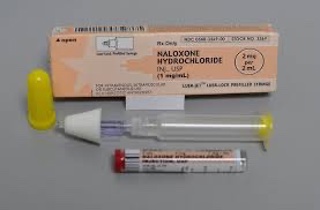

Podcast 673: Leaving the ED with Naloxone

Podcast 673: Leaving the ED with Naloxone

Contributor: Don Stader, MD

Educational Pearls:

  • Patients are more likely to survive an opioid overdose if they have naloxone
  • 10% risk of death in the year following an opioid overdose of patients seen in the ED
  • Those who receive naloxone:
    • Have better survival rates
    • Are more likely to enter recovery
    • Are more likely to use the naloxone on another person who has overdosed
  • Better to give the patient naloxone at discharge from the ED as rates of filling prescriptions are low
  • Any patient who uses illicit drugs, chronic opioid medications, or opioids with benzodiazepines are good candidates for naloxone at discharge
  • Remember to instruct the patient and those who live with them on how to use it

References

Gunn AH, Smothers ZPW, Schramm-Sapyta N, Freiermuth CE, MacEachern M, Muzyk AJ. The Emergency Department as an Opportunity for Naloxone Distribution. West J Emerg Med. 2018;19(6):1036-1042. doi:10.5811/westjem.2018.8.38829

Olfson M, Wall M, Wang S, Crystal S, Blanco C. Risks of fatal opioid overdose during the first year following nonfatal overdose. Drug Alcohol Depend. 2018;190:112-119. doi:10.1016/j.drugalcdep.2018.06.004

Olfson M, Crystal S, Wall M, Wang S, Liu SM, Blanco C. Causes of Death After Nonfatal Opioid Overdose [published correction appears in JAMA Psychiatry. 2018 Aug 1;75(8):867]. JAMA Psychiatry. 2018;75(8):820-827. doi:10.1001/jamapsychiatry.2018.1471

http://naloxoneproject.com/

Summarized by John Spartz, MS3 | Edited by Erik Verzemnieks, MD

The Emergency Medical Minute is excited to announce that we are now offering AMA PRA Category 1 credits™ via online course modules. To access these and for more information, visit our website at www.emergencymedicalminute.com/cme-courses/ and create an account.

Donate to EMM today!


Episoder(1145)

Episode 897: Adrenal Crisis

Episode 897: Adrenal Crisis

Contributor: Ricky Dhaliwal MD Educational Pearls: Primary adrenal insufficiency (most common risk factor for adrenal crises) An autoimmune condition commonly known as Addison's Disease Defects...

1 Apr 20244min

Podcast 896: Cancer-Related Emergencies

Podcast 896: Cancer-Related Emergencies

Contributor: Travis Barlock, MD Educational Pearls: Cancer-related emergencies can be sorted into a few buckets: Infection Cancer itself and the treatments (chemotherapy/radiation) can be immunos...

25 Mar 20242min

Episode 895: Indications for Exogenous Albumin

Episode 895: Indications for Exogenous Albumin

Contributor: Travis Barlock MD Educational Pearls: There are three indications for IV albumin in the ED Spontaneous bacterial peritonitis (SBP) Patients with SBP develop renal failure from volu...

18 Mar 20242min

Episode 894: DKA and HHS

Episode 894: DKA and HHS

Contributor: Ricky Dhaliwal, MD Educational Pearls: What are DKA and HHS? DKA (Diabetic Ketoacidosis) and HHS (Hyperosmolar Hyperglycemic State) are both acute hyperglycemic states. DKA More com...

11 Mar 20247min

Episode 893: Home Treatments for Button Battery Ingestion

Episode 893: Home Treatments for Button Battery Ingestion

Contributor: Aaron Lessen MD Educational Pearls: Button batteries cause alkaline corrosion and erosion of the esophagus when swallowed Children swallow button batteries, which create a medical eme...

4 Mar 20242min

Episode 892: Tourniquets

Episode 892: Tourniquets

Contributor: Ricky Dhaliwal, MD Educational Pearls: What can you do to control bleeding in a penetrating wound? Apply direct pinpoint pressure on the wound as well as proximal to the wound. Build ...

27 Feb 20245min
Pharmacy Phriday #11: Riddles, Medical Jargon, NNT, and Time Travel

Pharmacy Phriday #11: Riddles, Medical Jargon, NNT, and Time Travel

Contributors: Kali Olson PharmD, Travis Barlock MD, Jeffrey Olson MS2 Summary: In this episode of Pharmacy Phriday, Dr. Kali Olson joins Dr. Travis Barlock and Jeffrey Olson in studio to discuss a var...

23 Feb 202443min

Episode 891: Hypothermia

Episode 891: Hypothermia

Contributor: Taylor Lynch MD Educational Pearls Hypothermia is defined as a core body temperature less than 35 degrees Celsius or less than 95 degrees Fahrenheit  Mild Hypothermia: 32-35 degrees C...

19 Feb 20244min

Populært innen Vitenskap

fastlegen
smart-forklart
jss
tingenes-tilstand
villmarksliv
rekommandert
vett-og-vitenskap-med-gaute-einevoll
sinnsyn
forskningno
rss-rekommandert
fjellsportpodden
rss-paradigmepodden
tomprat-med-gunnar-tjomlid
aldring-og-helse-podden
pod-britannia
rss-nysgjerrige-norge
nordnorsk-historie
diagnose
tidlose-historier
rss-overskuddsliv

















