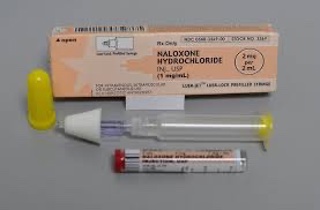

Podcast 673: Leaving the ED with Naloxone

Podcast 673: Leaving the ED with Naloxone

Contributor: Don Stader, MD

Educational Pearls:

  • Patients are more likely to survive an opioid overdose if they have naloxone
  • 10% risk of death in the year following an opioid overdose of patients seen in the ED
  • Those who receive naloxone:
    • Have better survival rates
    • Are more likely to enter recovery
    • Are more likely to use the naloxone on another person who has overdosed
  • Better to give the patient naloxone at discharge from the ED as rates of filling prescriptions are low
  • Any patient who uses illicit drugs, chronic opioid medications, or opioids with benzodiazepines are good candidates for naloxone at discharge
  • Remember to instruct the patient and those who live with them on how to use it

References

Gunn AH, Smothers ZPW, Schramm-Sapyta N, Freiermuth CE, MacEachern M, Muzyk AJ. The Emergency Department as an Opportunity for Naloxone Distribution. West J Emerg Med. 2018;19(6):1036-1042. doi:10.5811/westjem.2018.8.38829

Olfson M, Wall M, Wang S, Crystal S, Blanco C. Risks of fatal opioid overdose during the first year following nonfatal overdose. Drug Alcohol Depend. 2018;190:112-119. doi:10.1016/j.drugalcdep.2018.06.004

Olfson M, Crystal S, Wall M, Wang S, Liu SM, Blanco C. Causes of Death After Nonfatal Opioid Overdose [published correction appears in JAMA Psychiatry. 2018 Aug 1;75(8):867]. JAMA Psychiatry. 2018;75(8):820-827. doi:10.1001/jamapsychiatry.2018.1471

http://naloxoneproject.com/

Summarized by John Spartz, MS3 | Edited by Erik Verzemnieks, MD

The Emergency Medical Minute is excited to announce that we are now offering AMA PRA Category 1 credits™ via online course modules. To access these and for more information, visit our website at www.emergencymedicalminute.com/cme-courses/ and create an account.

Donate to EMM today!


Episoder(1144)

Episode 958: Intranasal Fentanyl

Episode 958: Intranasal Fentanyl

Contributor: Aaron Lessen, MD Educational Pearls: How do we take care of kids in severe pain? There are many non-pharmacologic options for pain (i.e. ice, elevation) as well as more conventional medi...

26 Mai 20251min

Episode 957: Cardiac Asthma

Episode 957: Cardiac Asthma

Contributor: Travis Barlock, MD Educational Pearls: Wheezing is classically heard in asthma and COPD, but it can be the result of a wide range of processes that cause airflow limitation Narrowed bro...

19 Mai 20253min

Episode 956: Psychedelics and Risk of Schizophrenia

Episode 956: Psychedelics and Risk of Schizophrenia

Contributor: Jorge Chalit-Hernandez, OMS3 Educational Pearls: Psychedelics are being studied for their therapeutic effects in mental illnesses, including major depressive disorder, post-traumatic str...

12 Mai 20252min

Episode 955: Cardiac Effects of COVID-19

Episode 955: Cardiac Effects of COVID-19

Contributor: Ricky Dhaliwal, MD Educational Pearls: What factors are considered in a COVID-19 infection? The viral load: Understood as the impact of SARS-CoV-2 viral particles infecting host cell tis...

5 Mai 20254min

Episode 954: Combo Rescue Inhalers - New Guidelines

Episode 954: Combo Rescue Inhalers - New Guidelines

Contributor: Aaron Lessen, MD Educational Pearls: What is a Rescue Inhaler? A rescue inhaler is a medication for people with asthma to quickly reverse the symptoms of an asthma attack.  Historical...

30 Apr 20253min

Episode 953: Penicillin Allergies

Episode 953: Penicillin Allergies

Contributor: Geoff Hogan MD Educational Pearls: Penicillin allergies are relatively uncommon despite their frequent reports 10% of the population reports a penicillin allergy but only 5% of these...

21 Apr 20252min

Episode 952: Heart Transplants

Episode 952: Heart Transplants

Contributor: Travis Barlock, MD Educational Pearls: Key clinical considerations when managing heart transplant patients due to their unique pathophysiology 1. Arrhythmias A transplanted heart i...

14 Apr 20253min

Episode 951: Pediatric Febrile Seizures

Episode 951: Pediatric Febrile Seizures

Contributor: Taylor Lynch, MD Educational Pearls: Pediatric febrile seizures are defined as seizures that occur between the ages of six months to five years in the presence of a fever greater than o...

7 Apr 20256min

Populært innen Vitenskap

fastlegen
smart-forklart
tingenes-tilstand
jss
sinnsyn
rekommandert
villmarksliv
rss-rekommandert
forskningno
tomprat-med-gunnar-tjomlid
vett-og-vitenskap-med-gaute-einevoll
fjellsportpodden
rss-paradigmepodden
pod-britannia
aldring-og-helse-podden
tidlose-historier
diagnose
nordnorsk-historie
nevropodden
rss-lundqvist-podden