Podcast 718: Renal Failure Follow Up

Podcast 718: Renal Failure Follow Up

Contributor: Aaron Lessen, MD

Educational Pearls:

  • Patients with acute renal failure often need medical management for hyperkalemia
  • Those with severe electrolyte derangements or absent renal function may need emergent dialysis as well
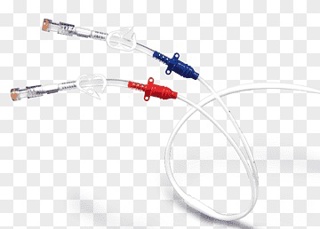
  • Dialysis catheters are 12 or 14 french catheters placed in the right internal jugular or left subclavian
  • Placement is very similar to a central line or cordis catheter
  • Trialysis catheter is one option that has an extra port that can be used for regular medication administration and drawing blood
  • Do not default to use dialysis catheters for normal ED access due to risk of infection and clot development
  • While dialysis catheters are typically reserved for dialysis only, they can be used in extreme circumstances, such as a cardiac arrest

References

Co I, Gunnerson K. Emergency Department Management of Acute Kidney Injury, Electrolyte Abnormalities, and Renal Replacement Therapy in the Critically Ill. Emerg Med Clin North Am. 2019;37(3):459-471. doi:10.1016/j.emc.2019.04.006

Simon LV, Hashmi MF, Farrell MW. Hyperkalemia. [Updated 2021 Aug 14]. In: StatPearls [Internet]. Treasure Island (FL): StatPearls Publishing; 2021 Jan-. Available from: https://www.ncbi.nlm.nih.gov/books/NBK470284/

Akaraborworn O. A review in emergency central venous catheterization. Chin J Traumatol. 2017;20(3):137-140. doi:10.1016/j.cjtee.2017.03.003

Summarized by John Spartz, MS4 | Edited by Erik Verzemnieks, MD

The Emergency Medical Minute is excited to announce that we are now offering AMA PRA Category 1 credits™ via online course modules. To access these and for more information, visit our website at https://emergencymedicalminute.org/cme-courses/ and create an account.

Donate to EMM today!


Episoder(1149)

Podcast #216: Roller Coasters and Kidney Stones

Podcast #216: Roller Coasters and Kidney Stones

Author: Aaron Lessen, M.D. Educational Pearls: Anecdotal evidence suggests that roller coasters may help with kidney stones. A recent study used a model of a kidney and ureter with different sized s...

13 Jun 20171min
Opioid MIniseries Part IV: Harm Reduction

Opioid MIniseries Part IV: Harm Reduction

PRACTICE RECOMMENDATIONS 1. Patients who abuse opioids should be managed without judgement; addiction is a medical condition and not a moral failing. Caregivers should endeavor to meet patients "where...

8 Jun 201748min
Opioid Miniseries Part III: Alternative to Opioids

Opioid Miniseries Part III: Alternative to Opioids

PRACTICE RECOMMENDATIONS 1. All emergency departments should implement ALTO programs and provide opioid-free pain treatment pathways for the following conditions: a. Acute on chronic opioid-tolerant r...

8 Jun 201749min

Opioid Miniseries Part II: Limiting Opioids in the Emergency Department

Opioid Miniseries Part II: Limiting Opioids in the Emergency Department

RACTICE RECOMMENDATIONS 1. Opioids are inherently dangerous, highly addictive drugs with significant abuse potential, numerous side effects, lethality in overdose, rapid development of tolerance, and ...

8 Jun 20171h 8min
Opioid Miniseries Part I: Medicine's Greatest Folly

Opioid Miniseries Part I: Medicine's Greatest Folly

The Emergency Medical Minute proudly presents an educational podcast series sponsored by the Colorado Hospital Association addressing our the United States' opioid epidemic.

7 Jun 201749min
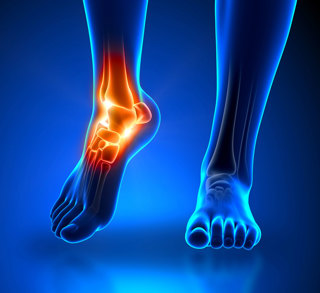
Podcast #215: Ankle Pain

Podcast #215: Ankle Pain

Author: Donald Stader, M.D. Educational Pearls: The most common ankle injury mechanism is an inversion. Most common broken bone in the ankle is the fibula. During exam, it is important to palpate ove...

7 Jun 20174min
Podcast #214: Dizziness

Podcast #214: Dizziness

Author: Aaron Lessen, M.D. Educational Pearls: We can differentiate verto into benign problems such as vestibular problem (peripheral problem), or something more worrisome that originates in the brai...

5 Jun 20171min
Podcast #213: Oats and Potatoes

Podcast #213: Oats and Potatoes

Author: Michael Hunt, M.D. Educational Pearls: Oats have been shown to lower LDL. Oat bran is the most effective way to consume oats to lower LDL. A Swedish study of 69,000 people who ate at least 3 ...

3 Jun 20172min

Populært innen Vitenskap

fastlegen
tingenes-tilstand
rekommandert
rss-nysgjerrige-norge
forskningno
sinnsyn
vett-og-vitenskap-med-gaute-einevoll
liberal-halvtime
smart-forklart
rss-rekommandert
pod-britannia
jss
fjellsportpodden
villmarksliv
rss-overskuddsliv
nevropodden
aldring-og-helse-podden
tomprat-med-gunnar-tjomlid
dekodet-2
rss-bondevennen