Podcast 785: Pepper Spray

Podcast 785: Pepper Spray

Contributor: Jared Scott, MD

Educational Pearls:

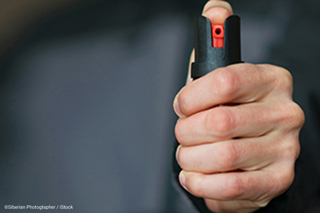
  • Pepper spray is a chemical irritant derived from oleoresin capsicum (OC), an extract from pepper plants. It can be used by police for riot or crowd control, or by individuals for self defense.
  • In the event of an exposure, those affected should immediately disperse from the area, remove contact lenses with clean or gloved hands, and remove contaminated clothing.
  • Pepper spray can spread from patients to providers by contact. When caring for those exposed, providers should use PPE including gloves and should double bag personal belongings.
  • For patient management consider the following:
    • If the eyes are affected, first remove contacts then irrigate with clean water. Use proparacaine drops for relief.
    • Clean exposed skin thoroughly with soap and water.
    • Inhalation and ingestion may cause nausea, vomiting, shortness of breath and generalized anxiety from discomfort. Treatment can include antiemetics and anxiolytics. Symptoms may persist for many days.

References

Schep LJ, Slaughter RJ, McBride DI. Riot control agents: the tear gases CN, CS and OC-a medical review. J R Army Med Corps. 2015;161(2):94-99. doi:10.1136/jramc-2013-000165

Tidwell RD, Wills BK. Tear Gas and Pepper Spray Toxicity. [Updated 2022 Jan 10]. In: StatPearls [Internet]. Treasure Island (FL): StatPearls Publishing; 2022 Jan-. Available from: https://www.ncbi.nlm.nih.gov/books/NBK544263/

Summarized by Kirsten Hughes, MS4 | Edited by John Spartz MS4 & Erik Verzemnieks, MD

The Emergency Medical Minute is excited to announce that we are now offering AMA PRA Category 1 credits™ via online course modules. To access these and for more information, visit our website at https://emergencymedicalminute.org/cme-courses/ and create an account.

Donate to EMM today!

*********************


Episoder(1145)

Podcast #318: Nystagmus

Podcast #318: Nystagmus

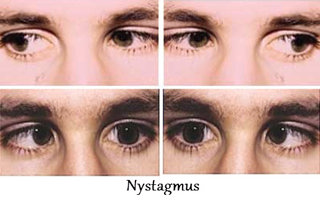
Author: Erik Verzemnieks, M.D. Educational Pearls: ● Common causes of nystagmus: Congenital disorders, CNS diseases (MS, CVA), Intoxication ● Drugs associated (ETOH, Ketamine, PCP, SSRI, MDMA, Lit...

13 Apr 20181min
Podcast #317: Elbow Dislocation

Podcast #317: Elbow Dislocation

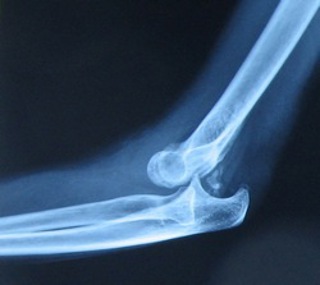
Author: John Winkler, M.D. Educational Pearls: ● Lower mechanisms of injury have a lower chance of an associated fracture or major ligament injury ● One major concern is having a fracture fragment i...

11 Apr 20182min

Podcast #316: Abnormalities in Alcohol Intoxication

Podcast #316: Abnormalities in Alcohol Intoxication

Author: Michael Hunt, M.D. Educational Pearls: 1% of patients presenting to ED with alcohol intoxication end up going to the ICU Most common critical illnesses were acute hypoxic respiratory fail...

9 Apr 20183min
Podcast #315: Retropharyngeal Infections in Pediatrics

Podcast #315: Retropharyngeal Infections in Pediatrics

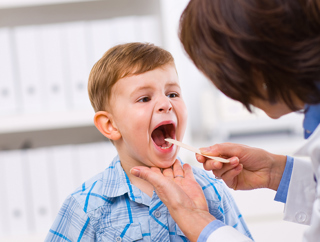
Author: Dr. Karen Woolf, MD Educational Pearls: Anatomy : base of skull to posterior mediastinum, anteriorly bounded by middle layer of deep cervical fascia and posteriorly by the deep layer, communi...

6 Apr 20186min

Podcast #314: Psychogenic nonepileptic seizures (PNES)

Podcast #314: Psychogenic nonepileptic seizures (PNES)

Author: Gretchen Hinson, M.D. Educational Pearls: PNES vs. epilepsy: postictal state is diagnostic of an epileptic seizure (sonorous respirations and/or confusion, lasting typically 20-30 minutes);...

4 Apr 20185min

Podcast #313: Flu Screening

Podcast #313: Flu Screening

Author: Dr. Peter Bakes Educational Pearls: High risk patients: underlying lung disease, immunocompromised, extremes of age (65), underlying cardiac/renal/neurologic disease, and pregnant women Testi...

2 Apr 20187min
Podcast #312: SCIWORA

Podcast #312: SCIWORA

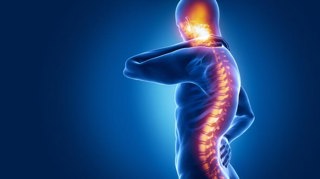
Author: Sam Killian, M.D. Educational Pearls: Spinal cord injury without radiographic abnormality (SCIWORA) is a diagnosis defined as traumatic injury to spine with clinical sx of traumatic myelopa...

30 Mar 20184min
Podcast #311: Recurrence of Seizures in Pediatrics

Podcast #311: Recurrence of Seizures in Pediatrics

Author: Aaron Lessen, M.D. Educational Pearls: Recurrence rate for first time unprovoked seizures - 5% after 48 hours, 14% at 2 weeks , 30% after 4 months. Higher risk for recurrence: age under 3; pa...

28 Mar 20182min

Populært innen Vitenskap

fastlegen
tingenes-tilstand
rekommandert
jss
vett-og-vitenskap-med-gaute-einevoll
rss-nysgjerrige-norge
rss-rekommandert
sinnsyn
smart-forklart
nordnorsk-historie
villmarksliv
rss-paradigmepodden
forskningno
pod-britannia
fjellsportpodden
aldring-og-helse-podden
diagnose
rss-overskuddsliv
tomprat-med-gunnar-tjomlid
tidlose-historier