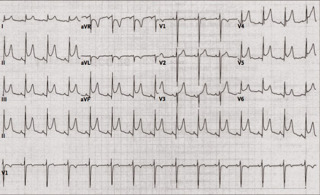

Podcast 806: Normal ECGs

Podcast 806: Normal ECGs

Contributor: Jared Scott, MD

Educational Pearls:

  • Physicians are typically advised not to trust computer interpretation of ECGs
  • Retrospective study was done of computer interpreted normal ECGs to evaluate the accuracy of such an interpretation
    • 989 ECGs were interpreted as "Normal sinus rhythm, Normal ECG" by proprietary cardiology software on MUSE Cardiology Information System
    • These EKGs received follow up interpretation by cardiologists which was considered the "gold standard" for interpretation
    • 18.6% of "normal ECG" had at least one abnormality identified by the cardiologist
      • 6.1% of these discrepant interpretations were deemed potentially clinically significant
      • Only 1% were classified as possible ischemia
    • On retrospective chart review:
      • Six patients underwent non-emergent cardiac catheterization
      • Two had cardiac interventions
        • One had three PCI stents to a prior CABG graft
        • One had a scheduled outpatient cardiac catheterization but was admitted and ended up receiving a CABG graft
  • Study showed that discrepancies between computer interpretation of "Normal ECG" and cardiologist re-interpretation were not clinically significant
  • Emergency physicians should still screen ECGs per AHA guidelines

References

Winters LJ, Dhillon RK, Pannu GK, Terrassa P, Holmes JF, Bing ML. Emergent cardiac outcomes in patients with normal electrocardiograms in the emergency department. Am J Emerg Med. 2022;51:384-387.

Summarized by Mark O'Brien, MS4 | Edited by John Spartz MD & Erik Verzemnieks, MD

The Emergency Medical Minute is excited to announce that we are now offering AMA PRA Category 1 credits™ via online course modules. To access these and for more information, visit our website at https://emergencymedicalminute.org/cme-courses/ and create an account.

Donate to EMM today!

Episoder(1144)

Episode 958: Intranasal Fentanyl

Episode 958: Intranasal Fentanyl

Contributor: Aaron Lessen, MD Educational Pearls: How do we take care of kids in severe pain? There are many non-pharmacologic options for pain (i.e. ice, elevation) as well as more conventional medi...

26 Mai 20251min

Episode 957: Cardiac Asthma

Episode 957: Cardiac Asthma

Contributor: Travis Barlock, MD Educational Pearls: Wheezing is classically heard in asthma and COPD, but it can be the result of a wide range of processes that cause airflow limitation Narrowed bro...

19 Mai 20253min

Episode 956: Psychedelics and Risk of Schizophrenia

Episode 956: Psychedelics and Risk of Schizophrenia

Contributor: Jorge Chalit-Hernandez, OMS3 Educational Pearls: Psychedelics are being studied for their therapeutic effects in mental illnesses, including major depressive disorder, post-traumatic str...

12 Mai 20252min

Episode 955: Cardiac Effects of COVID-19

Episode 955: Cardiac Effects of COVID-19

Contributor: Ricky Dhaliwal, MD Educational Pearls: What factors are considered in a COVID-19 infection? The viral load: Understood as the impact of SARS-CoV-2 viral particles infecting host cell tis...

5 Mai 20254min

Episode 954: Combo Rescue Inhalers - New Guidelines

Episode 954: Combo Rescue Inhalers - New Guidelines

Contributor: Aaron Lessen, MD Educational Pearls: What is a Rescue Inhaler? A rescue inhaler is a medication for people with asthma to quickly reverse the symptoms of an asthma attack.  Historical...

30 Apr 20253min

Episode 953: Penicillin Allergies

Episode 953: Penicillin Allergies

Contributor: Geoff Hogan MD Educational Pearls: Penicillin allergies are relatively uncommon despite their frequent reports 10% of the population reports a penicillin allergy but only 5% of these...

21 Apr 20252min

Episode 952: Heart Transplants

Episode 952: Heart Transplants

Contributor: Travis Barlock, MD Educational Pearls: Key clinical considerations when managing heart transplant patients due to their unique pathophysiology 1. Arrhythmias A transplanted heart i...

14 Apr 20253min

Episode 951: Pediatric Febrile Seizures

Episode 951: Pediatric Febrile Seizures

Contributor: Taylor Lynch, MD Educational Pearls: Pediatric febrile seizures are defined as seizures that occur between the ages of six months to five years in the presence of a fever greater than o...

7 Apr 20256min

Populært innen Vitenskap

fastlegen
tingenes-tilstand
rekommandert
tomprat-med-gunnar-tjomlid
rss-rekommandert
forskningno
jss
sinnsyn
villmarksliv
smart-forklart
rss-paradigmepodden
fjellsportpodden
diagnose
tidlose-historier
nevropodden
aldring-og-helse-podden
dekodet-2
vett-og-vitenskap-med-gaute-einevoll
grunnstoffene
rss-nysgjerrige-norge