Podcast 809: Achilles Tendon Rupture

Podcast 809: Achilles Tendon Rupture

Contributor: Aaron Lessen, MD

Educational Pearls:

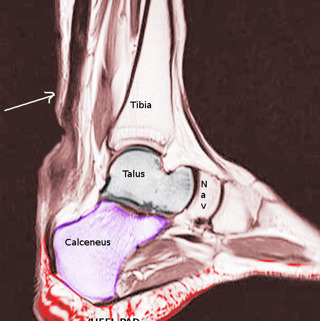
  • Achilles tendon rupture usually presents in younger, healthy patients after a sports injury
  • Patients typically present complaining of an abrupt onset ankle pain after feeling a "pop"
    • Pain can be localized to posterior ankle and patient's lack the ability to plantarflex
    • Achilles rupture is a clinical diagnosis and does not usually require imaging in the ED
    • Thompson test
      • Having patient lay on their stomach and squeezing the calf on the injured side should result in plantarflexion
      • If the Achilles is ruptured, no plantarflexion will occur
  • Treatment in the ED is to place the patient in a short leg posterior splint with some mild plantarflexion to aid in healing
  • After discharge patients should follow up with orthopedics
  • Recent study compared those who underwent the traditional open surgery, a minimally invasive surgery, and no surgery
    • No difference in functionality was noted between the groups 3 months to 1 year post injury
    • Those in the nonoperative group had slightly higher rates of repeat rupture (6%) than those in the surgical groups (<0.6% in each)
    • Patients undergoing minimally invasive surgery had the highest risk of nerve injury (5.2%), followed by traditional surgery (2.8%), and then nonoperative (0.6%)

References

Cuttica DJ, Hyer CF, Berlet GC. Intraoperative value of the thompson test. J Foot Ankle Surg. 2015;54(1):99-101.

Kauwe M. Acute Achilles Tendon Rupture: Clinical Evaluation, Conservative Management, and Early Active Rehabilitation. Clin Podiatr Med Surg. 2017;34(2):229-243.

Myhrvold SB, Brouwer EF, Andresen TKM, et al. Nonoperative or Surgical Treatment of Acute Achilles' Tendon Rupture. N Engl J Med. 2022;386(15):1409-1420.

Summarized by Mark O'Brien, MS4 | Edited by John Spartz MD & Erik Verzemnieks, MD

The Emergency Medical Minute is excited to announce that we are now offering AMA PRA Category 1 credits™ via online course modules. To access these and for more information, visit our website at https://emergencymedicalminute.org/cme-courses/ and create an account.

Donate to EMM today!

Episoder(1149)

Podcast #297: Truvada

Podcast #297: Truvada

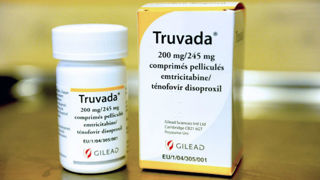
Educational Pearls Truvada (Emtricitabine/tenofovir) is a combination nucleotide reverse transcriptase inhibitor that can be used as pre-exposure prophylaxis (PrEP) for HIV. It has been shown to dram...

31 Jan 20184min
Podcast #296: Synthetic Cannabinoids

Podcast #296: Synthetic Cannabinoids

Author: Rachael Duncan, PharmD Educational Pearls A NEJM study report in July 2016 discussed a situation in New York during which 30 people became "zombie-like" after ingesting synthetic cannabinoids...

29 Jan 20185min
Podcast #295: UTI

Podcast #295: UTI

Author: Sam Killian, M.D. Educational Pearls Traditionally, UTI diagnosis has been dependent on urine culture, urinalysis and clinical symptoms. But a recent study casts some doubt on the utility of ...

26 Jan 20184min
Podcast #294: Rhabdomyolysis

Podcast #294: Rhabdomyolysis

Author: Michael Hunt, M.D. Educational Pearls Rhabdomyolysis is caused by the destruction of skeletal muscle that leads to the release of myoglobin, which causes renal failure. It presents with pain ...

22 Jan 20183min

Podcast #293: Transient Global Amnesia

Podcast #293: Transient Global Amnesia

Author: Sam Killian, M.D. Educational Pearls Transient global amnesia is a paroxysmal, transient memory issue. Remote and immediate memory is preserved, but new memories cannot be made. Patients will...

19 Jan 20184min
Podcast #292: Hypercalcemia

Podcast #292: Hypercalcemia

Author: John Winkler, M.D. Educational Pearls Normally, the parathyroid is the master regulator of serum Ca levels. It secretes PTH, which stimulates calcium uptake from the bone and gut. Causes of ...

17 Jan 20182min
Podcast #291: Cincinnati Stroke Scale

Podcast #291: Cincinnati Stroke Scale

Author: Nick Hatch, M.D. Educational Pearls The Cincinnati Stroke Scale uses 3 measures to screen for ischemic stroke. The measures are: facial asymmetry, speech quality and arm drift. This scale is ...

15 Jan 20182min
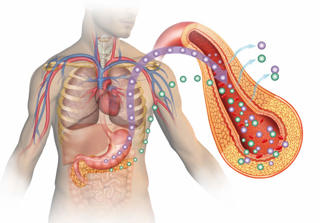
Podcast #290: The Biochemistry of DKA

Podcast #290: The Biochemistry of DKA

Author: Dave Rosenberg, M.D. Educational Pearls DKA commonly causes hyperkalemia, leading to peaked T-waves on ECG. However, DKA causes hypokalemia at the same time. In DKA, glucose cannot be taken i...

12 Jan 20186min

Populært innen Vitenskap

fastlegen
tingenes-tilstand
rekommandert
rss-nysgjerrige-norge
forskningno
sinnsyn
vett-og-vitenskap-med-gaute-einevoll
liberal-halvtime
smart-forklart
rss-rekommandert
pod-britannia
jss
fjellsportpodden
villmarksliv
rss-overskuddsliv
nevropodden
aldring-og-helse-podden
tomprat-med-gunnar-tjomlid
dekodet-2
rss-bondevennen