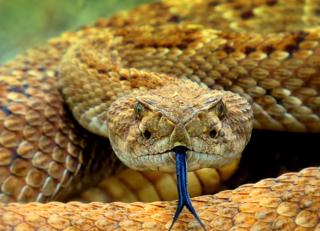

Podcast 837: Snakebites

Podcast 837: Snakebites

Contributor: Meghan Hurley, MD

Educational Pearls:

  • Venomous snakes in the United States include species from the family Elapidae and subfamily Crotalinae
  • In prehospital setting, elevate the bitten extremity and transport to hospital immediately
    • Do not attempt interventions with the bite site
  • Monitor for progression of swelling past any joint line, systemic symptoms or lab abnormalities for 8-12 hours
    • Symptoms may present up to hours after bite
    • Crotalinae venom has heme toxicity and may present with lab pattern of DIC
  • Treatment for all symptoms is antivenom
    • If symptoms persist or progress, continue to treat with antivenom
  • Compartment syndrome is rare with snake bites

References

Ruha AM, Kleinschmidt KC, Greene S, et al. The Epidemiology, Clinical Course, and Management of Snakebites in the North American Snakebite Registry. J Med Toxicol. 2017;13(4):309-320. doi:10.1007/s13181-017-0633-5

Aziz H, Rhee P, Pandit V, Tang A, Gries L, Joseph B. The current concepts in management of animal (dog, cat, snake, scorpion) and human bite wounds. J Trauma Acute Care Surg. 2015;78(3):641-648. doi:10.1097/TA.0000000000000531

Summarized by Kirsten Hughes, MS4 | Edited by John Spartz, MD, & Erik Verzemnieks, MD

In an effort to promote diversity, equity, and inclusion in Emergency Medicine, The Emergency Medical Minute is proud to present our 2nd annual Diversity and Inclusion Award. We support increasing the representation of underrepresented groups in medicine and extend this award to individuals applying to emergency medicine residencies during the 2022-2023 cycle. For information on award eligibility and the application process, visit https://emergencymedicalminute.com/edi-award/

Donate to EMM today!

Episoder(1145)

Episode 897: Adrenal Crisis

Episode 897: Adrenal Crisis

Contributor: Ricky Dhaliwal MD Educational Pearls: Primary adrenal insufficiency (most common risk factor for adrenal crises) An autoimmune condition commonly known as Addison's Disease Defects...

1 Apr 20244min

Podcast 896: Cancer-Related Emergencies

Podcast 896: Cancer-Related Emergencies

Contributor: Travis Barlock, MD Educational Pearls: Cancer-related emergencies can be sorted into a few buckets: Infection Cancer itself and the treatments (chemotherapy/radiation) can be immunos...

25 Mar 20242min

Episode 895: Indications for Exogenous Albumin

Episode 895: Indications for Exogenous Albumin

Contributor: Travis Barlock MD Educational Pearls: There are three indications for IV albumin in the ED Spontaneous bacterial peritonitis (SBP) Patients with SBP develop renal failure from volu...

18 Mar 20242min

Episode 894: DKA and HHS

Episode 894: DKA and HHS

Contributor: Ricky Dhaliwal, MD Educational Pearls: What are DKA and HHS? DKA (Diabetic Ketoacidosis) and HHS (Hyperosmolar Hyperglycemic State) are both acute hyperglycemic states. DKA More com...

11 Mar 20247min

Episode 893: Home Treatments for Button Battery Ingestion

Episode 893: Home Treatments for Button Battery Ingestion

Contributor: Aaron Lessen MD Educational Pearls: Button batteries cause alkaline corrosion and erosion of the esophagus when swallowed Children swallow button batteries, which create a medical eme...

4 Mar 20242min

Episode 892: Tourniquets

Episode 892: Tourniquets

Contributor: Ricky Dhaliwal, MD Educational Pearls: What can you do to control bleeding in a penetrating wound? Apply direct pinpoint pressure on the wound as well as proximal to the wound. Build ...

27 Feb 20245min
Pharmacy Phriday #11: Riddles, Medical Jargon, NNT, and Time Travel

Pharmacy Phriday #11: Riddles, Medical Jargon, NNT, and Time Travel

Contributors: Kali Olson PharmD, Travis Barlock MD, Jeffrey Olson MS2 Summary: In this episode of Pharmacy Phriday, Dr. Kali Olson joins Dr. Travis Barlock and Jeffrey Olson in studio to discuss a var...

23 Feb 202443min

Episode 891: Hypothermia

Episode 891: Hypothermia

Contributor: Taylor Lynch MD Educational Pearls Hypothermia is defined as a core body temperature less than 35 degrees Celsius or less than 95 degrees Fahrenheit  Mild Hypothermia: 32-35 degrees C...

19 Feb 20244min

Populært innen Vitenskap

fastlegen
tingenes-tilstand
rekommandert
jss
vett-og-vitenskap-med-gaute-einevoll
smart-forklart
rss-nysgjerrige-norge
rss-rekommandert
forskningno
sinnsyn
fjellsportpodden
rss-paradigmepodden
villmarksliv
pod-britannia
nordnorsk-historie
aldring-og-helse-podden
diagnose
tidlose-historier
rss-overskuddsliv
tomprat-med-gunnar-tjomlid

















