Podcast 852: Angioedema After Thrombolysis

Podcast 852: Angioedema After Thrombolysis

Contributor: Aaron Lessen, MD

Educational Pearls:

What is thrombolysis?

  • Thrombolysis is performed by administration of a medication that promotes the body's natural ability to break up clots. These medications include Alteplase (tPA) and Tenecteplase (TNK).

  • The main side effect of using such an agent is bleeding which typically occurs at puncture sites but can also occur internally. However, an unusual side effect of thrombolytic agents, which occurs in about 1-5% of cases, is angioedema.

What is angioedema?

  • Angioedema is a medical condition that causes swelling beneath the surface of the skin, typically in the face, lips, and throat (orolingual angioedema). Fluid leaks from blood vessels and accumulates in the deeper layers of the skin.

How are these two connected?

  • The mechanism by which angioedema occurs after thrombolysis is not well understood, but it is likely connected to how tPA can increase levels of bradykinin and histamine.

  • Swelling can appear suddenly but can also occur up to 24 hours after thrombolysis, and may last for a few hours or several days.

  • In some cases, angioedema can affect the airways, leading to difficulty breathing.

What can be done?

  • If this side effect occurs the provider can stop the medication or infusion and treat the patient with anti-histamines, steroids, epinephrine, and airway monitoring.

  • Medications such as Berinert or Icatibant, typically used in hereditary angioedema or ACE-i-induced angioedema, can also be used but have limited evidence for their efficacy.

Fun fact

  • tPA-related angioedema is about 4 times more likely in patients on ACE inhibitors. This is likely related to how ACE inhibitors also increase bradykinin and histamine in a patient's body.

References

  1. Zhu A, Rajendram P, Tseng E, Coutts SB, Yu AYX. Alteplase or tenecteplase for thrombolysis in ischemic stroke: An illustrated review. Res Pract Thromb Haemost. 2022 Sep 20;6(6):e12795. doi: 10.1002/rth2.12795. PMID: 36186106; PMCID: PMC9487449.

  2. Pahs L, Droege C, Kneale H, Pancioli A. A Novel Approach to the Treatment of Orolingual Angioedema After Tissue Plasminogen Activator Administration. Ann Emerg Med. 2016 Sep;68(3):345-8. doi: 10.1016/j.annemergmed.2016.02.019. Epub 2016 May 10. PMID: 27174372.

  3. Burd M, McPheeters C, Scherrer LA. Orolingual Angioedema After Tissue Plasminogen Activator Administration in Patients Taking Angiotensin-Converting Enzyme Inhibitors. Adv Emerg Nurs J. 2019 Jul/Sep;41(3):204-214. doi: 10.1097/TME.0000000000000250. PMID: 31356244.

  4. Sczepanski M, Bozyk P. Institutional Incidence of Severe tPA-Induced Angioedema in Ischemic Cerebral Vascular Accidents. Crit Care Res Pract. 2018 Sep 27;2018:9360918. doi: 10.1155/2018/9360918. PMID: 30363665; PMCID: PMC6180929.

Summarized by Jeffrey Olson, MS1 | Edited by Meg Joyce & Jorge Chalit, OMS1

Episoder(1147)

Podcast 611: Flu Season in the time of COVID

Podcast 611: Flu Season in the time of COVID

Contributor: Chris Holmes, MD Educational Pearls: During a typical flu season positive rates of flu tests run around ~20% Surveillance data from Australia, South Africa, and Chile showed remarkably l...

9 Nov 20203min

Podcast 610: Swimmers Itch

Podcast 610: Swimmers Itch

Contributor: John Winkler, MD Educational Pearls: Swimmers itch is due to a flatworm parasitic infection that causes an itchy rash after the worm burrows into the skin The flatworm is passed between ...

3 Nov 20203min
Podcast 609: Kratom

Podcast 609: Kratom

Contributor: Nick Hatch, MD Educational Pearls: Kratom is derived from the evergreen tree sharing the same name, found in Southeast Asia Kratom is legal is most regions Adverse effects of this substa...

2 Nov 20204min
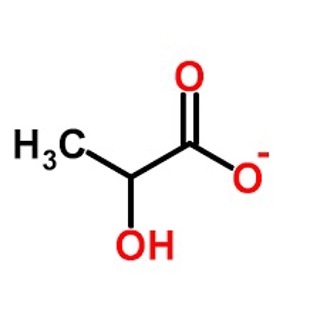
Podcast 608: Another Elevated Lactate?

Podcast 608: Another Elevated Lactate?

Contributor: Jared Scott, MD Educational Pearls: Lactate is a byproduct of anaerobic metabolism or tissue hypoperfusion Though typically associated with severe sepsis, hyperlactatemia can be caused b...

27 Okt 20205min
Podcast 607: Is Pain the Enemy?

Podcast 607: Is Pain the Enemy?

Contributor: Don Stader, MD Educational Pearls: Pain is ubiquitous in the emergency department but it is not the enemy - suffering is Nociception is the ability to feel noxious stimuli which usually ...

26 Okt 20205min
Pediatric Emergencies Brewcast: Common Respiratory Conditions in Pediatric Patients

Pediatric Emergencies Brewcast: Common Respiratory Conditions in Pediatric Patients

Emergency Medical Minute collaborated with CarePoint Health in early March for a night of education on Pediatric Emergencies geared towards mid-level providers at a local Denver brewery for our latest...

21 Okt 202019min
Podcast 606: The Oxygen Wars

Podcast 606: The Oxygen Wars

Contributor: Aaron Lessen, MD Educational Pearls: The use of oxygen is controversial when treating patients with certain conditions, like MI's, stokes, or ARDS because adverse outcomes have been demo...

20 Okt 20203min

Podcast 605: Acute Limb Ischemia

Podcast 605: Acute Limb Ischemia

Contributor: Peter Bakes, MD Educational Pearls: Classically presents with the 6Ps: Pain, pallor, paresthesia, pulseless, poikilothermia (cold), and paralysis Acute limb ischemia occurs by embolic or...

19 Okt 20205min

Populært innen Vitenskap

fastlegen
rekommandert
tingenes-tilstand
jss
rss-rekommandert
liberal-halvtime
villmarksliv
rss-paradigmepodden
forskningno
sinnsyn
fjellsportpodden
pod-britannia
rss-nysgjerrige-norge
tidlose-historier
hva-er-greia-med
rss-lundqvist-podden
dekodet-2
tomprat-med-gunnar-tjomlid
vett-og-vitenskap-med-gaute-einevoll
nordnorsk-historie