
Podcast 862: How to Apply a Painful Stimulus

Podcast 862: How to Apply a Painful Stimulus

Contributor: Travis Barlock MD

Educational Pearls:

When might you need to apply a painful stimulus in a medical setting?

  • The main reason is to assess the patient's level of consciousness, such as when they are waking up from anesthesia or have potentially suffered a brain injury.

  • It can be part of the Glasgow Coma Scale (GCS) if patients are not responding to auditory stimuli.

  • Possible levels of consciousness include Alert, Lethargic, Obtunded, and Comatose (ALOC)

What are the approved ways to apply a painful stimulus to assess central nervous system function?

  • Trapezius squeeze. Grab the trapezius muscle and twist (contraindicated in clavicle fractures).

  • Supraorbital rim pressure. Find the notch in the supraorbital rim of the patient and push hard with your thumb (contraindicated in facial fractures).

  • Mandibular pressure (not mentioned). Press hard at the angle of the jaw on the mandibular nerve (contraindicated in mandible fractures).

  • Sternal rub. Push down with your knuckles into the patient's sternum and rub vigorously (contraindicated in chest injury/surgery).

  • Each technique should be done for between 15 and 30 seconds.

  • If skin damage is observed in one location, move to a different location. This is especially true of the sternal rub.

Important note: Peripheral techniques such as nail tip pressure should only be used to evaluate spinal nerve reflexes and not as a method of assessing the level of consciousness.

References

  1. Lower J. Using pain to assess neurologic response. Nursing. 2003 Jun;33(6):56-7. doi: 10.1097/00152193-200306000-00047. PMID: 12799591.

  2. Middleton PM. Practical use of the Glasgow Coma Scale; a comprehensive narrative review of GCS methodology. Australas Emerg Nurs J. 2012 Aug;15(3):170-83. doi: 10.1016/j.aenj.2012.06.002. Epub 2012 Aug 3. PMID: 22947690.

  3. Mistovich JJ, Krost W, Limmer DD. Beyond the basics: patient assessment. Emerg Med Serv. 2006 Jul;35(7):72-7; quiz 78-9. PMID: 16878751.

  4. Naalla R, Chitirala P, Chittaluru P, Atreyapurapu V. Sternal rub causing presternal abrasion in a patient with capsuloganglionic haemorrhage. BMJ Case Rep. 2014 Apr 7;2014:bcr2014204028. doi: 10.1136/bcr-2014-204028. PMID: 24711478; PMCID: PMC3987201.

Summarized by Jeffrey Olson, MS2 | Edited by Jorge Chalit, OMSII

Episoder(1145)

Podcast 646: Thunderclap Headache, Think...RCVS?

Podcast 646: Thunderclap Headache, Think...RCVS?

Contributor: Aaron Lessen, MD Educational Pearls: When evaluating a thunderclap headache, don't forget RCVS! RCVS: reversible cerebral vasoconstriction syndrome Due to reversible spasms of cerebra...

8 Mar 20213min

Podcast 645: Necrotizing Enterocolitis and More

Podcast 645: Necrotizing Enterocolitis and More

Contributor:  Peter Bakes, MD Educational Pearls: Necrotizing Enterocolitis (NEC) Presents in the first few days of life (often in the NICU) to 3 weeks old Risk factors include prematurity, excess ...

2 Mar 20219min
Podcast 644: Covid Outcomes

Podcast 644: Covid Outcomes

Contributor: Aaron Lessen, MD Educational Pearls: Meta-analysis of 57,420 COVID+ patients evaluated mortality after intubation 45% mortality rate for all patients in the study 84.4% mortality in p...

1 Mar 20213min

Podcast 643: Convulsions with Gastroenteritis

Podcast 643: Convulsions with Gastroenteritis

Contributor: Jared Scott, MD Educational Pearls: Differential Diagnosis: non-accidental trauma, febrile seizure, meningitis, hyponatremia, epilepsy Convulsions with gastroenteritis is a known entity...

23 Feb 20215min

Podcast 642: Vasopressors

Podcast 642: Vasopressors

Contributor: Nick Tsipis, MD Educational Pearls: Epinephrine: alpha-1, alpha-2, beta-1, and beta 2 agonist - used in cardiac arrest with positive effects on ROSC in prehospital and peri-hopsital set...

22 Feb 20218min
Podcast 641: Leadless Intracardiac Pacemaker

Podcast 641: Leadless Intracardiac Pacemaker

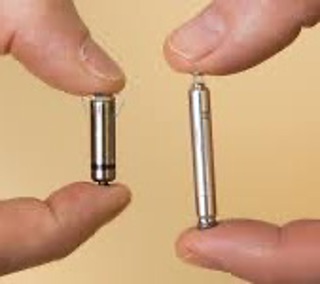
Contributor: Jared Scott, MD Educational Pearls: Small capsule pacemaker (2.5 cm, 1 ml volume) resides in the heart without any associated wires or leads like a traditional pacemaker The new version ...

16 Feb 20216min
Podcast 640: Kawasaki's Disease

Podcast 640: Kawasaki's Disease

Contributor: Peter Bakes , MD Educational Pearls: Pediatric Fever + Rash Differential: scarlet fever, measles, rubella, chicken pox, fifth's disease, HHV-6, adenovirus, anaphylaxis, Kawasaki's diseas...

15 Feb 20215min
Pharmacy Phriday #9: Xofluza (Baloxavir marboxil) for Influenza

Pharmacy Phriday #9: Xofluza (Baloxavir marboxil) for Influenza

Contributor: Rachael Duncan, PharmD BCPS Educational Pearls:  According to the Department of Public Health and Environment who puts out a weekly report on the influenza virus in Colorado, there appea...

12 Feb 202112min

Populært innen Vitenskap

fastlegen
tingenes-tilstand
rekommandert
jss
rss-nysgjerrige-norge
vett-og-vitenskap-med-gaute-einevoll
rss-rekommandert
sinnsyn
forskningno
villmarksliv
nordnorsk-historie
fjellsportpodden
smart-forklart
rss-paradigmepodden
aldring-og-helse-podden
diagnose
pod-britannia
rss-overskuddsliv
abid-nadia-skyld-og-skam
tomprat-med-gunnar-tjomlid