Podcast 862: How to Apply a Painful Stimulus

Podcast 862: How to Apply a Painful Stimulus

Contributor: Travis Barlock MD

Educational Pearls:

When might you need to apply a painful stimulus in a medical setting?

  • The main reason is to assess the patient's level of consciousness, such as when they are waking up from anesthesia or have potentially suffered a brain injury.

  • It can be part of the Glasgow Coma Scale (GCS) if patients are not responding to auditory stimuli.

  • Possible levels of consciousness include Alert, Lethargic, Obtunded, and Comatose (ALOC)

What are the approved ways to apply a painful stimulus to assess central nervous system function?

  • Trapezius squeeze. Grab the trapezius muscle and twist (contraindicated in clavicle fractures).

  • Supraorbital rim pressure. Find the notch in the supraorbital rim of the patient and push hard with your thumb (contraindicated in facial fractures).

  • Mandibular pressure (not mentioned). Press hard at the angle of the jaw on the mandibular nerve (contraindicated in mandible fractures).

  • Sternal rub. Push down with your knuckles into the patient's sternum and rub vigorously (contraindicated in chest injury/surgery).

  • Each technique should be done for between 15 and 30 seconds.

  • If skin damage is observed in one location, move to a different location. This is especially true of the sternal rub.

Important note: Peripheral techniques such as nail tip pressure should only be used to evaluate spinal nerve reflexes and not as a method of assessing the level of consciousness.

References

  1. Lower J. Using pain to assess neurologic response. Nursing. 2003 Jun;33(6):56-7. doi: 10.1097/00152193-200306000-00047. PMID: 12799591.

  2. Middleton PM. Practical use of the Glasgow Coma Scale; a comprehensive narrative review of GCS methodology. Australas Emerg Nurs J. 2012 Aug;15(3):170-83. doi: 10.1016/j.aenj.2012.06.002. Epub 2012 Aug 3. PMID: 22947690.

  3. Mistovich JJ, Krost W, Limmer DD. Beyond the basics: patient assessment. Emerg Med Serv. 2006 Jul;35(7):72-7; quiz 78-9. PMID: 16878751.

  4. Naalla R, Chitirala P, Chittaluru P, Atreyapurapu V. Sternal rub causing presternal abrasion in a patient with capsuloganglionic haemorrhage. BMJ Case Rep. 2014 Apr 7;2014:bcr2014204028. doi: 10.1136/bcr-2014-204028. PMID: 24711478; PMCID: PMC3987201.

Summarized by Jeffrey Olson, MS2 | Edited by Jorge Chalit, OMSII

Episoder(1145)

Podcast 609: Kratom

Podcast 609: Kratom

Contributor: Nick Hatch, MD Educational Pearls: Kratom is derived from the evergreen tree sharing the same name, found in Southeast Asia Kratom is legal is most regions Adverse effects of this substa...

2 Nov 20204min
Podcast 608: Another Elevated Lactate?

Podcast 608: Another Elevated Lactate?

Contributor: Jared Scott, MD Educational Pearls: Lactate is a byproduct of anaerobic metabolism or tissue hypoperfusion Though typically associated with severe sepsis, hyperlactatemia can be caused b...

27 Okt 20205min
Podcast 607: Is Pain the Enemy?

Podcast 607: Is Pain the Enemy?

Contributor: Don Stader, MD Educational Pearls: Pain is ubiquitous in the emergency department but it is not the enemy - suffering is Nociception is the ability to feel noxious stimuli which usually ...

26 Okt 20205min
Pediatric Emergencies Brewcast: Common Respiratory Conditions in Pediatric Patients

Pediatric Emergencies Brewcast: Common Respiratory Conditions in Pediatric Patients

Emergency Medical Minute collaborated with CarePoint Health in early March for a night of education on Pediatric Emergencies geared towards mid-level providers at a local Denver brewery for our latest...

21 Okt 202019min
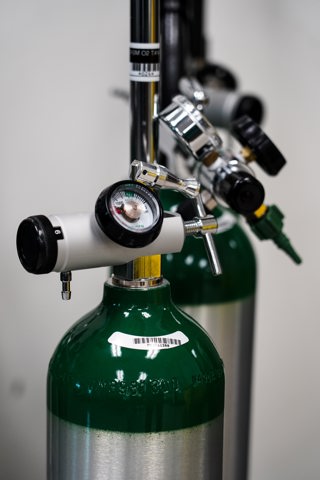
Podcast 606: The Oxygen Wars

Podcast 606: The Oxygen Wars

Contributor: Aaron Lessen, MD Educational Pearls: The use of oxygen is controversial when treating patients with certain conditions, like MI's, stokes, or ARDS because adverse outcomes have been demo...

20 Okt 20203min

Podcast 605: Acute Limb Ischemia

Podcast 605: Acute Limb Ischemia

Contributor: Peter Bakes, MD Educational Pearls: Classically presents with the 6Ps: Pain, pallor, paresthesia, pulseless, poikilothermia (cold), and paralysis Acute limb ischemia occurs by embolic or...

19 Okt 20205min
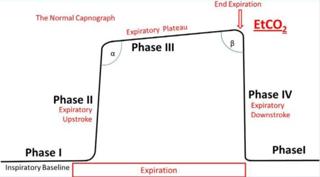
On the Streets #9: Advanced Applications of Capnography

On the Streets #9: Advanced Applications of Capnography

Capnography is the measurement of the partial pressure of exhaled CO2 and is an indirect measurement of your cellular respiration. It is displayed visually as a block-like waveform during the exhalati...

14 Okt 20201h 11min
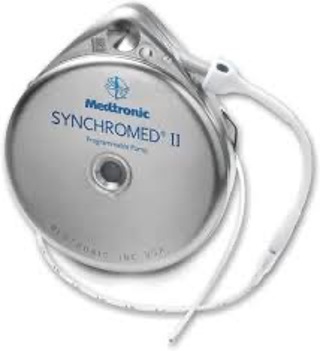
Podcast 604: Baclofen Withdrawal

Podcast 604: Baclofen Withdrawal

Contributor: Erik Verzemnieks, MD Educational Pearls: Baclofen is used to treat muscle spasms or spasticity. Baclofen comes in two forms: oral and intrathecal Withdrawal is much more common with thos...

13 Okt 20202min

Populært innen Vitenskap

fastlegen
tingenes-tilstand
rekommandert
jss
rss-nysgjerrige-norge
rss-rekommandert
vett-og-vitenskap-med-gaute-einevoll
sinnsyn
forskningno
villmarksliv
nordnorsk-historie
fjellsportpodden
rss-paradigmepodden
smart-forklart
rss-overskuddsliv
aldring-og-helse-podden
diagnose
pod-britannia
tomprat-med-gunnar-tjomlid
tidlose-historier