Episode 868: Airway Management in Obesity

Episode 868: Airway Management in Obesity

Contributor: Aaron Lessen MD

Educational Pearls:

Why is airway management more difficult in obesity?

  • Larger body habitus causes the chest to be above the head when the patient is lying supine, creating difficult angles for intubation.

  • Reduced Functional Residual Capacity (FRC) causes these patients to deoxygenate much more quickly, reducing the amount of time during which the intubation can take place.

What special considerations need to be made?

  • Positioning. The auditory canal and sternal notch should be aligned in a horizontal plane. Do this by stacking blankets to lift the neck and head. Also, try to make the head itself parallel to the ceiling.

  • Pre-oxygenation. Use Bi-level Positive Airway Pressure (BiPAP) with Positive End Expiratory Pressure (PEEP) or a Bag-Valve-Mask (BVM) with a PEEP valve. PEEP helps prevent alveoli from collapsing after every breath and improves oxygenation.

  • Dosing of paralytics. Succinylcholine is dosed on total body weight so the dose will be much larger for the obese patient. Rocuronium is dosed on ideal body weight, but adjusted body weight may also be used in obese cases.

References

  1. De Jong A, Wrigge H, Hedenstierna G, Gattinoni L, Chiumello D, Frat JP, Ball L, Schetz M, Pickkers P, Jaber S. How to ventilate obese patients in the ICU. Intensive Care Med. 2020 Dec;46(12):2423-2435. doi: 10.1007/s00134-020-06286-x. Epub 2020 Oct 23. PMID: 33095284; PMCID: PMC7582031.

  2. Langeron O, Birenbaum A, Le Saché F, Raux M. Airway management in obese patient. Minerva Anestesiol. 2014 Mar;80(3):382-92. Epub 2013 Oct 14. PMID: 24122033.

  3. Sharma S, Arora L. Anesthesia for the Morbidly Obese Patient. Anesthesiol Clin. 2020 Mar;38(1):197-212. doi: 10.1016/j.anclin.2019.10.008. Epub 2020 Jan 2. PMID: 32008653.

  4. Singer BD, Corbridge TC. Basic invasive mechanical ventilation. South Med J. 2009 Dec;102(12):1238-45. doi: 10.1097/SMJ.0b013e3181bfac4f. PMID: 20016432.

Summarized by Jeffrey Olson, MS2 | Edited by Jorge Chalit, OMSII

Episoder(1149)

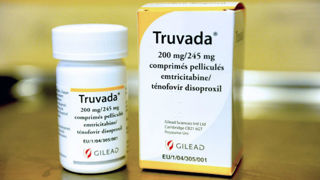
Podcast #297: Truvada

Podcast #297: Truvada

Educational Pearls Truvada (Emtricitabine/tenofovir) is a combination nucleotide reverse transcriptase inhibitor that can be used as pre-exposure prophylaxis (PrEP) for HIV. It has been shown to dram...

31 Jan 20184min
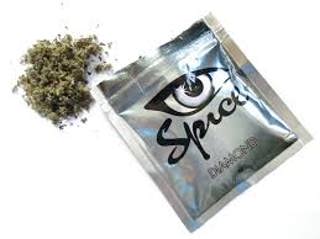
Podcast #296: Synthetic Cannabinoids

Podcast #296: Synthetic Cannabinoids

Author: Rachael Duncan, PharmD Educational Pearls A NEJM study report in July 2016 discussed a situation in New York during which 30 people became "zombie-like" after ingesting synthetic cannabinoids...

29 Jan 20185min
Podcast #295: UTI

Podcast #295: UTI

Author: Sam Killian, M.D. Educational Pearls Traditionally, UTI diagnosis has been dependent on urine culture, urinalysis and clinical symptoms. But a recent study casts some doubt on the utility of ...

26 Jan 20184min
Podcast #294: Rhabdomyolysis

Podcast #294: Rhabdomyolysis

Author: Michael Hunt, M.D. Educational Pearls Rhabdomyolysis is caused by the destruction of skeletal muscle that leads to the release of myoglobin, which causes renal failure. It presents with pain ...

22 Jan 20183min

Podcast #293: Transient Global Amnesia

Podcast #293: Transient Global Amnesia

Author: Sam Killian, M.D. Educational Pearls Transient global amnesia is a paroxysmal, transient memory issue. Remote and immediate memory is preserved, but new memories cannot be made. Patients will...

19 Jan 20184min
Podcast #292: Hypercalcemia

Podcast #292: Hypercalcemia

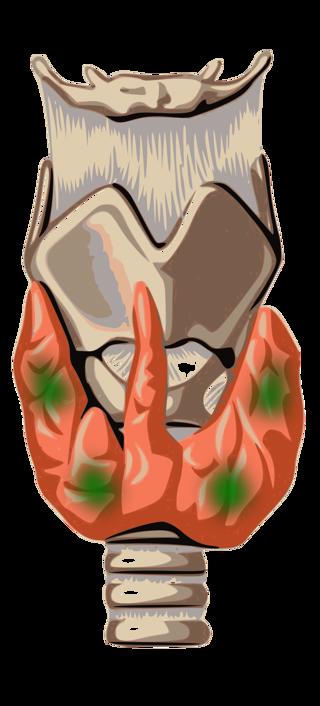
Author: John Winkler, M.D. Educational Pearls Normally, the parathyroid is the master regulator of serum Ca levels. It secretes PTH, which stimulates calcium uptake from the bone and gut. Causes of ...

17 Jan 20182min
Podcast #291: Cincinnati Stroke Scale

Podcast #291: Cincinnati Stroke Scale

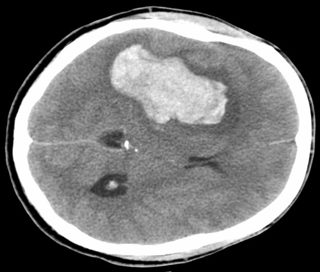
Author: Nick Hatch, M.D. Educational Pearls The Cincinnati Stroke Scale uses 3 measures to screen for ischemic stroke. The measures are: facial asymmetry, speech quality and arm drift. This scale is ...

15 Jan 20182min
Podcast #290: The Biochemistry of DKA

Podcast #290: The Biochemistry of DKA

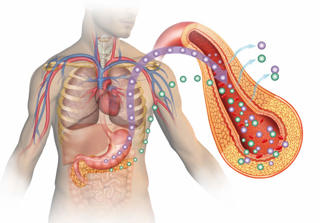
Author: Dave Rosenberg, M.D. Educational Pearls DKA commonly causes hyperkalemia, leading to peaked T-waves on ECG. However, DKA causes hypokalemia at the same time. In DKA, glucose cannot be taken i...

12 Jan 20186min

Populært innen Vitenskap

fastlegen
tingenes-tilstand
rekommandert
rss-nysgjerrige-norge
forskningno
sinnsyn
vett-og-vitenskap-med-gaute-einevoll
liberal-halvtime
smart-forklart
rss-rekommandert
pod-britannia
jss
fjellsportpodden
villmarksliv
rss-overskuddsliv
nevropodden
aldring-og-helse-podden
tomprat-med-gunnar-tjomlid
dekodet-2
rss-bondevennen