Episode 868: Airway Management in Obesity

Episode 868: Airway Management in Obesity

Contributor: Aaron Lessen MD

Educational Pearls:

Why is airway management more difficult in obesity?

  • Larger body habitus causes the chest to be above the head when the patient is lying supine, creating difficult angles for intubation.

  • Reduced Functional Residual Capacity (FRC) causes these patients to deoxygenate much more quickly, reducing the amount of time during which the intubation can take place.

What special considerations need to be made?

  • Positioning. The auditory canal and sternal notch should be aligned in a horizontal plane. Do this by stacking blankets to lift the neck and head. Also, try to make the head itself parallel to the ceiling.

  • Pre-oxygenation. Use Bi-level Positive Airway Pressure (BiPAP) with Positive End Expiratory Pressure (PEEP) or a Bag-Valve-Mask (BVM) with a PEEP valve. PEEP helps prevent alveoli from collapsing after every breath and improves oxygenation.

  • Dosing of paralytics. Succinylcholine is dosed on total body weight so the dose will be much larger for the obese patient. Rocuronium is dosed on ideal body weight, but adjusted body weight may also be used in obese cases.

References

  1. De Jong A, Wrigge H, Hedenstierna G, Gattinoni L, Chiumello D, Frat JP, Ball L, Schetz M, Pickkers P, Jaber S. How to ventilate obese patients in the ICU. Intensive Care Med. 2020 Dec;46(12):2423-2435. doi: 10.1007/s00134-020-06286-x. Epub 2020 Oct 23. PMID: 33095284; PMCID: PMC7582031.

  2. Langeron O, Birenbaum A, Le Saché F, Raux M. Airway management in obese patient. Minerva Anestesiol. 2014 Mar;80(3):382-92. Epub 2013 Oct 14. PMID: 24122033.

  3. Sharma S, Arora L. Anesthesia for the Morbidly Obese Patient. Anesthesiol Clin. 2020 Mar;38(1):197-212. doi: 10.1016/j.anclin.2019.10.008. Epub 2020 Jan 2. PMID: 32008653.

  4. Singer BD, Corbridge TC. Basic invasive mechanical ventilation. South Med J. 2009 Dec;102(12):1238-45. doi: 10.1097/SMJ.0b013e3181bfac4f. PMID: 20016432.

Summarized by Jeffrey Olson, MS2 | Edited by Jorge Chalit, OMSII

Episoder(1149)

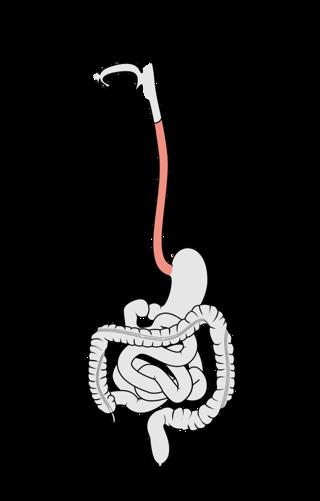
Podcast #231: Esophageal Tearing

Podcast #231: Esophageal Tearing

Author: Jared Scott, M.D. Educational Pearls Boerhaave syndrome (aka effort rupture of the esophagus) accounts for 10% of esophageal ruptures and is usually caused by strain during vomiting episodes....

28 Jul 20174min

Podcast #230: Concussive Treatment

Podcast #230: Concussive Treatment

Author: Aaron Lessen, M.D. Educational Pearls 2 studies this past year looked at pediatric and adolescent patients following a concussion. They found people who returned to activity sooner did better...

26 Jul 20172min

Podcast #229: Andrew Jackson

Podcast #229: Andrew Jackson

Author: Sam Killian, M.D. Educational Pearls Andrew Jackson was the 7th president of the USA. He served 2 terms from 1829-1837. He had had many medical issues during his presidency. He was said to be...

24 Jul 20175min

Podcast #228: BB Guns

Podcast #228: BB Guns

Author: Jared Scott, M.D. Educational Pearls BB gun eye injuries are most common in August and September. They most often happen to males aged 16-17 year old. Around 10% of the BB eye injuries lead t...

22 Jul 20174min

Podcast #227: CPR-Induced Consciousness

Podcast #227: CPR-Induced Consciousness

Author: Nick Hatch, M.D. Educational Pearls CPR-induced consciousness is a phenomenon that occurs when someone who was previously unconscious and is undergoing CPR regains consciousness and makes pur...

20 Jul 20173min
Podcast #226: Biphasic Anaphylaxis

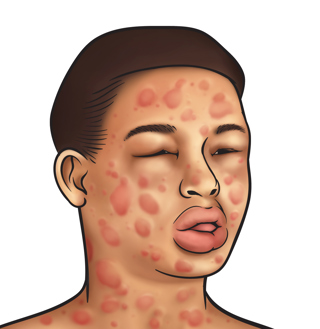
Podcast #226: Biphasic Anaphylaxis

Author: Sam Killian, M.D. Educational Pearls Anaphylaxis is common in the ED. These patients are treated and then usually watched for 4-6 hours. Biphasic happens in patients that have a complete reso...

18 Jul 20173min

Podcast #225: Rhogam

Podcast #225: Rhogam

Author: Dylan Luyten, M.D. Educational Pearls Rhogam is commonly used when an Rh negative woman has an Rh positive fetus. It is commonly used in the ER in the setting of a miscarriage. Rh(+) fetal bl...

16 Jul 20174min
Deep Dive #4: Pediatric Type I DKA

Deep Dive #4: Pediatric Type I DKA

Author: Justin Harper Justin Harper, a paramedic married to a pediatric nurse, discovered his own son had type I diabetes 2 years ago. Despite their medical experience, this diagnosis came as surprise...

14 Jul 201747min

Populært innen Vitenskap

fastlegen
rekommandert
tingenes-tilstand
forskningno
rss-rekommandert
rss-nysgjerrige-norge
sinnsyn
liberal-halvtime
smart-forklart
villmarksliv
vett-og-vitenskap-med-gaute-einevoll
fjellsportpodden
jss
pod-britannia
psykopoden
tomprat-med-gunnar-tjomlid
dekodet-2
aldring-og-helse-podden
nevropodden
rss-paradigmepodden